Calibers that shoot flat — until wind becomes a factor
Rifle shooters love to talk about “flat” calibers, the cartridges that seem to laser across a canyon with almost no drop. On paper, some modern rounds barely sag at 500 yards and still look remarkably level at 1,000. Yet the moment a real crosswind shows up, that flat arc stops being the whole story and wind drift, not gravity, becomes the shot breaker.
To understand which calibers really help in the field, I look at how trajectory, bullet shape, and velocity interact with moving air. The flattest options can buy forgiveness on range estimation, but once wind becomes a factor, ballistic coefficient and bullet design often matter more than raw speed.
What “flat shooting” actually means
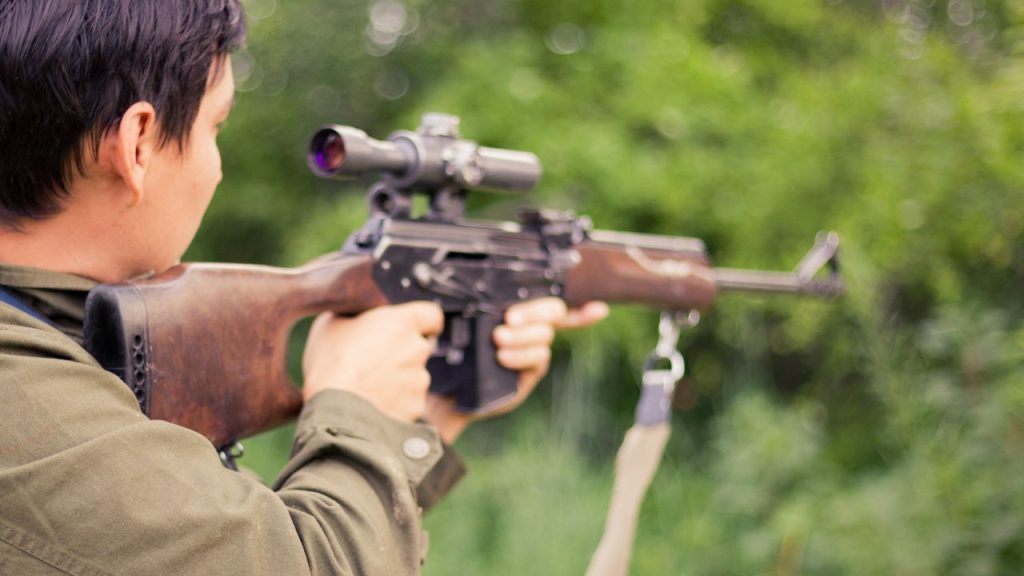
When shooters describe a caliber as flat, they are talking about how little the bullet drops between the muzzle and a given distance with a fixed zero. Tables of popular cartridges show that some modern rounds lose surprisingly little height by 500 yards, with the 500 yard figures often used as a benchmark for comparison. In that context, “flat” is simply shorthand for a trajectory that requires minimal holdover or dialing at typical hunting ranges.
Stretch the distance farther and the same data show which rounds keep that advantage. At 1,000 yards, the flattest options are those that combine high muzzle velocity with efficient bullets, and the drop numbers at 1,000 yards highlight how a few cartridges separate from the pack. In practice, that means a shooter can misjudge distance by a bit and still land in the vital zone, which is why hunters and competitors chase flat trajectories so aggressively.
Speed, caliber, and the illusion of a perfect arc
Velocity is the first ingredient in a flat path, and many classic “speedster” rounds were built around that idea. The Flattest Shooting Rifle discussions point to examples like the .243 Winchester and 6mm rounds that send light bullets fast enough to rank among the flattest of the 24 caliber options. Their appeal is obvious: minimal drop, mild recoil, and forgiving trajectories out to typical big game distances.
The same logic shows up at smaller scales. Rimfire options in .17 HMR are marketed around very high muzzle speeds, with carbines in this chambering described as using cartridges that are “distinguished by their high muzzle velocity, typically exceeding 2,500 feet per second (fps).” That kind of speed produces a remarkably flat arc at short to medium range, which is why varmint shooters prize it for small targets where a few inches of error matter.
When wind, not gravity, becomes the real problem
Gravity is predictable, but wind is not, and that is where the idea of a perfectly flat caliber starts to break down. As one technical explanation of bullet flight notes, Clearly something other than simple “blowing in the wind” is at work when a bullet drifts. The projectile is actually flying through a moving air mass, and its shape, time of flight, and stability determine how far it is pushed sideways.
That is why a small, fast pellet can look ideal on a calm day but become a liability in gusts. In air rifles, for example, 4.5 mm projectiles are praised for their flat trajectory, yet detailed comparisons point out that Wind Sensitivity is higher for these lighter pellets. Although the trajectory is flat, the report notes that “Although the” smaller diameter is efficient, it demands more precise reading of conditions because the pellet is more easily deflected.
Ballistic coefficient: the quiet counterweight to raw speed
Once wind enters the picture, ballistic coefficient becomes at least as important as muzzle velocity. Technical guides define What a Ballistic Coefficient is by explaining how it measures a bullet’s ability to overcome air resistance, and they stress that Ballistic Coefficient is a way to compare how different shapes and masses retain speed downrange. Most long range shooters now treat BC as a primary spec, not an afterthought, because it directly affects both drop and drift.
Bullet makers echo that logic, noting that high BC designs hold onto speed and resist wind better. One discussion of Retained Velocity and explains that a high BC bullet will retain velocity longer, maintaining a flatter trajectory and reducing wind drift, as long as it is launched with enough initial speed to maximize its benefits. That is the key trade: a slightly slower but sleeker bullet can arrive at 600 yards both higher and less winded than a lighter, faster one that sheds velocity quickly.
Light versus heavy: how bullets of the same BC behave
Many shooters assume heavier bullets always drift less, but the physics is more nuanced. Experienced competitors point out that The BC already takes mass and sectional density into account, so in theory two bullets with the exact same BC, sectional density, and launch conditions should show similar wind drift. In practice, the heavier bullet may be launched slower because of pressure limits, which can give up some of the theoretical advantage.
That is why cartridge designers increasingly chase “heavy for caliber” bullets that still maintain high speed. The 6 mm ARC is a good example, with reports noting that 6 mm ARC was Introduced by Hornady to push heavy for caliber, high BC bullets from a compact platform. That design philosophy accepts a bit less raw speed than some older 6 mm hot rods in exchange for better retained velocity and more stable flight in the wind.
Real-world hunting calibers: flat arcs versus wind calls
In the field, the “flat versus wind” debate shows up most clearly in mule deer and pronghorn country, where shots often stretch past 300 yards. Guidance on the 5 best mule options stresses that a cartridge should be flat shooting, meaning it resists gravity and wind and maintains enough speed for reliable expansion out to 400 or 500 yards. That definition quietly acknowledges that a flat arc alone is not enough; the bullet must also carry energy and resist drift at those ranges.
Comparisons of classic Western rounds make the tradeoffs concrete. One detailed mule deer cartridge showdown notes that But that involves a trade off when moving to heavier bullets: more recoil and lower MV. The same analysis points out that Lighter bullets with lower B.C.s generally shoot flatter out to moderate distances, while heavier, higher BC bullets may drop more initially but drift less in wind. For a hunter on a windy ridge, that can matter more than a few extra inches of drop that are easy to dial or hold.
Beating the wind: technique and caliber choice together
Caliber choice is only half the battle; reading and holding for wind is the other half. One veteran writer recalls that at one time he thought the .25-06 had to be the world’s best pronghorn cartridge, But he is also a huge . 270 fan. Over time, he gravitated toward higher BC bullets, such as a sleek 140 grain design, because they made wind calls more forgiving even if they did not look quite as flat on a chart.
Modern long range advice reflects the same evolution. Overviews of the 7 mm Remington Magnum describe it as an Overview of a high velocity option that shoots flatter than many older rounds while also handling heavy, high BC bullets. That combination lets shooters pair a reasonably flat arc with strong wind performance, provided they practice reading mirage, vegetation, and other cues to judge the breeze.
Deer calibers and the search for balance
For deer hunters, the conversation about flat calibers often ends in a call for moderation. One influential voice argues that Balance is Key to Best Deer Hunting, emphasizing that the less recoil and blast a shooter endures, and the less wind drift the bullet suffers, the better the overall outcome. That philosophy favors mid size cartridges that are flat enough, controllable, and paired with bullets that hold up in the wind.
Other guidance for mule deer echoes that theme. One overview states that Generally speaking, a good mule deer caliber will be accurate at long distances, have a relatively flat trajectory, and still deliver a knockdown punch at those ranges. That checklist implicitly includes wind performance, because a cartridge that groups tightly on a calm range but drifts wildly in a 10 mile per hour crosswind is not truly reliable in real hunting conditions.

Leo’s been tracking game and tuning gear since he could stand upright. He’s sharp, driven, and knows how to keep things running when conditions turn.