California father accidentally shoots five-year-old son; boy expected to survive
A routine evening inside an Oakley home turned into a life-or-death emergency when a father’s rifle discharged and a bullet struck his five-year-old son in the chest. The boy was airlifted to a trauma center and, according to police, is expected to survive after surgery, while investigators piece together how a weapon kept for protection became the source of a near-fatal injury. The case has already reignited questions about gun storage, semi-automatic rifles in family homes, and what responsibility adults bear when children are hurt by weapons they control.
What happened
Police in the Contra Costa County city of Oakley responded to a 911 call from a residence on Hemlock Court after reports that a child had been shot inside the home. When officers arrived, they found a five-year-old boy with a gunshot wound to the chest and immediately began lifesaving measures until paramedics could take over. The child was flown by medical helicopter to a regional trauma hospital because of the severity of the injury, a step that reflects how critical his condition appeared at the scene.
Investigators say the shot came from an AR-15 style rifle that the boy’s father was handling inside the house. According to police, the father told officers he had been cleaning or inspecting the weapon when it fired and the round struck his son. The rifle is described as a semi-automatic platform similar to those at the center of national debates over high-powered firearms in civilian homes, and officers recovered it as evidence after the incident. The description of the weapon as an AR-15 style rifle appears consistently across early reports, including accounts that the bullet hit the child squarely in the chest while he was nearby.
Officers who entered the home after the shooting found other family members present, including the boy’s mother, who had called 911. Neighbors reported seeing patrol cars, crime scene tape and a medical helicopter landing nearby as first responders worked to stabilize the child and secure the scene. According to details shared by police and relayed in local coverage, the home is located on a quiet residential cul-de-sac, and there were no signs of an argument, forced entry or any outside intruder who might have fired the shot.
Oakley police have emphasized that, based on initial interviews and physical evidence, the shooting appears to have been accidental. The father has reportedly cooperated fully with detectives, speaking with officers at the scene and later at the police station about what he says happened in the moments before the gun discharged. In their early description of the case, investigators have said there is no indication of intentional harm or domestic conflict that might reframe the incident as anything other than a tragic mishandling of a firearm.
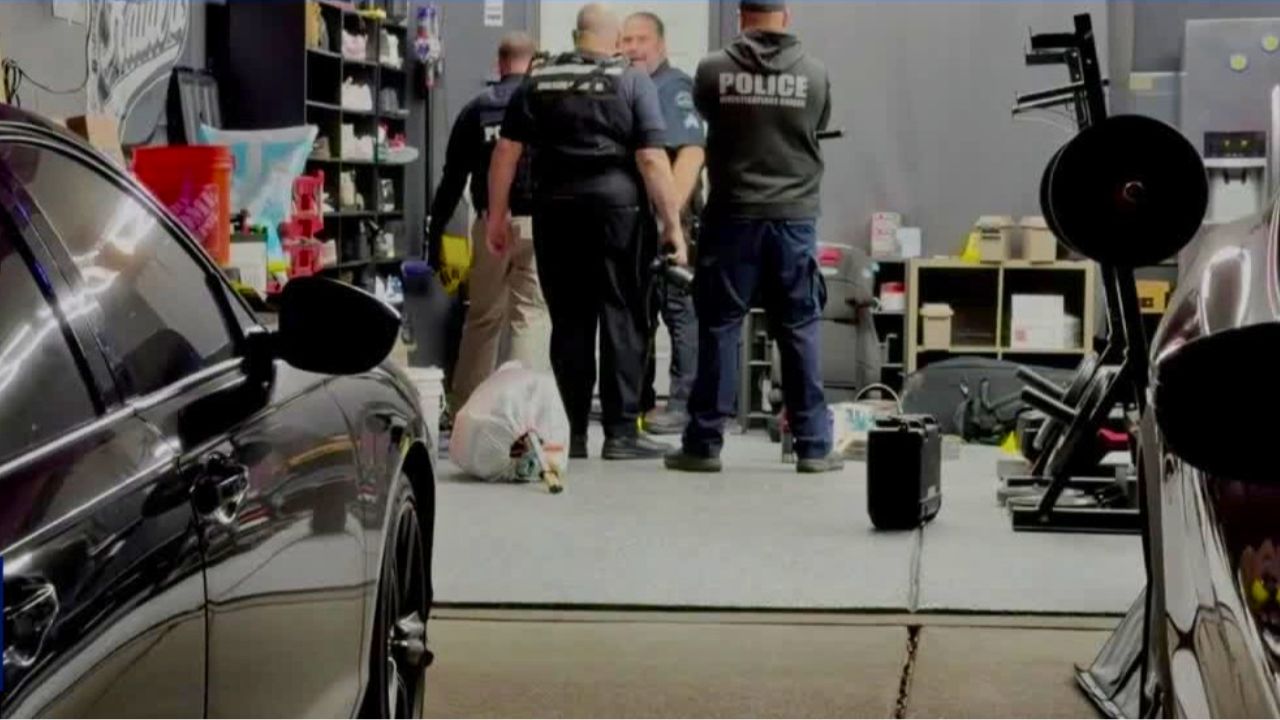
Despite that assessment, the case is being treated as a serious criminal investigation. Detectives obtained a search warrant for the home to document the layout of the room where the shot was fired, collect ballistic evidence and determine how many firearms were stored in the residence. That work includes photographing the rifle, documenting whether a round was chambered, and examining any cleaning supplies or accessories that might support or contradict the father’s account that he was servicing the weapon when it went off. The police department has also said it is checking whether the rifle and any other guns in the home were legally owned and properly registered.
Authorities have not released the names of the child or his parents, citing the boy’s age and the ongoing investigation. They have, however, confirmed that the father is the person who fired the shot and that the child was the only person injured. No officers discharged their weapons, and there is no evidence that anyone else handled the rifle in the minutes before it fired. According to early hospital updates shared with investigators, the boy underwent emergency surgery and is expected to survive, though the full extent of his injuries and any long-term complications remain unclear.
Police have said they are working with child welfare authorities to assess the safety of the home environment while the boy remains hospitalized. That coordination is standard in cases where a child is seriously injured inside a residence, especially when a parent’s actions are at the center of the incident. Whether the child will be allowed to return directly to his parents once he is discharged will depend on both the medical timeline and the outcome of the criminal review.
Local outlets have reported that the father was handling the rifle in a back room of the house when the gun went off and that the bullet passed through the boy’s chest before lodging in an interior wall. One account notes that the child was close enough to his father that there was no question about the source of the shot, and that neighbors heard a single loud bang followed by frantic screams. Police have confirmed that only one round was fired and that there were no other injuries inside or outside the home.
Witnesses told reporters that the family had lived on Hemlock Court for several years and that nothing in their past behavior suggested any pattern of violence. Some neighbors described the father as a working parent who appeared attentive to his children and who occasionally spoke about owning firearms for protection. Those impressions have deepened the sense of shock on the block, where residents now see crime scene tape and media vans outside a house they previously associated with routine family life.
According to one detailed account, the boy’s condition was grave enough that paramedics requested an airlift rather than ground transport, a decision often reserved for patients with life-threatening trauma. The helicopter landed at a nearby field, and the child was flown to a pediatric-capable trauma center in the Bay Area. Police later confirmed that surgeons were able to stabilize the boy and that he was listed in serious condition but expected to survive, a rare bit of encouraging news in a case that could easily have ended in a child’s death.
Oakley police have said that once the initial medical crisis passes, they will forward their findings to the Contra Costa County District Attorney’s Office for a charging decision. Possible counts could include child endangerment or negligent discharge of a firearm, depending on how prosecutors interpret the father’s conduct. At this stage, however, no formal charges have been announced, and the father has not been taken into custody. Investigators have stressed that the focus remains on the child’s recovery and on understanding exactly how an AR-15 style rifle came to be fired in a home with a young child present.
The incident has drawn attention across the Bay Area, in part because of the specific weapon involved and in part because of the rare outcome of a child surviving a close-range chest wound from a rifle round. Coverage has detailed the rapid response from Oakley police and medical crews, the airlift to a trauma center and the father’s account that he was cleaning the gun when it discharged. One report noted that officers are examining whether the rifle’s safety was engaged, whether a round was already chambered and whether the father was following any established cleaning protocol when he pulled the trigger.
Local reporting has also highlighted the way the story fits into a broader pattern of accidental shootings involving children and unsecured firearms. While Oakley investigators focus on the specific facts of the Hemlock Court case, parents, gun owners and policymakers across California are once again confronting the question of what more could have been done to prevent a five-year-old from ending up in an operating room with a gunshot wound that originated in his own home.
Why it matters
The Oakley shooting matters first because a child nearly died in circumstances that, by the father’s account, were entirely preventable. A five-year-old was struck in the chest by a high-velocity round from an AR-15 style rifle inside what should have been the safest place in his life, his family’s home. Even as doctors expect him to survive, the physical and psychological toll of such an injury at that age is profound, and the trauma extends to siblings, parents and a neighborhood that watched a helicopter carry a child away from their cul-de-sac.
Beyond this family, the case illustrates how quickly a moment of inattention with a firearm can escalate into irreversible harm. Investigators say the father was cleaning or inspecting the rifle when it fired, which suggests the weapon was loaded or at least chambered in a way that violated basic safety rules. Standard guidance for gun owners instructs them to unload a firearm, remove the magazine, clear the chamber and verify that the weapon is empty before any cleaning or maintenance. If a round remained in the rifle while the father handled it near his child, that lapse becomes central to any legal and moral assessment of what happened.
The fact that the weapon involved was an AR-15 style rifle adds another layer of concern. These rifles fire rounds at much higher velocities than many handguns, and a shot to the chest at close range can be catastrophic for a small child. That the boy survived at all is a testament to the speed of the medical response and the capabilities of the trauma center where he was treated. At the same time, the use of such rifles for home defense or recreation in houses where young children live has become a flashpoint in debates over what kinds of weapons should be readily accessible in residential settings.
California has some of the strictest gun laws in the country, including requirements for safe storage when children are present and penalties for adults who leave firearms where minors can access them. Even under those standards, however, state law still relies heavily on individual behavior inside private homes. If a parent chooses to handle a loaded rifle in a room where a child is nearby, enforcement usually comes only after something goes wrong. The Oakley case illustrates that gap, where legal frameworks exist on paper but cannot physically prevent a moment of negligence in a family living room or bedroom.
The shooting also resonates because it is not an isolated event. Around the country, children are regularly injured or killed when adults mishandle weapons or leave them accessible. In one example from outside California, police in DeKalb County, Georgia, reported that a young child accidentally shot themself with a gun that had been left within reach, a case that drew its own scrutiny of how the firearm was stored and who might face charges. In another case in Olyphant, Pennsylvania, a three-year-old was shot in a home under circumstances that investigators said involved a family member’s gun and a lapse in supervision. Together with the Oakley incident, these cases show how a single loaded firearm can turn an ordinary day into a medical emergency.

Leo’s been tracking game and tuning gear since he could stand upright. He’s sharp, driven, and knows how to keep things running when conditions turn.