Accessories gun owners should watch closely as rules evolve
Gun owners are living through a period when accessories can change legal status faster than many people can track, and the stakes range from wasted money to potential criminal exposure. As regulators, courts and manufacturers all pull in different directions, the smartest move is to understand which add‑ons sit closest to the legal line and which are simply essential for safe, responsible use. I want to map out that landscape, from contested items like pistol braces to mundane but critical gear like safes and cleaning supplies, so readers can see which accessories deserve the closest attention as rules evolve.
The shifting legal line around “just accessories”
The most important starting point is that accessories are no longer treated as an afterthought in firearms policy debates. Regulators have increasingly tried to treat certain add‑ons as if they were core components, arguing that items such as stabilizing braces or conversion devices can change how a gun functions in ways that matter for public safety. Legal analysts have noted that efforts by President Joe Biden to heavily restrict pistol braces were rejected in court for pushing the authority of the Bureau of Alcohol, Tobacco, Firearms and Explosives, or ATF beyond what existing law allowed, which underscores how contested the boundary between “gun” and “accessory” has become.
That same tension is visible in litigation over stabilizing braces, where The Department of Justice recently dropped its appeal in Mock v. Garland, leaving an earlier decision that vacated the ATF’s pistol brace rule in place. For owners, the key point is not just that the rule is now off the books, but that it took a full federal court fight to determine whether a piece of plastic attached to the rear of a pistol could be regulated like a short‑barreled rifle. The fact that The Department of Justice walked away from the appeal, and that the ATF’s pistol brace rule is now permanently vacated, is documented in industry commentary on Mock, and it illustrates why owners cannot assume that an accessory will stay in the same legal category from one year to the next.
Pistol braces and the fallout from Mock v. Garland
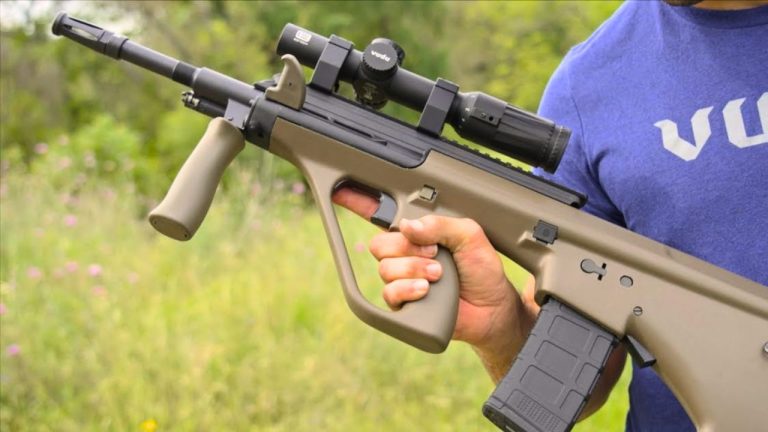
Stabilizing braces became a flashpoint because they sit at the intersection of disability accommodation, ergonomics and rifle regulations. For years, many shooters used braces to help control large‑format pistols, treating them as a way to improve stability without crossing into the National Firearms Act regime that governs short‑barreled rifles. When the ATF tried to reinterpret those same braces as effectively turning pistols into rifles, it created a compliance nightmare for owners who had purchased them in good faith, and it raised the question of whether accessories that change how a gun is shouldered can be regulated as if they were barrels or stocks.
The resolution of Mock v. Garland, where The Department of Justice chose not to continue its appeal, has immediate practical consequences. With the ATF’s pistol brace rule permanently vacated, owners who had been scrambling to register, modify or remove braces are now in a very different position, although they still need to track any future attempts to regulate similar devices. Industry voices that followed the case closely have highlighted how quickly the regulatory ground shifted under brace users, and those same voices now point to the Mock outcome on pistol braces as a reminder that even a seemingly settled accessory category can be upended by a single rulemaking and court decision.
Optics, holsters and other “safe bets” that still demand care
While some accessories sit in legal gray zones, others are widely accepted as part of responsible ownership, yet they still deserve close attention because they shape how safely and effectively a firearm is used. Optics and Sights, for example, are marketed as tools for Enhancing Accuracy and Target Acquisition, and they can help shooters place rounds more precisely, which in turn can reduce the risk of stray shots. Guides for everyday owners emphasize that quality Holsters designed to Carry with Security and Comfort are just as important, since a poorly fitted holster can lead to negligent discharges or lost firearms during daily carry, and these themes are laid out in detail in discussions of tactical gear.
Even within these “safe bet” categories, the details matter. A holster that fully covers the trigger guard and retains the gun during vigorous movement is a very different proposition from a minimalist clip that leaves the trigger exposed. Similarly, a rugged red‑dot sight that holds zero under recoil is more than a convenience; it can be the difference between a clean hit and a miss in a defensive context. Accessory makers that specialize in compact firearms, such as those offering grips, forends and other parts through gun accessories catalogs, routinely stress fit and function because a small design change can have outsized effects on how a firearm handles.
Safes, quick access and the politics of storage
Storage gear might seem far removed from the legal fights over braces, but it is another area where expectations are changing quickly. Many new owners worry that locking up a defensive firearm will slow their response in an emergency, yet modern quick‑access designs show that security and speed are not mutually exclusive. Commentators who work with first‑time buyers point out that Tons of companies now sell small safes that can be opened in a matter of seconds, often with biometric or keypad systems, which means a gun can be both secured from unauthorized users and available when needed, a balance described in detail in advice for new owners.
Manufacturers that specialize in full‑size safes echo that message, urging customers to think about fire protection, anchoring and interior layout alongside quick access. They also stress that a safe is not just about theft prevention, but about keeping firearms out of the hands of children or visitors who should never have access. Practical guides for first‑time buyers walk through how to choose a safe that fits the home, from compact bedside units to large vaults, and they frame secure storage as a core part of responsible ownership rather than an optional extra, a theme that runs through resources aimed at first‑time gun owners.
Safety rules, training gear and the accessories that enforce discipline
Hardware alone cannot make anyone safe, but certain accessories are designed to reinforce the basic rules that every shooter is expected to follow. Safety educators repeat that Your firearm is your responsibility, and that you must do everything in your power to keep it out of the hands of those who should not have it, which is why chamber flags, trigger locks and secure cases are treated as standard equipment in many training environments. Those same educators also stress the importance of knowing what is BEHIND and AROUND Your Target, a reminder that optics, lights and range gear should all be chosen with situational awareness in mind, as laid out in detailed lists of safety rules.
Training‑focused accessories, from dummy rounds to shot timers, also play a role in turning abstract rules into muscle memory. A shot timer can push a shooter to balance speed and accuracy, while dummy rounds make it possible to practice malfunction drills without live ammunition. Some manufacturers and retailers bundle these items into starter kits for new owners, and they often pair them with written checklists that echo the same core principles found in formal safety curricula, reinforcing the idea that accessories should serve the goal of disciplined, repeatable handling rather than just aesthetics.
Hearing, eye protection and the overlooked health gear
Protective equipment is one of the most underrated categories of gun accessories, even though it directly affects long‑term health. On shooting ranges, electronic earmuffs and quality eye protection are now common, but many new owners still treat them as afterthoughts compared with holsters or optics. In online discussions, experienced shooters sometimes describe upgrading from basic hearing protection to premium models as a revelation, with one user remarking that they Just got some Sordins and found them 100 times better than older budget muffs, a sentiment captured in community threads about Sordins.
Video reviews of range gear echo that focus on comfort and performance, highlighting how lightweight frames and interchangeable lenses can make it easier to wear eye protection all day. One such review notes that a particular set of SNW glasses has a slim frame that is comfortable for extended use, folds down small for storage and runs on two AAA batteries for its electronic features, illustrating how even eyewear can incorporate powered components that need maintenance, as seen in breakdowns of SNW gear. The broader point is that as accessories become more sophisticated, owners need to think about batteries, durability and replacement parts for safety gear just as carefully as they do for firearms themselves.
Cleaning, de‑leading and the rise of health‑focused accessories
Another category that deserves more attention is cleaning and decontamination gear, which sits at the intersection of maintenance and personal health. Regular cleaning has always been part of firearm ownership, but modern kits now include items aimed specifically at reducing exposure to lead and other residues. One example is Anti‑Lead Soap and Cleanser, which some retailers describe as one of the most important pieces of gun gear for anyone who shoots regularly, because it is designed to reduce your lead exposure after shooting by removing particles that ordinary soap might leave behind, a point emphasized in guides to Anti contamination.
Beyond de‑leading products, comprehensive cleaning kits now bundle bore brushes, solvent, lubricant and specialized tools for disassembling popular platforms. For new owners, these kits can be the difference between a firearm that runs reliably and one that starts to malfunction after a few hundred rounds. Retailers that cater to first‑time buyers often frame cleaning gear as essential rather than optional, grouping it alongside eye and ear protection in their lists of must‑have accessories for new firearm owners.
3D‑printed parts, maintenance and the durability question
As 3D printing has moved from hobbyist garages into mainstream manufacturing, it has opened a new frontier in firearm accessories. Enthusiasts now experiment with printed grips, magazine extensions and even structural components, attracted by the ability to customize shapes and textures that might not be available off the shelf. Yet the same flexibility raises questions about strength, heat resistance and long‑term wear, especially when parts are subjected to repeated recoil or environmental stress, which is why detailed guidance on post‑processing and inspection has become a staple of discussions around printed accessories.
Experts who work with these materials stress that Keeping Your Accessories in Top Condition requires deliberate Maintenance and Longevity planning, including Proper cleaning, inspection for cracks and, in some cases, annealing or other treatments to improve durability. They warn that neglecting these steps can lead to degradation that is not immediately visible but could cause a part to fail under load, especially in high‑round‑count firearms. Detailed guides on Keeping Your Accessories in Top Condition, Maintenance and Longevity, and Proper care explain how regular checks and conservative replacement schedules can help prevent degradation, and they frame these practices as non‑negotiable for anyone relying on printed components, as laid out in technical discussions of Top Condition.
Local rules, model‑specific guides and why details matter
Even when federal rules are clear, local regulations and model‑specific quirks can complicate accessory choices. Owners in California, for example, often find that their options are shaped by state‑level rosters and feature bans, which is why some advice columns note that if you are in California, that likely means you will be buying a Smith and Wesson Shield or another roster‑approved handgun, a point that surfaces in community Q&A about California. Once a specific model is chosen, owners then have to navigate which sights, lights and holsters are actually compatible, and whether any of those add‑ons change how the gun is classified under local law.

Leo’s been tracking game and tuning gear since he could stand upright. He’s sharp, driven, and knows how to keep things running when conditions turn.