Elon Musk flew to China with Trump without informing federal judge awaiting his recall to witness stand
In recent days, the worlds of big tech, presidential diplomacy, and federal courts collided in a way that few could have predicted. Elon Musk joined President Donald Trump on a state visit to China, traveling aboard Air Force One as part of a select group of American business leaders. At the same moment, Musk stayed bound by an order from a California federal judge in his civil lawsuit against OpenAI. The case, which centers on claims that the company strayed from its original nonprofit roots, had already seen Musk spend time on the witness stand. What stands out is how these threads ran parallel without clear coordination, leaving observers to weigh the practical realities of someone managing vast enterprises against the steady pull of legal process. You watch events like this unfold and sense the friction that arises when global schedules meet courtroom timelines.
Musk travels with Trump and other executives
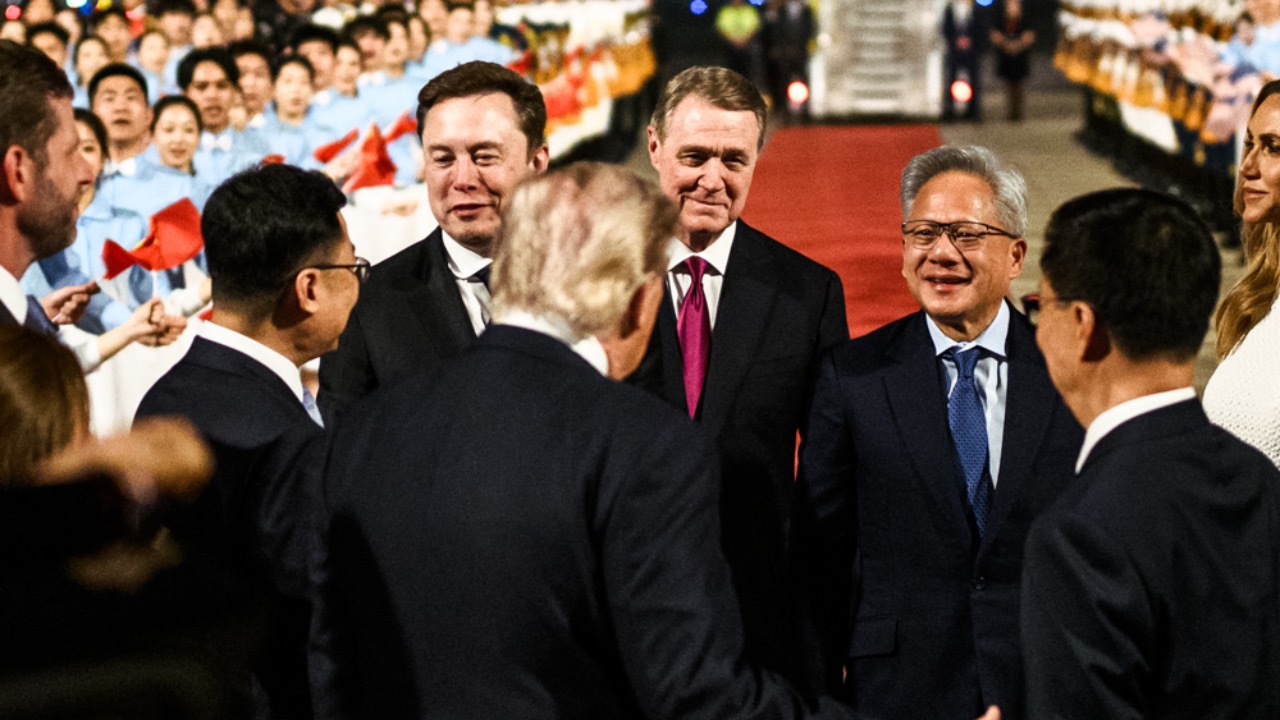
The delegation included Musk alongside figures from Nvidia and Apple, all heading to Beijing for talks with Xi Jinping on trade and technology matters. Air Force One carried them across the Pacific, with Musk visible in photos from the Great Hall of the People. His companies maintain deep ties to the Chinese market, including Tesla’s manufacturing footprint there, so the trip aligned with ongoing business priorities.
Observers noted the symbolic weight of the moment, as Musk stood near Trump during the high-level meetings. The itinerary had firmed up after Musk wrapped his earlier court testimony, yet the travel proceeded without documented outreach to the judge handling his case. This sequence left room for questions about how executives in his position navigate overlapping commitments.
The judge’s recall order in the OpenAI trial
U.S. District Judge Yvonne Gonzalez Rogers presided over the proceedings in Oakland. After Musk finished testifying at the end of April, she asked both sides whether he should remain available for quick recall to the stand. OpenAI’s lawyers said yes, prompting the judge to keep him on notice rather than fully excusing him.
Musk received no formal bar on international travel, but the status meant he needed to stay reachable if summoned again. Court records and people familiar with the process show he did not seek explicit approval before boarding the flight to China. The order reflected standard practice in civil trials where key witnesses might need to return briefly, yet it created an unusual situation once Musk left the country.
Why the timing created complications
Closing arguments in the OpenAI case began while Musk was overseas, with his lead attorney offering an apology to the jury for the absence. The trial had stretched into mid-May, focusing on detailed disputes over the company’s direction and founding agreements. Musk’s departure happened just as those final stages approached, raising eyebrows among those tracking the docket.
Legal experts point out that parties in civil matters often face fewer restrictions than in criminal ones, but the recall step still signals an expectation of availability. Musk’s team maintained it caused no disruption since he was not ultimately called back. Still, the episode drew attention to how someone with his schedule balances those demands without formal clearance.
Business stakes behind the China visit
Tesla operates a major factory in Shanghai, and Musk has long pursued expansion in electric vehicles and related technologies there. The presidential trip offered a chance to engage directly on issues like supply chains and market access, especially amid broader U.S.-China discussions on artificial intelligence. Other executives on the plane shared similar interests in semiconductors and consumer electronics.
You see the practical side when leaders like Musk join such delegations. The visit coincided with efforts to address tensions in tech trade, and his input carried weight given his companies’ scale. At the same time, the court order lingered in the background, illustrating how personal business calendars can intersect with public duties in unexpected ways.
The case wrapped without his return
Both sides rested their arguments shortly after Musk reached Beijing, and the judge did not require him to reappear. His lawyer described the situation as routine from their perspective, while OpenAI’s team expressed mild surprise at the timing. The jury heard the closing statements without further testimony from Musk, allowing the trial to move forward on schedule.
This resolution eased immediate legal pressure, though it left some wondering about future precedents for high-profile witnesses. Musk continued his activities in China, including public appearances with his son, before the trip concluded. The episode serves as a reminder of how fluid global responsibilities can test the boundaries of court expectations, even when no formal violation occurs.

Asher was raised in the woods and on the water, and it shows. He’s logged more hours behind a rifle and under a heavy pack than most men twice his age.