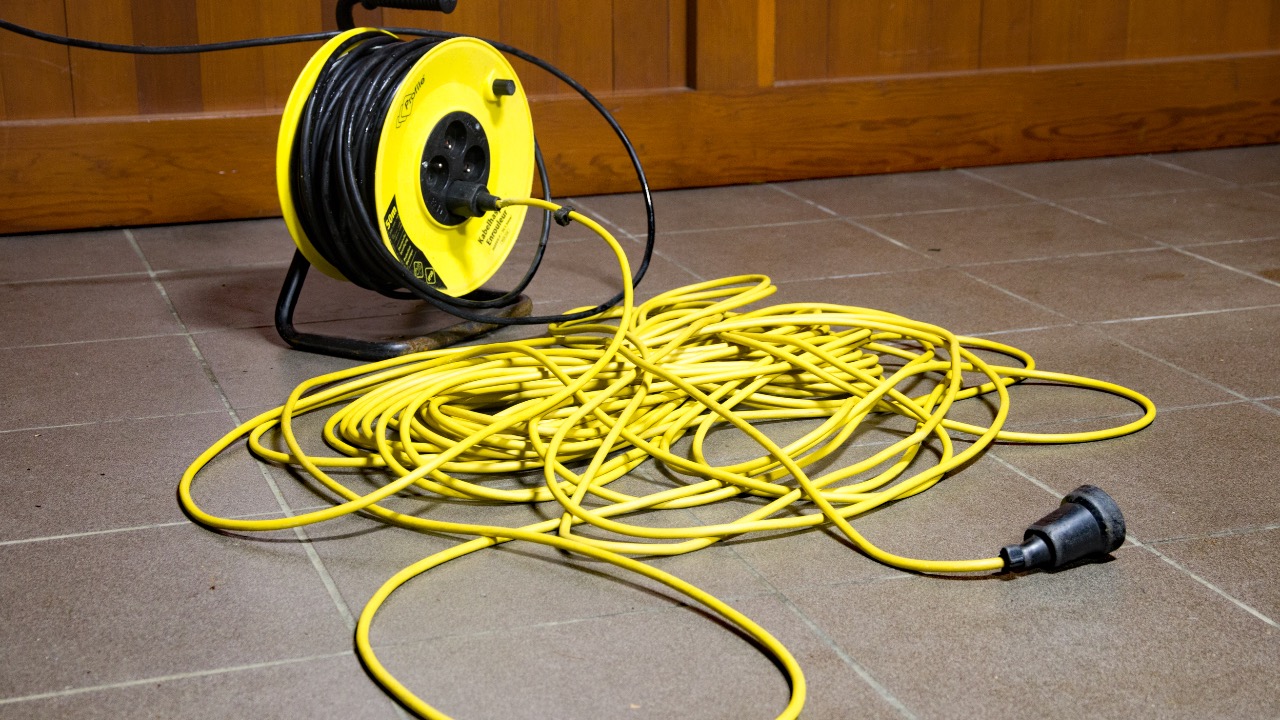
Fire marshals say this common extension cord setup now violates North Carolina code
North Carolina fire marshals are cracking down on a wiring shortcut that shows up in garages, deer camps, dorm rooms, and home offices all over the state. Plugging one extension cord or power strip into another to reach “just a little farther” is now squarely in the crosshairs of updated fire code language, and inspectors are treating it as a violation instead of a harmless workaround. The change is rooted in a growing body of data on extension cord fires and in new state code sections that spell out exactly how cords can, and cannot, be used.
If you are running a freezer in the shop, a space heater in the blind, or a bank of chargers in the spare bedroom, the way you string those cords now matters in the eyes of the law. The same setup that felt normal a few seasons ago can get you written up during an inspection, and in a worst case, it can be the weak link that starts a fire.
What fire marshals are actually targeting

The setup drawing the most attention is what electricians and safety officers call “daisy chaining,” where one extension cord or power strip is plugged into another to stretch reach or add more outlets. It looks harmless, but every extra connection adds resistance and heat, and it encourages people to load more gear onto a circuit than it was ever meant to handle, which is exactly why fire marshals across the Southern states have started flagging it as a serious hazard in their outreach and inspections, including in North Carolina. In plain terms, the message from inspectors is that the days of building cord-on-cord chains across a room or down a hallway are over.
Safety officials describe daisy chaining as a leading example of how a “simple shortcut sparks a disaster,” especially when folks plug one cord into another to stretch across a room or campsite and then stack on heaters, coolers, or chargers until the insulation starts to cook. Electricians warn that this habit, which many people picked up long before anyone talked about codes, is now recognized as a contributor to a significant share of residential electrical fires, a trend that has pushed Southern fire marshals to sound the alarm about how often this one mistake shows up in the aftermath of a blaze linked to overloaded cords and strips, according to electricians.
The code section that changed the game
Behind the tougher stance is a set of specific rules in the North Carolina State Building Code, Fire Prevention Code, that spell out how cords are supposed to be used. Section 603.6, labeled “Extension cords,” makes it clear that cords are not a substitute for permanent wiring and must be listed and labeled for the way they are used. That language gives inspectors a solid hook to write up any situation where cords are being treated like a permanent part of the building’s electrical system, including long chains that snake around a room or under rugs to feed multiple devices.
Another piece of the same framework, identified as 603.6 “Application and Use,” ties those rules directly to the North Carolina State Building Code, Fire Prevention Code, and lays out that cords have to be installed and used in line with their listing. When you plug one cord into another, or into a power strip that is already loaded, you are stepping outside the way those products were tested and labeled, which is why fire marshals now treat that common setup as a code problem, not just a bad habit.
How North Carolina’s rules treat extension cords
Even before the latest code cycle, North Carolina had already baked some of these limits into everyday practice through institutional policies. Craven Community College, for example, spells out in its fire code procedure that Extension Cords are governed by the North Carolina State Fire Prevention Code under a section literally titled “Extension Cords: Temporary Use.” That policy states that cords shall not be used as a replacement for permanent wiring and that their use is limited in duration, which lines up with the statewide push to keep cords from becoming a semi-permanent fixture in classrooms, labs, and offices.
The same document goes further, noting that the current capacity of the cord has to be at least as high as the rated capacity of the appliance or fixture it serves, and that Extension Cords must be plugged directly into a permanent outlet. When you start stacking cords or strips, you are almost guaranteed to violate that direct connection rule, which is why inspectors at schools, churches, and county buildings are now tagging daisy chains as a straightforward code violation instead of looking the other way.
Why “daisy chaining” is so dangerous in real life
On paper, daisy chaining is defined as plugging one extension cord or power strip into another to extend reach or add more outlets, but in the field it usually looks like a tangle of orange and white cords feeding everything from freezers to phone chargers. Safety guidance describes “What is Daisy Chaining” in blunt terms, warning that this practice can quickly become a serious hazard because each added cord increases resistance, heat, and the odds that someone will overload the circuit, a pattern highlighted in explanations of Daisy Chaining.
Fire marshals in the Southern states point out that while there may not be a single new statute that uses the word “daisy chain,” their enforcement of existing fire code sections has tightened because this one mistake shows up again and again in investigations of electrical fires. Guidance aimed at explaining “Why Southern Fire Marshals Are Sounding the Alarm” notes that, while there is no single statewide “new law” banning daisy chaining in Southern jurisdictions, the combination of code language and inspection practice has turned these cord chains into a clear red flag, especially in homes and small businesses that already rely heavily on portable cords, according to warnings about Southern fire risks.
What inspectors are seeing in homes, dorms, and camps
In practice, the violations show up in familiar places: a string of cords running from a single outlet to a freezer and a chest of tools in a detached garage, or a power strip plugged into another strip behind a TV stand that also feeds a game console, sound bar, and space heater. Safety officers describe walking into older buildings where the supply of outlets is limited and finding that Extension cords and surge-protected strips have been used to create entire “trees” of outlets, a setup that might feel clever until the insulation fails.
College campuses and community facilities have tried to get ahead of that pattern by banning certain adapters outright. Craven Community College’s fire code procedure has a section on Multiplug Adapters that states extension cords and multiplug strips must be plugged directly into an outlet and cannot be plugged into each other. That is the same basic setup many hunters and anglers use in cabins and sheds, which means the wiring tricks that used to slide by in private spaces are now the same ones that would get a dorm room or office written up during a fire inspection.
Specific gear that is now off-limits on cords
One of the clearest bright lines in the updated rules involves space heaters, which are common in workshops, garages, and hunting cabins. The Fire Prevention Code section labeled 603.9 “Extension cords” states flatly that Portable electric space heaters shall not be plugged into extension cords. That means the classic move of running a heater off a cord from the nearest outlet is not only risky, it is a direct code violation in North Carolina.
Older versions of the code carried similar language. The 2018 North Carolina State Building Code, Fire Prevention Code, used section 605.5 to state that Extension cords and flexible cords shall not be a substitute for permanent wiring and that they are to be used only with portable appliances. When you combine that with the newer heater-specific rule, the picture is clear: high draw gear like heaters needs a direct, permanent receptacle, not a daisy chain of cords running across the floor.
How national standards back up North Carolina’s approach
North Carolina’s fire code does not exist in a vacuum, it tracks closely with national standards that have been warning against permanent cord use for years. A discussion among electricians about NEC violations points out that while the National Electrical Code is not always the primary enforcement tool for fire inspectors, NFPA 1 sections such as 11.1 make it clear that permanent use of extension cords is prohibited. That national backdrop helps explain why state fire marshals feel comfortable treating long term cord setups as violations even when property owners see them as normal.
Other guidance aimed at inspectors, such as a document that cites section 605.5 Extension cords, repeats the same core rule that extension cords and flexible cords shall not be a substitute for permanent wiring. That document also stresses that Extension cords and flexible cords are to be used only with portable appliances, which lines up neatly with how North Carolina’s Fire Prevention Code is written and enforced.
What the state fire marshal says about the 2024 code
There has been some confusion about when the newest code language actually takes effect, and the state has tried to clear that up. A notice about the North Carolina State Building Code explains that the effective date of the 2024 edition has been postponed indefinitely and directs readers to “See the State Fire Mars” update for details, a reminder that code books and enforcement dates do not always move in lockstep, according to the Notice.
At the same time, a separate update from the code community notes that the 2024 NC Building Code, NC Existing Building Code, NC Fire Code, NC Mechanical Code, and NC Fuel Gas Code, all tied to the Office of State Fire Marshal, are scheduled to be adopted on 1/1/25 and mandatorily effective on 7/1/25, according to the summary of the Building Code rollout. The North Carolina Office of State Fire Marshal has also said that Both online and print versions of the 2024 North Carolina State Building Code are expected to support building and safety compliance across the state, according to its Both newsletter, which signals that, postponed or not, the new language is shaping how inspectors think about cord use.
Practical steps to stay legal and safe
For homeowners and hunters who rely on cords to power freezers, tools, and heaters, staying on the right side of the code comes down to a few practical habits. First, avoid daisy chaining entirely, which means no cord-to-cord or strip-to-strip setups, a point hammered home in a safety alert that says Never “daisy-chain” power strips and instructs people to plug strips directly into wall outlets, never into other strips, according to the Safety Alert. Second, match the cord to the load and keep it temporary, which means using a heavy enough gauge for the appliance and planning to replace long term cord runs with permanent wiring.
Fire safety guidance also stresses how cords are routed and protected. Extension cord safety rules note that Flexible cords may not be run above ceilings or inside or through walls, ceilings, or floors, and may not be fastened with staples that damage the outer jacket or insulation, according to the Flexible cord guidance. Injury lawyers who track extension cord fires in North Carolina add that many deaths from extension cord fires could be prevented with basic steps like Installing tamper-resistant outlet covers or electrical outlets in places where people now rely on cords, and by keeping flammable materials away from outlets and cords, according to their list of Other tips.

Asher was raised in the woods and on the water, and it shows. He’s logged more hours behind a rifle and under a heavy pack than most men twice his age.