Glock 20 returns to discussion after another reported incident in Alaska
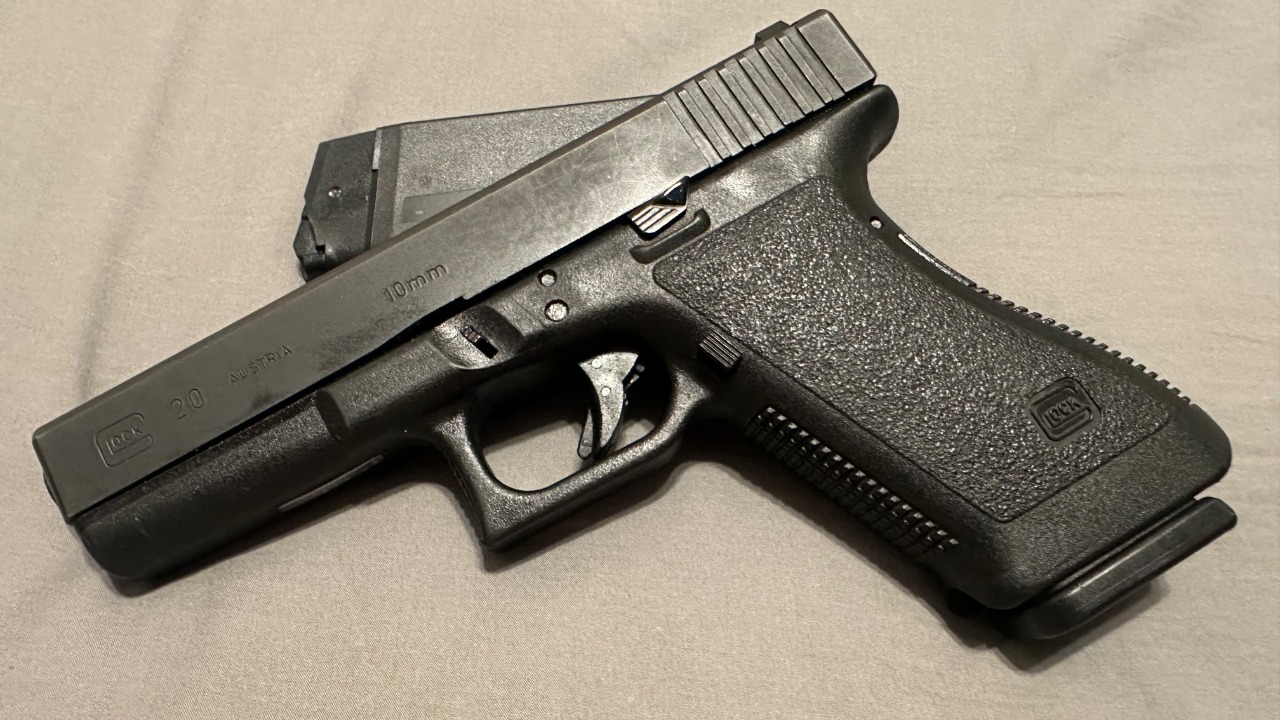
The Glock 20 is back under scrutiny after another reported explosion in Alaska, reviving a debate that has simmered for years among hunters, hikers, and handgun enthusiasts who rely on 10 mm power in remote country. The latest account has not only raised questions about what went wrong in that specific incident, it has also reopened a broader argument about how much risk users are willing to accept from a powerful semi‑automatic pistol that many carry as a last line of defense against large animals.
As discussion spreads from gun counters to online forums, the Glock 20 is being judged against a changing product landscape, from new factory generations to aftermarket barrels and the looming shift toward replacement models. The stakes are not abstract: in the backcountry, a catastrophic failure in the shooter’s hand is more than a mechanical problem, it is a potential medical emergency far from help.
Another Alaska incident puts pressure on a trusted workhorse

The latest controversy centers on a reported Glock 20 explosion in Alaska, where the pistol has long been a favorite for those who want a relatively light, high‑capacity 10 mm sidearm in bear country. According to coverage of the incident, the renewed attention is driven in part by Jan and other commentators who have amplified the story and questioned whether the failure reflects a one‑off problem or a pattern that owners should take seriously, especially in a state where many shooters already push the cartridge hard for maximum stopping power. The report describes how the event has pushed the Glock 20 back into the spotlight, with users parsing photos, load data, and the shooter’s account to understand whether ammunition, maintenance, or design played the decisive role in the failure, and that renewed focus is captured in the broader discussion of the explosion.
What makes this case resonate is not only the mechanical failure itself but the context in which it occurred. In Alaska, a 10 mm Glock is often carried as a defensive tool against bears and other wildlife, not as a range toy, so any suggestion that the platform might be vulnerable under heavy loads cuts directly to user confidence. The fact that the incident has been dissected by Jan and others in such detail reflects how much is at stake for people who are literally betting their hands and their safety on a single handgun, and it explains why a single explosion report can ripple through the community far beyond the individual shooter involved.
Chuke, Jan, and the anatomy of a public call‑out
One reason this story has gained traction is the role of personalities like Chuke from Chuke’s Outdoor Adventures, whose commentary has become a focal point for frustrated Glock 20 owners. In the coverage of the Alaska incident, Chuke is described as drilling into what he sees as the core problem, stripping away internet noise to argue that the real issue is how much unsupported case head and chamber design margin Glock has built into the 10 mm platform. His critique, amplified by Jan and others, is not just that a single pistol failed, but that the design leaves too little room for error when shooters use hot loads or handloads, a concern that is spelled out in the analysis of what Chuke is really calling out.
From my perspective, what matters in this debate is not whether every detail of a YouTube breakdown is perfect, but that experienced users are publicly questioning whether the factory configuration of a hard‑recoiling pistol is robust enough for the way it is actually used in the field. When someone like Chuke, who spends time in the same kind of terrain as many Glock 20 owners, says he is no longer comfortable betting his hands on a stock barrel, that sentiment carries weight. It pushes the conversation away from abstract brand loyalty and toward a more sober assessment of risk, especially for those who carry the gun as a primary defensive tool in remote areas.
Aftermarket barrels and the search for peace of mind
In the wake of the Alaska explosion report, one of the most concrete responses from the shooting community has been a renewed push toward aftermarket barrels that promise tighter, more supportive chambers. The same coverage that highlights the incident also notes that a quality replacement barrel with a more fully supported case head can reduce bulging and give owners more confidence that their 10 mm loads will stay within the mechanical limits of the gun. The argument is straightforward: if the factory design leaves a sliver of brass unsupported, then a barrel that cradles more of the cartridge can provide a safety margin, especially for those who shoot heavy hard‑cast bullets or high‑pressure hunting loads, a point underscored in the discussion of a quality aftermarket option.
I see this shift toward aftermarket parts as a kind of informal vote of no confidence in the stock configuration, even if many Glock 20s will never experience a catastrophic failure. When a significant slice of the user base feels compelled to spend extra money on a new barrel simply to feel comfortable with normal use, that is a signal that the manufacturer’s design choices are out of sync with how the product is being used. At the same time, it reflects the reality that many shooters are not willing to give up the Glock 20’s capacity and ergonomics, so they are trying to engineer around perceived weaknesses rather than abandon the platform altogether.
Gen6 and the evolution of Glock’s design philosophy
All of this is unfolding just as GLOCK, Inc is rolling out a new generation of pistols that it says represent a significant step forward in design. In an announcement from SMYRNA, GA, the company describes the 6th Generation of GLOCK pistols as a line that incorporates updated ergonomics and internal changes, with the Gen6 design slated to appear on shelves on January 20th, 2026. The company frames this Generation of GLOCK products as a response to user feedback and evolving standards, positioning the new line as a refinement of the brand’s core principles rather than a radical departure, a message that is laid out in the description of the Gen6 design.
In a separate section of the same announcement, GLOCK, Inc emphasizes that the Gen6 rollout is anchored in SMYRNA and that the first models will be chambered in 9 mm Luger, which means that 10 mm variants like a future Glock 20 successor are not at the front of the launch queue. The company’s description of the Generation of GLOCK pistols highlights incremental improvements rather than specific changes to chamber support or case head geometry, and it notes that the initial Gen6, chambered in 9 mm Luger, will lead the way. That leaves Glock 20 owners reading between the lines of the SMYRNA announcement and wondering how quickly, if at all, the lessons from Alaska and other incidents will filter into a future 10 mm Gen6 variant.
New features, Glock V, and the looming model shake‑up
Alongside Gen6, Glock is also reshaping its catalog with new features and entire product families that could eventually displace older workhorses like the Glock 20. Coverage of the Gen6 pistols notes that GLOCK officially announces the line with changes such as an extended thumb rest and an enlarged beavertail, tweaks that are meant to improve both performance and comfort for shooters who spend long hours on the range. These ergonomic updates, described as New features and improvements, signal that the company is willing to adjust long‑standing design elements when it sees a benefit, a point that comes through clearly in the overview of the Gen6 pistols.
At the same time, Glock is preparing a more dramatic shift with the Glock V series, which is scheduled to arrive in the United States market as a new family of pistols. Reporting from Oct notes that The Glock V pistols will begin distributing on the US market on November 30, and that this line is designed specifically for the US market only, suggesting a targeted strategy that could eventually reshape what is available on store shelves. The fact that Glock is willing to create a distinct V series for American buyers, as described in the coverage of The Glock V, raises the possibility that legacy models like the Glock 20 may face pressure from both ends: incremental Gen6 updates and a parallel line of region‑specific designs.
Backcountry expectations: Alaska users speak up
To understand why the Alaska explosion report has hit such a nerve, it helps to listen to how backcountry users talk about the Glock 20 in their own words. In a discussion on bear defense in Alaska, one Reddit user posting under sohikes asks what gun another hiker is planning to carry, and the original poster, Snipen543, replies that they are Likely to choose a 10 mm Glock 20. The reasoning is straightforward: a Semi auto pistol that is pretty light, with a magazine full of powerful cartridges, offers a balance of firepower and portability that is hard to match in the bush, a sentiment that comes through clearly in the bear defense thread.
On a separate Nosler Reloading Forum thread focused specifically on an Alaska Glock 20, another user recounts an encounter where a bear was hoarding a moose kill that hunters had to leave and then return to in daylight. The poster explains that they always carry a pistol while butchering moose in that environment, and that they rely on specific 10 mm loads, including DoubleTap and Buffalo Bore, with one user noting that they use 200 grain WFNGC and 200 grain WFNGC TP exclusively in the bush. That level of detail, captured in the description of the Alaska Glock setup, underscores why any suggestion of structural weakness in the Glock 20 is taken so seriously: these are not casual plinking guns, they are tools that people trust when they are elbow‑deep in a moose carcass with a bear nearby.
Discontinuations, SHOT Show, and what comes next for Glock 20 owners
Overlaying all of this technical and user‑driven debate is a major strategic shift by Glock itself. In an analysis of Glock’s Big Move, the company is described as planning the Discontinuation of Numerous Models, with a public list of all commercial pistol models that will be phased out and replaced by the Glock V Series. The explanation of What’s happening makes clear that this is not a minor SKU cleanup but a broad restructuring of the catalog, and while the reporting does not spell out the exact fate of the Glock 20, the implication is that many familiar model numbers will eventually give way to new designations within the V family, a prospect laid out in the overview of the Big Move.
At the same time, Glock is using high‑profile events to showcase its direction of travel. During the 2025 SHOT Show, the company highlighted several new products, noting from SMYRNA that at the SHOT Show GLOCK would officially launch multiple additions to its lineup, including rimfire and centerfire options. The description of these launches, which notes that On the range the company was demonstrating new models such as a .22 L.R., shows that Glock is comfortable experimenting at the edges of its traditional catalog while it prepares deeper structural changes, a strategy that is evident in the summary of the SHOT Show announcements. For Glock 20 owners watching another Alaska explosion report ripple through their community, the message is mixed: the brand is evolving quickly, but it is not yet clear whether that evolution will directly address the specific concerns that have pushed their trusted 10 mm back into the center of a very public debate.

Leo’s been tracking game and tuning gear since he could stand upright. He’s sharp, driven, and knows how to keep things running when conditions turn.