Kuwait mistakenly shot down three U.S. fighter jets during combat, military says
Kuwait has acknowledged that its own air defenses mistakenly shot down three American F-15E Strike Eagles during intense combat operations linked to the war with Iran, according to the U.S. military. All six crew members ejected and were recovered alive, but the incident has instantly become a case study in how fast-moving regional conflicts can strain even well coordinated alliances.
The friendly fire shootdown over Kuwait unfolded as Iranian forces targeted U.S. and partner assets across the region and as Kuwaiti units tried to protect their own airspace. The error has raised hard questions about identification systems, communication between partners and how quickly small states are being pulled into a wider confrontation with Iran.
How three U.S. jets were brought down by an ally
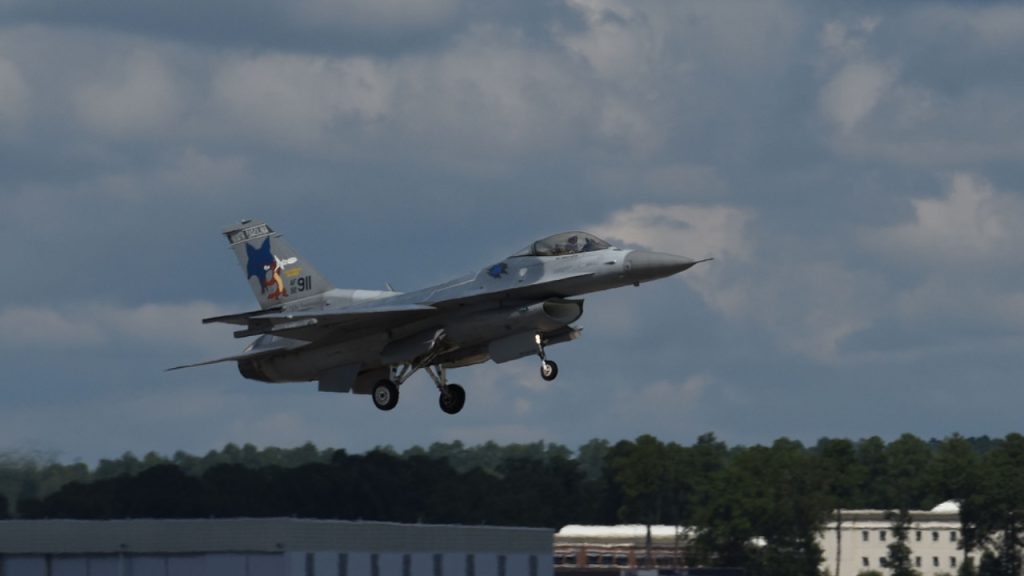
The U.S. Central Command has said that three U.S. F-15E Strike Eagles were on a combat mission in support of operations against Iran when they were mistakenly engaged by Kuwaiti defenses over Kuwait. In its account, Central Command described the episode as a friendly fire incident and confirmed that each jet carried two crew members, all of whom ejected and survived. The command, which is responsible for military operations across the Middle East, framed the flights as part of broader air support in the conflict with Iran and stressed that the aircraft were operating in coordination with regional partners when the misidentification occurred, a description that matches separate references to CENTCOM operations.
American officials have linked the loss of the jets to Kuwait’s efforts to defend its territory as Iranian strikes rippled across the region. Reporting that summarized the U.S. military’s statement said the F-15E Strike Eagles were hit while they supported combat missions against Iranian targets and that the aircraft were among the most advanced in the U.S. inventory. Other accounts have echoed that framing, describing how three U.S. aircraft were shot down over Kuwait and attributing the description of a friendly fire incident directly to Central Command, which emphasized that the Air Force crews were providing ongoing support in the war with Iran and that the shootdown occurred in the midst of that wider operation, as reflected in analysis of how three U.S. fighter were lost.
Kuwait’s air defense posture amid Iranian attacks
The mistake did not happen in isolation but against a backdrop of sustained Iranian pressure and Kuwaiti efforts to intercept threats. Kuwait’s security forces had already been tracking and shooting down what they described as hostile drones linked to Iranian retaliatory strikes, including repeated intercepts near Kuwait City as the conflict with Iran intensified. Official statements cited in regional reporting described how Kuwaiti defenses intercepted incoming drones on multiple days, a pattern that illustrates how Kuwaiti units were on high alert and under stress as they tried to protect their own population during the conflict with Iran, according to accounts that detail how Kuwait intercepts hostile.
Within that pressured environment, Kuwait’s defense ministry acknowledged that several U.S. military aircraft had crashed on its territory and said that all crews survived. Accounts that drew on Kuwaiti statements described the incidents near a U.S. air base and linked them to the broader Iranian strikes that had triggered emergency responses across the region. Other reports highlighted that Kuwait, while a close American partner, suddenly found its own forces making split second decisions about fast moving radar contacts as Iranian weapons targeted U.S. and allied assets, a context that helps explain how Kuwaiti operators might have misread the radar picture while trying to protect their airspace from Iranian threats.
What is known about the engagement and the aircraft
Early military assessments have pointed to Kuwaiti combat aircraft as the likely source of the lethal fire. Aviation focused reporting cited U.S. officials who said that Kuwaiti F/A-18 jets were suspected of firing on the three U.S. F-15s, describing the incident as an apparent case of mistaken identity in a crowded battlespace. Analysts Chris Gordon and Matthew Cox drew on those officials to explain that initial theories about other causes had faded and that attention had turned to the actions of Kuwaiti pilots, although they also noted that the investigation remained active and that earlier speculation was no longer the leading theory, a narrative that matches the suggestion that Kuwaiti F/A-18s were responsible.
The U.S. jets themselves were F-15E Strike Eagles, twin engine fighters that can carry large precision guided payloads and are often used for deep strike missions. Several reports stressed that the American aircraft were among the most advanced in the fleet and that each airframe cost roughly 31 million dollars, a figure cited in coverage that tallied the financial loss alongside the tactical consequences. Other analysis pieces walked through the capabilities of the F-15E Strike Eagle, explaining how the jets use radar and advanced targeting systems to support complex missions, and noted that three U.S. F-15E Strike Eagle fighter jets were mistakenly shot down over Kuwait, a description that aligns with detailed explainers on Jets Shot Down in the friendly fire incident.
Surviving crew, circulating videos and public reaction
Despite the loss of the aircraft, the U.S. military has emphasized that all six crew members survived. Central Command said the aviators ejected from the three jets and were recovered in stable condition, a point repeated across multiple accounts that highlighted the effectiveness of the F-15E ejection systems and the rapid response of search and rescue teams. One summary of the incident described how 3 American F-15 jets were mistakenly shot down by Kuwait but all crew were safe, and quoted CENTCOM as saying that all six personnel had been recovered and were in stable condition, a detail that matches the military’s insistence that all crew safely.
As official statements filtered out, videos began to circulate that appeared to show the moments when U.S. fighter jets crashed over Kuwait on Monday local time. Visual investigations described footage of aircraft trailing smoke and then fireballs on the horizon, with separate clips capturing a pilot descending by parachute after ejecting. These videos, which were analyzed alongside radar data and eyewitness accounts, appeared to show three U.S. fighter jets, F-15E Strike Eagles, going down over Kuwaiti territory, and were cited as open source evidence that matched Central Command’s timeline of events, as seen in reporting that examined how Videos appear to the crashes.
Official footage and briefings have also reached the public through short clips that summarize the Pentagon’s account. One widely shared video explained that the U.S. military said Monday that Kuwait mistakenly shot down three American F-15E Strike Eagles during a combat mission as Iranian forces attacked, repeating that the incident was friendly fire and that all crew members survived, a message that mirrors the language used when the Pentagon confirmed that Kuwait shot down by mistake.
Regional escalation and the risks of crowded skies
The shootdown has become a stark example of how quickly the Iran conflict has widened and how easily miscalculations can occur when multiple militaries operate in the same airspace. Reporting on the broader war has described how Iranian attacks have expanded to other fronts, including Lebanon, and how U.S. and partner forces have responded with strikes that destroyed Iranian ships and other assets. Within that larger fight, Kuwait mistakenly shot down three American F-15E fighter jets during an Iranian attack, according to Central Command, a detail cited in coverage that framed the friendly fire as a symptom of mounting pressure on smaller states caught between Iran and the United States, and which described how Underlining the risks of escalation.

Leo’s been tracking game and tuning gear since he could stand upright. He’s sharp, driven, and knows how to keep things running when conditions turn.