Millions of Hunters and Gun Owners: A Factor Often Cited in America’s Defense Debate
America’s vast civilian gun culture is often invoked as a hidden asset in national defense debates, with hunters and gun owners cast as a kind of informal reserve force. Supporters argue that millions of armed citizens would complicate any foreign invasion or domestic power grab, while critics counter that this romantic image ignores modern warfare and the realities of unregulated firearms. The question of whether this civilian arsenal actually strengthens national security sits at the intersection of constitutional theory, hard numbers and the lived experience of those who own and oppose guns.
At the center of the argument is a simple question with complex implications: does the sheer scale of privately owned weapons in the United States make the country safer, or does it simply magnify internal risks while offering little real deterrent value? The answer depends on how one weighs historical ideas about militias against contemporary data on gun distribution, training and the changing nature of conflict.
The scale of civilian firepower

Any assessment of hunters and gun owners as a strategic factor starts with volume. Estimates of the national stockpile vary, but one industry assessment reports that there are nearly 433.9 m firearms in civilian possession in the United States. Another analysis of global ownership patterns, based on a survey of national stockpiles, concluded that USA civilians alone hold an estimated 393 m guns, or about 46 percent of the worldwide total of civilian held firearms. Even at the low end of those estimates, the United States stands out as a country where civilian firepower rivals or exceeds many national militaries.
The weapons are not evenly distributed, however. Research on ownership patterns found that American civilians own at least Gun ownership is heavily concentrated, with just 3 percent of American adults holding a collective 133 million firearms. That means any theoretical “people’s arsenal” is largely in the hands of a relatively small slice of Americans, rather than being spread across the broader population in a way that would resemble a universal militia. The picture that emerges is less an even citizen army and more a dense cluster of highly armed households.
From militias to modern defense theory
Proponents of a heavily armed citizenry often root their case in the militia tradition and the language of a “free state.” One influential argument holds that even with the nation’s modern and well equipped professional military, the broader body of armed people and the militia system remain part of deterring and repelling any sudden foreign invasion, as set out in a prominent discussion of how Even an armed people secure a free state. In this view, millions of hunters and recreational shooters function as a latent defensive network that supplements formal forces and raises the cost of occupation.
Critics argue that this reading badly misstates the current reality of gun culture. A sharp critique from Minnesota framed the situation bluntly, telling gun owners that “None of you are members of a ‘well regulated militia’. You are members of an UNREGULATED bunch of gun owners,” and linking that unstructured status to the country’s “insane, week by week, mass shootings” through a searing commentary that used the phrase None of you are members of a well regulated militia. That critique highlights a core tension: the constitutional language imagines organized, trained units, while modern civilian gun ownership is largely individual, uncoordinated and often disconnected from any formal defense planning.
Hunters, training and the militia myth
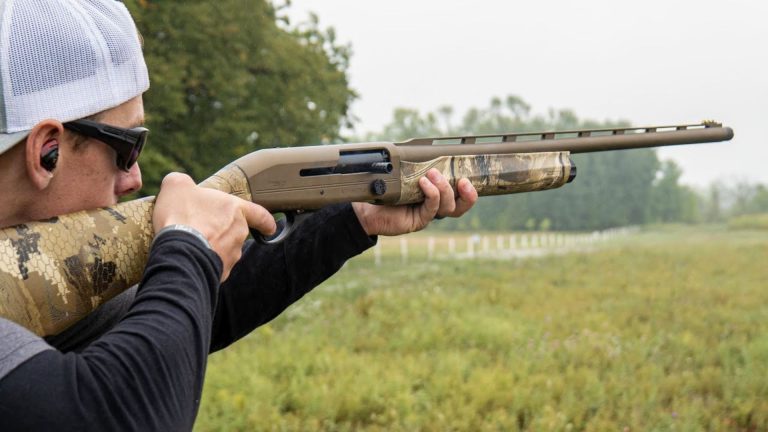
Hunters occupy a special place in this debate, often portrayed as citizens with practical fieldcraft and marksmanship that could translate into irregular defense. Industry figures point out that millions buy hunting licenses in America each year, and that these hunters routinely navigate remote terrain, handle firearms in varied conditions and track game over long distances, as described in arguments that defend hunters against anti hunting groups. Supporters of the “armed citizen” thesis see these skills as a foundation for guerrilla style resistance that could complicate any occupying force’s operations, especially in rural regions where local knowledge is paramount.
Possessing firearms and outdoor experience does not automatically translate into organized resistance capability, though. A critical essay on armed resistance to tyranny argued that before any population could seriously combat a tyrannical government, it would have to learn the basics of insurgency, logistics and coordination, rather than relying on scattered individuals with rifles, as outlined in an analysis of why Before lone gun owners cannot credibly resist oppression. That perspective suggests that without structure, command and sustained training, even millions of hunters remain a symbolic rather than operational force in high intensity conflict.
Guerrilla potential and home field advantage
History and modern conflict studies do offer some support for the idea that a dispersed, armed population can complicate invasion or occupation. Analysts of irregular warfare emphasize that guerrilla campaigns thrive on home turf, with fighters who know the terrain, roads and local communities often able to outmaneuver conventional units, as summarized in a discussion titled Familiar Terrain, Unfamiliar that highlights how local familiarity shapes outcomes. Advocates of civilian gun ownership argue that a heavily armed American public would present exactly this kind of challenge, turning any attempted occupation into a grinding, neighborhood by neighborhood contest.
Historical examples show both the promise and the limits of such thinking. A reflection on the Gallipoli campaign in World War I, for instance, described how a major amphibious assault faltered because there had been no systematic preparation, no specially equipped units, no command and control system and little intelligence or deception, according to a detailed account that noted that there had been central command position. Supporters of the armed citizen model sometimes point to such failures as evidence that even powerful militaries can be stymied by geography, poor planning and local resistance. Critics respond that Gallipoli involved organized national armies, not loose networks of private gun owners, and that drawing a straight line from that campaign to contemporary suburban America stretches the analogy.
From deterrence narrative to domestic risk
Beyond strategic theory, the sheer number of weapons raises questions about internal security. Commentators who favor stricter controls have observed that there are over 400 m firearms in civilian hands in the United States, and that a large share of them are owned by people who hunt something other than humans, as one pointed essay put it. That same argument contends that any realistic path to reducing gun violence would require directly addressing this stockpile, rather than assuming it is an unalloyed defensive asset. The tension between external deterrence and internal harm sits at the heart of the political fight over whether the country is safer with so many guns in private circulation.
Even among those who see value in an armed public, there is recognition that numbers alone do not guarantee effective defense. One libertarian leaning perspective, looking at a different country’s experience, argued that “We have a high quality military, but they are relatively small. A well armed population is both a crucial addition to our defence and a significant deterrent to any foreign power that might try and occupy a heavily armed nation,” as summarized in a discussion of why some libertarians ask about the right to bear arms. Transposed to the American context, that logic reinforces the idea that hunters and gun owners provide a psychological and practical barrier to aggression. It also assumes a level of coordination, shared purpose and restraint that the current, highly polarized gun debate does not always reflect.

Leo’s been tracking game and tuning gear since he could stand upright. He’s sharp, driven, and knows how to keep things running when conditions turn.