Mistakes people make with home security
Most accidental shootings at home do not come from exotic scenarios, they come from ordinary people making the same avoidable mistakes with storage, handling, and communication. Treating a firearm like just another household object, or assuming everyone in the house “knows better,” is exactly how a routine day turns into a life changing emergency. I want to walk through the most common errors I see and explain how to replace them with habits that match what safety experts recommend.
Ignoring the basic rules of safe handling
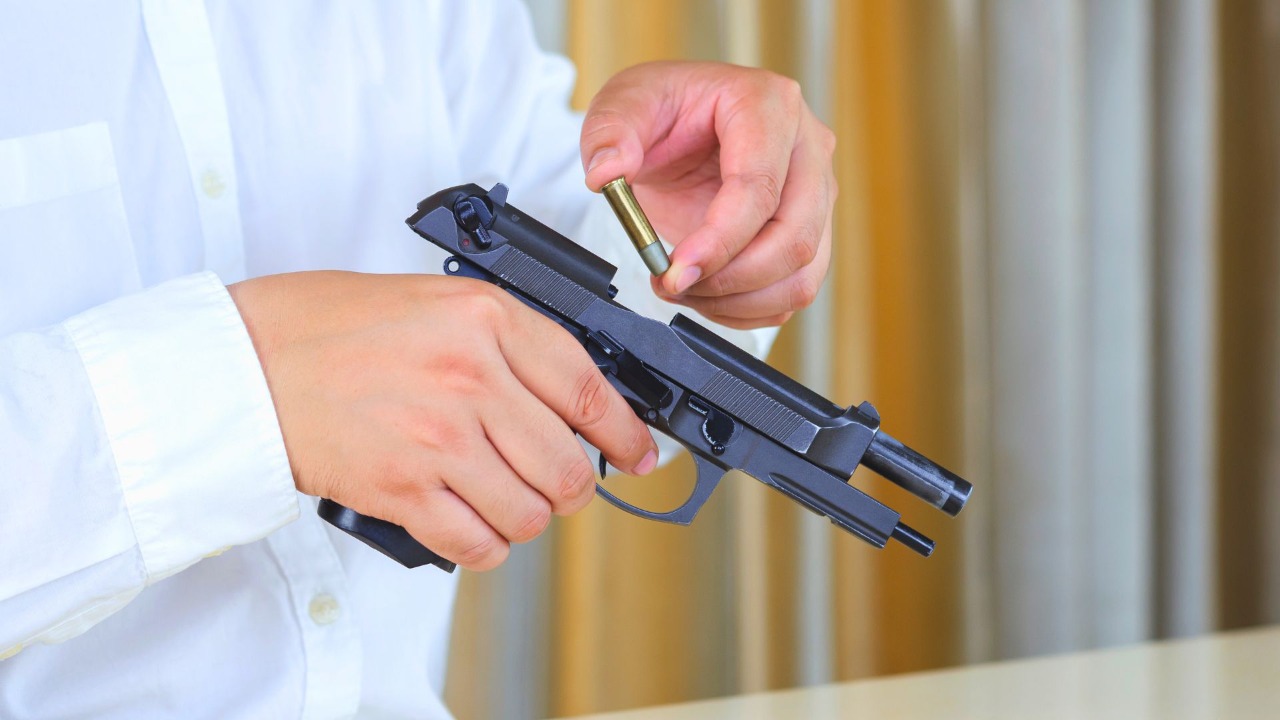
The first and most dangerous mistake is treating the four core safety rules as optional, especially inside the home. Many owners relax once they step away from a range, handling a gun they believe is unloaded or pointing it casually while cleaning or showing it to a friend. In reality, the safest approach is to always treat every firearm as if it is loaded, keep your finger off the trigger until you are ready to fire, and be certain of what is in front of and behind your target, even if you never intend to pull the trigger in your living room.
Training resources for new shooters stress that beginners often fail to comply with these fundamentals, especially when they handle a gun they believe to be unloaded, which is exactly when tragedies happen at home. One guide on common errors highlights how people forget to Not complying with the 4 rules of firearm safety, including the instruction to Treat every weapon as if it is loaded until you have cleared it. National guidance on safe gun handling reinforces that you should Always Keep the Muzzle Pointed in a Safe Direction and unload your gun as soon as you are finished, which applies just as much in a bedroom or garage as it does on a firing line.
Assuming “unloaded” means “safe”
Another widespread error is the belief that once a gun is unloaded, it can be left anywhere in the house without much thought. I see people tuck pistols into nightstands, closets, or under mattresses because they have removed the magazine and racked the slide a couple of times. That habit ignores the reality that ammunition can still be present, that someone else might load the firearm later, or that a visitor or child could discover it long after the owner has forgotten it is there.
Safety organizations warn that it is a grave mistake to simply toss a powerful weapon under a mattress or prop it up in a corner, even if you think it is empty, because you still need to handle your weapon with extreme care and be aware of what is in front of and behind it every time you pick it up. One practical guide for new owners notes that many gun accidents happen because people assume a firearm is unloaded when it is not, and that even a modern gun can refuse to fire when you expect it to or fire when you do not if it is mishandled. That is why experts emphasize that Handle your weapon with extreme caution at all times and that Many gun accidents happen because someone trusted their memory instead of physically checking the chamber.
Storing guns where kids can reach them
Leaving a firearm where a child can find it is one of the most common and devastating mistakes in gun owning households. Parents and grandparents often underestimate how curious kids are and how quickly they can locate a “hidden” handgun in a drawer, closet, or vehicle. I have heard countless versions of the same story, an adult who was sure a child would never look in a particular spot or did not think anything would happen, only to discover that assumption was catastrophically wrong.
Health and safety experts are blunt that safe gun storage means all guns in your home should be locked and unloaded, with ammunition locked separately, and that you must make sure children and teens cannot access the keys or combinations. Pediatric guidance stresses that Safe gun storage requires that All guns be locked and unloaded and that you Make sure kids cannot get to them anywhere on your property. A separate safety advisory focused on families with firearms underscores that you should Never store or handle a loaded firearm in your house or vehicle and never point a firearm at anyone, loaded or unloaded, even if you do not think anything would happen.
Relying on “teaching kids about guns” instead of secure storage
Many gun owners believe that if they teach their children to respect firearms, they can relax about locks and safes. I hear versions of this argument all the time, from “my kids grew up around guns” to “I took them to the range, so they know better than to touch one.” Education is valuable, but treating it as a substitute for physical barriers is a mistake that research has started to quantify.
One study on household practices found that those who taught their children how to shoot were 2.27 times more likely to store a gun unsafely, and that simply discussing firearm safety with children did not guarantee secure storage, especially when guns were also accessible to other relatives such as grandparents or other relatives. That is why both medical and firearms safety groups now stress that Both the American Academy of Pediatrics and the National Shooting Sports Foundation recommend that guns be stored locked and unloaded, with ammunition stored in a different locked location, regardless of how much you talk to your kids about guns. Public awareness campaigns like Public initiatives such as Be SMART, developed by Everytown, are built around that simple message, that education is important but secure storage is non negotiable.
Skipping real training and relying on confidence

Plenty of people buy a handgun for home defense and then never seek out formal instruction, assuming that common sense and a few YouTube videos are enough. That overconfidence leads directly to poor trigger discipline, sloppy muzzle control, and bad habits that feel normal because no one has ever corrected them. Inside a home, where walls are thin and family members are close, those habits can be lethal.
Training professionals warn that one of the Big Mistakes People Make When Carrying a Handgun is Poor Trigger Discipline, and that bad discipline turns a routine interaction into a potential tragedy. A separate guide for new owners lists Refusing to Take a Gun Safety Training course as the first mistake on its list, and notes that While guns can be useful safety tools, they are also extremely dangerous and must be handled and stored with strict attention to detail. I find that structured classes, whether through a local range or a community program, do more than teach mechanics, they build the muscle memory and mindset that keep you from making impulsive decisions in a dark hallway at three in the morning.
Using casual or improvised storage instead of real locks
Another mistake is treating a closet shelf, glove compartment, or desk drawer as “good enough” storage for a firearm that is not in your direct control. Owners often tell me they want quick access in an emergency, so they resist safes or lockboxes, but that tradeoff ignores the far more likely scenarios of theft, a child’s curiosity, or a visitor stumbling across a gun. Proper storage is not about making your life harder, it is about making unauthorized access nearly impossible.
Military family guidance on Storing guns safely is clear that you should Never leave a gun unattended, Unload firearms when not in use, and Remove all ammunition from the gun and its storage area unless you or another responsible adult is in direct control. A detailed brochure on STORING FIREARMS in a SAFE MANNER stresses that as a firearm owner, you must make absolutely sure that guns in your home are stored so that they are inaccessible to unauthorized persons, which in practice means using devices like cable locks, lockable gun cases, or lockboxes, not just a high shelf. Home safety advice for gun owners adds that below are recommendations for how to store firearms, including using safes, lockable gun cases, or lockboxes, and notes that Below are recommendations for how to keep guns secured even while balancing access.
Forgetting that kids learn about guns from everyone, not just you
Parents sometimes assume that if there are no guns in their own home, or if they have had a single safety talk, their children are insulated from risk. That overlooks how often kids encounter firearms at friends’ houses, in relatives’ vehicles, or online. I have seen families who do not own guns at all still face close calls because a child visited a home where a firearm was left out, and no one had prepared them for what to do.
Programs built around children’s safety emphasize that all adults can help keep kids safer by asking about secure gun storage before playdates and by normalizing conversations about how firearms are stored in homes and vehicles. One initiative spells this out with the message that All Adults Can Help Keep Kids Safer by storing guns so that they are inaccessible and by asking about secure gun storage. A related campaign aimed at schools notes that Be SMART for Kids materials are used in Be SMART presentations to educate the school community on secure gun storage, reinforcing that safety is a shared responsibility that extends beyond any single household.
Not using kid focused safety messages and drills
Even in homes with strong storage habits, adults sometimes skip age appropriate safety messages because they worry that talking about guns will make children more curious. In my experience, the opposite is true when the conversation is handled well. Kids who know exactly what to do if they see a gun, and have practiced that response, are less likely to treat a firearm as a toy or a secret.
One long running program from The National Rifle Association uses the Eddie Eagle character to teach children to stop, do not touch, run away, and tell a grown up if they find a gun, and a hunting safety resource notes that The National Rifle Association Eddie Eagle program and the National Shooting Sports Foundation distribute millions of firearm safety kits every year. I find that pairing those messages with household rules, like never touching a gun without an adult and always leaving if a friend shows one off, gives kids a script they can follow under stress instead of relying on impulse.
Overlooking mental health and suicide risk in storage decisions
Gun owners often think about burglars and home invasions when they decide how to store firearms, but they rarely factor in the risk of suicide by a family member or themselves. That blind spot can be deadly, because research has repeatedly shown that access to a firearm in a moment of crisis dramatically increases the chance that a suicide attempt will be fatal. I have spoken with families who never imagined a loved one would use a household gun on themselves, only to realize afterward that a simple lock or separate storage of ammunition might have slowed things down enough for someone to intervene.
Home safety guidance points out that there are even studies that show you are more likely to follow through with suicide if you have a gun available, and that because of this, secure storage is not just about preventing accidents, it is also about reducing the risk of impulsive self harm. One resource on gun safety at home notes that There are even studies linking access to higher suicide completion and that Because of this, owners should use safes, lockable gun cases, or lockboxes to add time and distance between a person in crisis and a loaded firearm. I see that as part of a broader responsibility to think about every person who might be affected by how a gun is stored, not just the hypothetical intruder.
Neglecting maintenance and assuming the gun will “just work”
Finally, many people treat their firearm like a fire extinguisher, something they buy once and then forget about until an emergency. That neglect can lead to malfunctions at the worst possible moment or to accidental discharges when worn parts fail. Inside a home, where a single unintended shot can travel through multiple rooms, assuming that a poorly maintained gun is safe simply because it has been sitting untouched is a serious mistake.
Training materials on carrying handguns warn that ignoring firearm maintenance is one of the Big Mistakes People Make When Carrying, since dirt, rust, or worn springs can change how a gun behaves. Legal analysis of accidental shootings notes that, in some cases, what people call an accidental discharge is treated as negligence, and that However many novice shooters are often on the wrong end of negligent discharge claims when they fail to maintain or handle their weapons properly. Safety campaigns timed to National Safety Month even encourage owners to use events like Gun storage check weeks, where Gun owners gain extra entries to sweepstakes by watching a video about gun safety rules and secure storage options, as a reminder to inspect both their storage setups and the condition of their firearms. I see regular cleaning, function checks, and review of safety rules as part of the same discipline that keeps a gun from ever becoming the source of a preventable tragedy at home.

Leo’s been tracking game and tuning gear since he could stand upright. He’s sharp, driven, and knows how to keep things running when conditions turn.