Putin fires Oreshnik missile – without nuclear warhead – prompting Nato to scramble fighter jets
Russia’s decision to fire an Oreshnik ballistic missile without a nuclear warhead at Ukraine has reignited fears of escalation along Nato’s eastern flank. The launch triggered a rapid response from allied air forces, which scrambled fighter jets as the projectile followed a path close to Nato-monitored airspace. The incident underlines how every Russian long-range strike now carries not only battlefield consequences for Ukraine but also direct security implications for the wider European alliance.
What happened
According to Ukrainian and Western tracking data, Russian forces included an Oreshnik missile in a larger barrage aimed at Ukrainian targets, using a conventional payload instead of a nuclear device. The Oreshnik is described in Russian military reporting as a high-speed ballistic system designed to penetrate air defences and reach targets in Europe, and its use in the current phase of the war signals Moscow’s willingness to test newer or less familiar weapons alongside established cruise and ballistic systems. Ukrainian air defence units detected the launch as part of a broader wave of strikes that also involved other long-range missiles and drones, forcing them to allocate interceptors against several threats at once while the Oreshnik followed a high-altitude trajectory that was harder to engage directly, according to Ukrainian reports.
Nato surveillance assets picked up the launch shortly after it left Russian-controlled territory, and the alliance’s integrated air defence network began tracking its flight path toward Ukrainian airspace. Because the Oreshnik is designed to carry either conventional or nuclear warheads, early warning systems treated the launch as a potential strategic event until telemetry and additional intelligence confirmed that the missile was not armed with a nuclear payload. In line with standard procedures for unidentified or potentially hazardous trajectories near alliance territory, Nato air forces ordered quick reaction alert fighters into the air to monitor the situation and stand ready to respond if the missile deviated toward member states.
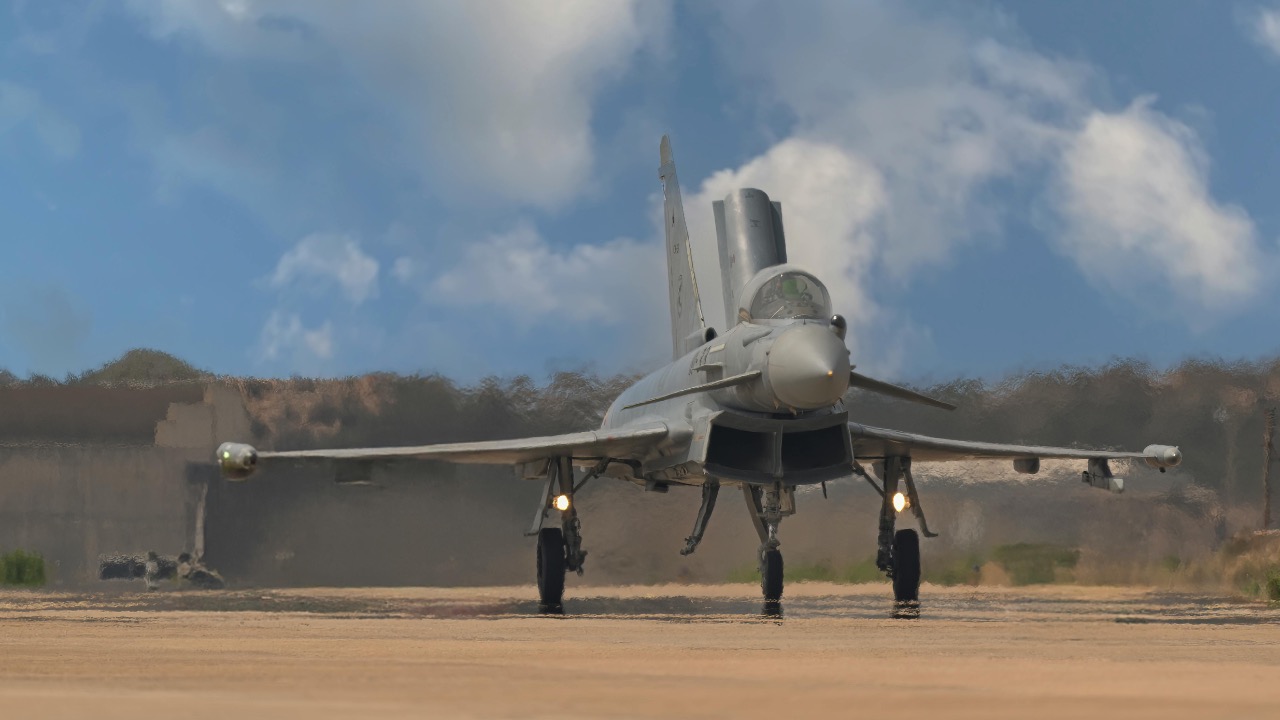
The scramble involved jets from air bases in countries along the eastern flank, where Nato has rotated additional aircraft since Russia’s full-scale invasion of Ukraine. Pilots were tasked with shadowing any Russian aircraft that might accompany the launch and with providing real-time visual confirmation of activity in contested air corridors over the Black Sea and near the borders of Poland, Romania, and the Baltic states. Alliance officials said the jets did not attempt to intercept the Oreshnik itself, which remained on a ballistic arc toward Ukrainian territory, but their presence was intended to deter any spillover incident and reassure member governments that the alliance was actively managing the risk.
On the ground in Ukraine, local authorities reported explosions and damage in several regions that were targeted as part of the same barrage. The Oreshnik’s conventional warhead was aimed at critical infrastructure and military facilities, fitting a pattern in which Russian planners combine newer ballistic systems with cruise missiles and drones to stress Ukrainian defences. Ukrainian officials did not publicly disclose whether this particular missile was intercepted or struck its intended target, but they described the overall attack as another attempt to degrade energy networks and logistics hubs that support front-line operations.
Military analysts noted that the Oreshnik launch followed earlier Russian tests and deployments of hypersonic and quasi-ballistic systems such as Kinzhal and Iskander, which have been used against both Ukrainian cities and military installations. The addition of Oreshnik to this arsenal further complicates Ukraine’s defensive calculus, since each system flies at different speeds and altitudes and demands different interception tactics. It also raises questions about Russia’s remaining stockpiles and production capacity, given that advanced ballistic missiles are expensive and time-consuming to manufacture compared with shorter-range artillery rockets.
Why it matters
Even without a nuclear warhead, the decision to fire an Oreshnik still carries strategic weight because it tests Nato’s detection and response mechanisms while keeping Moscow below the threshold of direct nuclear confrontation. The missile’s design parameters, which Russian sources describe as capable of reaching targets across Europe, mean that any launch is automatically treated as a potential threat to alliance territory until proven otherwise. That is why Nato radar operators and command centers reacted quickly and why fighter jets were scrambled even though the trajectory remained oriented toward Ukraine.
The episode fits into a broader pattern in which Russia uses advanced missiles to signal both military capability and political resolve. Earlier Russian deployments of hypersonic and ballistic systems against Ukraine prompted warnings that these weapons could also hold European capitals at risk, a concern repeated in recent analysis that highlighted how new Russian systems are intended to strike targets across the continent. One assessment of Russian missile development argued that systems like Oreshnik and Kinzhal are designed to reach deep into Europe and challenge Nato’s air defences, presenting a long-term threat to cities and bases far from the immediate front, as described in detail in coverage of Russian hypersonic capability.
For Ukraine, the use of Oreshnik in a conventional role adds another layer of pressure to an already stretched air defence network. Kyiv relies on a mix of Soviet-era systems and Western-supplied platforms such as Patriot and NASAMS to intercept incoming missiles. Each new type of Russian projectile forces Ukrainian operators to adapt engagement rules, allocate scarce interceptors, and refine radar tracking. When barrages include a blend of cruise missiles, Shahed-type drones, and ballistic systems like Oreshnik, defenders must decide in seconds which threats to prioritize, which can result in more damage on the ground even if the majority of incoming weapons are shot down.
For Nato, the incident underscores the risk of miscalculation on the alliance’s borders. A ballistic missile that veers off course or breaks up in flight could scatter debris into member states, triggering calls for a stronger response. The scramble of fighters in reaction to the Oreshnik launch mirrors earlier episodes in which Russian missiles or drones approached Nato airspace and led to heightened alert levels. In one previous case, alliance jets were launched after a Russian missile trajectory raised concerns about possible incursion, according to reporting on Nato air policing.
The political dimension is just as significant. Each high-profile missile launch allows the Kremlin to project an image of technological prowess to domestic and foreign audiences, even when the warhead is conventional. It also tests Western red lines and response times without crossing into the use of nuclear weapons, which would trigger a radically different set of consequences. For European governments, the repeated use of missiles that could theoretically carry nuclear payloads reinforces the argument for sustained investment in air and missile defence, from additional Patriot batteries to new sensor networks and hardened infrastructure.
There is also a messaging contest. Ukrainian leaders point to incidents like the Oreshnik launch as evidence that Russia is willing to risk broader regional instability to achieve battlefield gains, and they use these episodes to press for more advanced Western systems and munitions. Russian officials, by contrast, frame such launches as legitimate responses to Western support for Kyiv and as demonstrations that Nato cannot shield Ukraine from long-range strikes. The result is a cycle in which each missile barrage becomes both a military event and a propaganda tool, aimed at shaping perceptions in European capitals and beyond.
What to watch next
Several questions now shape how the Oreshnik episode might influence the next phase of the conflict. One is whether Russia will continue to use this missile in conventional roles or reserve it for occasional signaling strikes. If more Oreshnik launches follow, analysts will look for patterns in targeting, such as a focus on energy facilities, command centers, or transport hubs, which could indicate an evolving Russian strategy to grind down Ukraine’s resilience over the coming winter or summer seasons.

Leo’s been tracking game and tuning gear since he could stand upright. He’s sharp, driven, and knows how to keep things running when conditions turn.