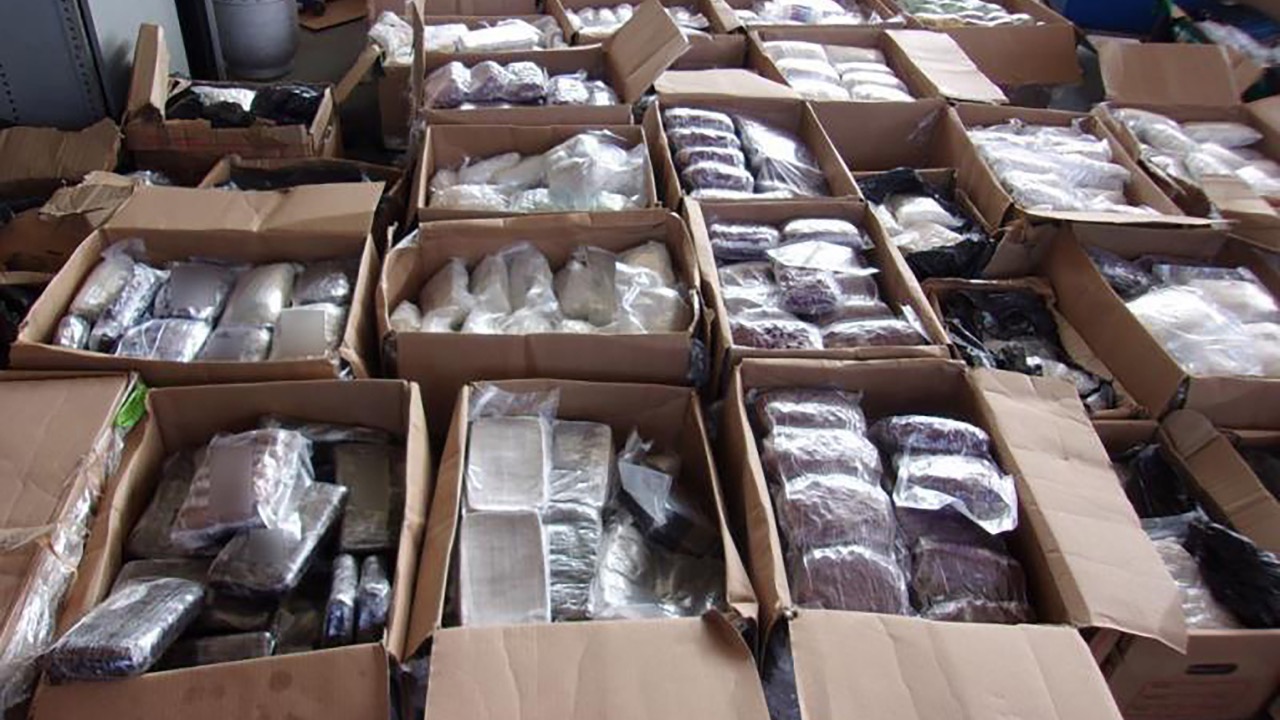
Record drug hauls expose vulnerabilities: Monks, truckers, and the booming smuggling routes
The latest wave of record drug seizures is forcing everyone to take a fresh look at how easily contraband slips through systems most people trust. In the past year alone, authorities have uncovered massive hauls that rely on everyday travel and transport rather than shadowy back channels. These cases show how smugglers adapt to legitimate pathways, whether through air travel or long-haul freight, and leave gaps that are harder to close than they first appear. As you follow these developments, the pattern becomes clear: the very routines of daily commerce and movement create openings that organized groups continue to exploit.
Sri Lankan monks return from Thailand with hidden cargo

Twenty-two young Buddhist monks from temples across Sri Lanka landed at Colombo’s main international airport on April 26, 2026, after a four-day trip to Bangkok. Customs officers found roughly 110 kilograms of a potent cannabis strain known as Kush concealed inside false compartments built into their suitcases. Each monk carried about five kilograms, making this the largest single seizure of the drug at the airport to date. Officials handed the group over to police for court proceedings the same day.
The monks, mostly students sponsored by a local businessman, had no prior public links to trafficking. Yet the discovery highlights how seemingly routine international travel can mask larger operations. Investigators are still piecing together who arranged the vacation and whether the monks knew about the contents. Similar airport stops in recent months had already raised questions about Bangkok as a transit point for high-value shipments heading elsewhere in Asia.
How religious travelers fit into smuggling patterns
Monks in saffron robes normally draw little scrutiny at borders or airports, which is exactly why they can become useful covers. In this instance, the group’s collective appearance and shared itinerary allowed the luggage to move as one unit through security checks. Authorities noted the false walls were professionally constructed, suggesting experienced handlers prepared the bags before the return flight. The haul’s size and method point to a calculated effort rather than an amateur attempt.
Regional history adds context. Past cases have involved individual monks in Myanmar and Thailand testing positive for methamphetamine or storing pills inside monasteries. Sri Lankan officials have stepped up airport screening after earlier busts involving tourists and commercial passengers on the same Bangkok route. The pattern suggests traffickers test different profiles—students, vacationers, even religious figures—to find which ones draw the least attention during routine inspections.
Truckers discover loads they never agreed to carry
Commercial drivers spend long hours on the road, often stopping at the same rest areas and truck stops night after night. That predictability creates windows for outsiders to tamper with trailers when rigs sit unattended. One driver in Indiana noticed his trailer seal had been cut and replaced during a routine pre-trip check. Instead of proceeding, he alerted police right away. Officers opened the trailer and found ten extra boxes containing 350 pounds of cocaine valued at around 16 million dollars.
The driver faced no charges and cooperated fully with investigators. Police described the incident as one of the largest cocaine seizures in state history. Months later, they were still searching for whoever loaded the contraband while the truck sat at the Pilot Travel Center in Whiteland. Cases like this show how smugglers treat legitimate rigs as temporary storage, counting on the driver to move the goods without realizing what is inside.
Organized rings turn semi-trucks into cross-border pipelines
Federal probes have dismantled networks that treat long-haul trucking companies as their own logistics arm. In one operation spanning the United States and Canada, investigators traced hundreds of kilograms of cocaine and methamphetamine moving from suppliers in Mexico through Los Angeles and then north across multiple border crossings. Canadian-based drivers coordinated with dispatchers who met them briefly in U.S. cities before the loads continued to final destinations.
The ring used established trucking firms and standard routes, including the Detroit-Windsor Tunnel and Buffalo Peace Bridge. Handlers loaded drugs into hidden compartments or swapped cargo at truck stops. FBI arrests in early 2024 targeted drivers, dispatchers, and wholesale buyers connected to Italian organized crime in Montreal. The scheme relied on the sheer volume of legitimate freight traffic to blend illegal shipments into daily commerce. Similar rings continue operating along the same corridors, adjusting tactics after each bust.
Ports and highways keep offering new entry points
Smugglers favor commercial freight because containers and trailers move in such high numbers that full inspections remain impractical. At busy border crossings and major truck stops, the flow of rigs creates constant opportunities to add or swap loads. Recent seizures along U.S. interstates and at Canadian ports show how quickly groups pivot from one route to another once authorities focus attention on a single location.
Coast Guard and customs teams have also reported rising activity at seaports tied to the same networks feeding inland trucking. The volume of legitimate trade masks the smaller percentage of tainted shipments. Drivers rarely inspect every pallet or compartment themselves, especially when schedules are tight and paperwork looks clean. This built-in efficiency works in the traffickers’ favor, turning routine supply chains into reliable distribution channels.
Everyday routines expose cracks in the system
You see the same vulnerabilities repeated across these cases: reliance on trust, limited physical checks, and the assumption that most travelers or drivers have nothing to hide. Airports scan luggage quickly when groups present matching tickets. Truck stops operate 24 hours with minimal surveillance between arrivals and departures. Officials acknowledge that scaling up inspections at every point would grind legitimate travel and commerce to a halt.
The recent hauls involving monks and unwitting truckers illustrate how smugglers study these routines and insert themselves into them. They count on the fact that most people—whether religious travelers or professional drivers—follow predictable patterns. Law enforcement responds with better technology and intelligence sharing, yet the sheer scale of global movement keeps creating new openings faster than they can close old ones.
Authorities push back with targeted operations
Sri Lankan customs has increased random checks on flights from Bangkok and begun deeper background reviews of group travel. In the United States and Canada, joint task forces focus on trucking companies with repeated border crossings or unusual routing patterns. The FBI and DEA continue wiretap investigations that map entire supply chains rather than isolated drivers or mules.
These efforts have led to arrests and large seizures, yet the record hauls keep appearing. Each new bust reveals how quickly networks adapt, whether by recruiting different couriers or refining concealment methods. The challenge lies in balancing security with the free flow of people and goods that economies depend on. For now, the cases serve as reminders that vigilance at every level—from individual drivers to international agencies—remains essential.

Asher was raised in the woods and on the water, and it shows. He’s logged more hours behind a rifle and under a heavy pack than most men twice his age.