Ryan Routh sentenced to life in prison for Trump assassination plot
Ryan Wesley Routh has been ordered to spend the rest of his life in federal prison for plotting to kill President Donald J. Trump during a 2024 visit to a Florida golf course. The case, which grew out of a foiled sniper-style attack near West Palm Beach, has become a stark example of how the justice system responds when political rage crosses into lethal violence. The life term, coupled with additional years behind bars, signals that federal authorities view the attempted assassination of a sitting president as an offense that leaves virtually no room for leniency.
Routh’s sentencing caps a prosecution that detailed months of preparation, a cache of weapons, and a plan that prosecutors said went far beyond protest or heated rhetoric. Jurors agreed, convicting him on every major count tied to the attempt on President Trump’s life, and a federal judge concluded that only the harshest punishment could match the gravity of what he set out to do.
The life sentence and what it means
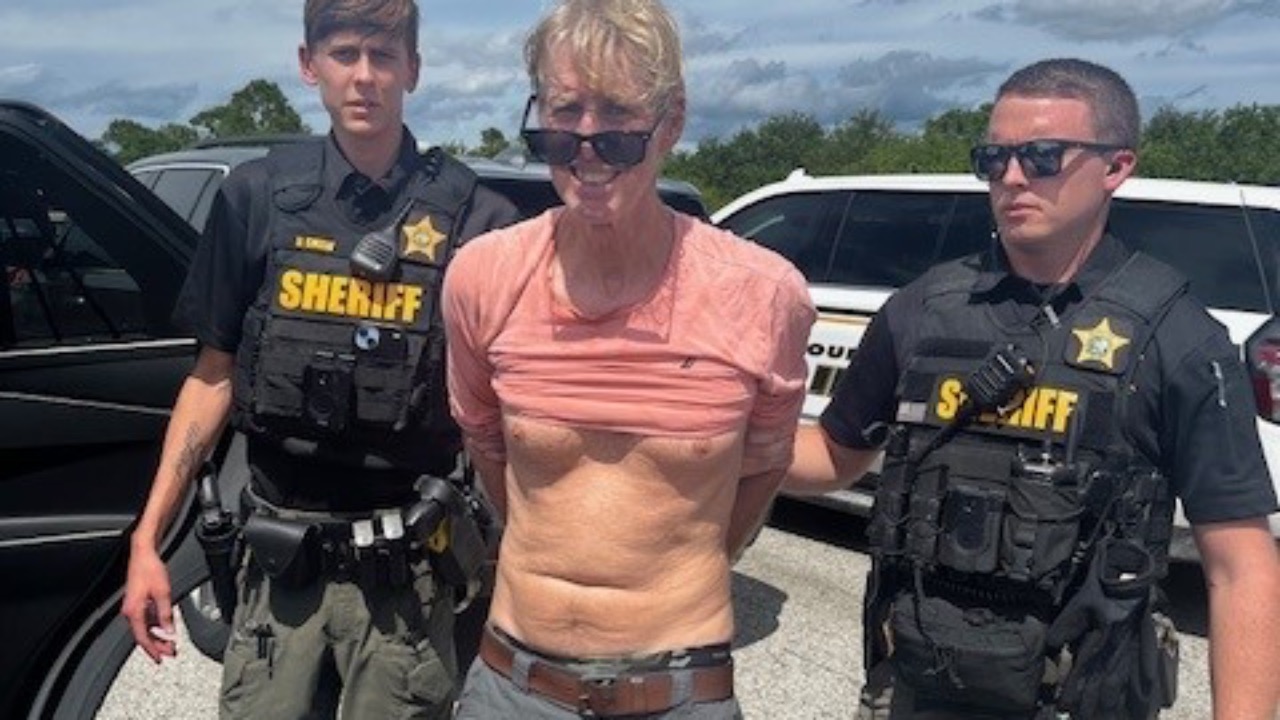
Federal officials have framed the punishment as a clear message that targeting the president will be met with the most severe penalties available under law. According to the Department of Justice, Ryan Wesley Routh, who is 59, received a life term in prison for attempted assassination of President Donald J. Trump and for assaulting federal law enforcement officers, after being convicted on all counts in the indictment, including firearms and obstruction charges tied to the plot at the Florida golf course attempted assassination. Prosecutors argued that anything less than life would undercut the seriousness of trying to kill the sitting president and would fail to deter others who might be tempted to turn political grievances into violence.
The sentence did not stop at life. Court records and law enforcement summaries indicate that Routh was also ordered to serve an additional seven years in prison, reflecting separate counts related to weapons and the assault on federal agents who confronted him near the course in West Palm Beach life plus seven. That structure ensures that even if some portion of the life term were ever revisited on appeal, the extra years would still keep him incarcerated for the foreseeable future, underscoring how thoroughly the court moved to neutralize any future threat he might pose.
How the plot unfolded at the golf course
The attempted killing took shape around President Trump’s regular outings at his golf club near West Palm Beach, Florida, where he was spending time in late 2024. Investigators said Routh traveled to the area and positioned himself near the course with a rifle fitted with a scope, choosing a vantage point that gave him a clear line of sight toward the fairways where the president was expected to play rifle fitted. The plan, as prosecutors described it, was to wait for Trump to appear in the open and then fire from a concealed location, using distance and terrain to his advantage.
That plan collapsed when Secret Service agents and other federal officers spotted suspicious activity near the course and moved in. Routh was taken into custody close to the perimeter of the property, and authorities later detailed how he had brought not only the scoped rifle but also additional ammunition and equipment that suggested careful preparation rather than a spontaneous act agents spotted. The rapid intervention meant the president was never in direct line of fire, but the proximity of an armed attacker to the commander in chief on a relatively open golf course rattled security officials and underscored the vulnerability of such public-facing routines.
Inside the investigation and arrest
Once Routh was detained near the course, the case quickly shifted from a security scare to a sprawling federal investigation. Agents from the Bureau of Alcohol, Tobacco, Firearms and Explosives, along with the Secret Service and FBI, traced the weapons and gear he carried, building a picture of how he had acquired the rifle, scope, and other materials used in the attempted attack ATF investigation. Investigators also combed through his travel records and digital footprint, looking for signs of coordination or support from others, but the case that emerged in court centered on Routh as a lone actor driven by his own political and ideological motivations.
Publicly available accounts of the arrest describe a tense confrontation in which federal officers approached Routh after noticing his position and equipment near the course. He was taken into custody without shots being fired, but prosecutors later emphasized that he had already moved into a firing position and that the only reason President Trump was not harmed was the vigilance of the agents on the ground arrested on scene. That narrative, backed by physical evidence and testimony, became central to the government’s argument that the crime was not an abstract threat but a narrowly averted assassination.
The charges, trial, and conviction
From the outset, prosecutors pursued the most serious charges available, including attempted assassination of the president, assault on federal law enforcement officers, and multiple firearms offenses. The Justice Department’s formal announcement stressed that Routh was convicted on every count in the indictment, a clean sweep that reflected how thoroughly the jury accepted the government’s version of events and rejected any suggestion that his actions fell short of an actual attempt to kill President Trump convicted on all. The attempted assassination charge alone carried a potential life sentence, and the additional counts ensured that even if one element were challenged, others would still support a lengthy term.
The trial itself unfolded in federal court in Florida, with jury selection beginning in early September and testimony stretching across days of detailed evidence about Routh’s movements, weapons, and statements before and after his arrest trial began. Jurors heard from Secret Service agents who described spotting him near the course, from firearms experts who analyzed the rifle and scope, and from investigators who traced his planning. By the time the verdict was read, the panel had been presented with a narrative of premeditation and intent that left little room for ambiguity, setting the stage for the life sentence that followed.
What we know about Ryan Wesley Routh
Routh’s background has drawn intense scrutiny, both for what it reveals about his path to radicalization and for what it suggests about the warning signs that preceded the attack. Official documents identify him as Ryan Wesley Routh, age 59, a man who had become increasingly consumed by global conflicts and domestic politics in the years leading up to the assassination attempt Ryan Routh. In court, he was portrayed as someone who had moved beyond protest or advocacy into a belief that violence against the president was a legitimate response to world events.
Social media posts and courtroom statements highlighted his fixation on conflicts abroad, including the wars in Ukraine and Gaza, which he cited as part of his justification for targeting President Trump Ukraine and Gaza. At sentencing, he reportedly spoke about his outrage over those crises and framed his actions as a response to what he saw as failures of U.S. policy, a rationale the judge and prosecutors flatly rejected. That mix of personal grievance, international anger, and domestic political animus has fueled broader debates about how online discourse and global events can feed into homegrown plots against national leaders.
Inside the sentencing hearing
The sentencing hearing offered a rare, unfiltered look at how the justice system weighs intent, remorse, and risk in a case involving the president’s life. U.S. District Judge Aileen Cannon, who presided over the trial, described Routh’s actions as a premeditated effort to kill President Trump, emphasizing that he had taken concrete steps to carry out the plan and was thwarted only by the intervention of federal agents judge’s assessment. She noted that the law provides legitimate avenues to oppose a presidential candidate or officeholder and that Routh had chosen instead to pursue murder, a line that prosecutors echoed in their own remarks.
Routh, who represented himself at trial, used the hearing to argue for a fixed term of years rather than life, suggesting that a shorter sentence would be sufficient punishment and allow for the possibility of eventual release asked the judge. Prosecutors countered that his lack of genuine remorse, his willingness to embrace violence as a political tool, and the sophistication of his planning all pointed toward a continuing danger. The judge ultimately sided with the government, concluding that a life sentence, plus the additional seven years, was the only proportionate response.
Motives, ideology, and the line between protest and violence
Routh’s own words have become central to understanding why this case has resonated far beyond the courtroom. During the proceedings, he reportedly declared that “sadly, execution is not an option,” a chilling statement that prosecutors cited as evidence of his desire to see President Trump dead and his frustration that the legal system could not impose capital punishment for his crimes “sadly, execution”. He also tied his actions to global conflicts, saying he was outraged by the situations in Ukraine and Gaza and suggesting that killing the president was, in his view, a way to respond to those crises.
Federal prosecutors pushed back hard on that framing, arguing that there are legitimate ways to oppose a presidential candidate or sitting president, including protest, advocacy, and voting, but that murder is not one of them legitimate ways. That distinction, drawn sharply in court, speaks to a broader concern among law enforcement and political leaders about how heated rhetoric and global grievances can be weaponized into domestic plots. By treating Routh’s ideology as an aggravating factor rather than a mitigating one, the court signaled that political anger does not excuse or soften the crime of attempting to assassinate the president.
Security lessons for protecting President Trump
The near miss at the golf course has prompted renewed scrutiny of how the Secret Service and other agencies protect President Trump during relatively open, routine activities. Golf outings, by their nature, involve long stretches of open terrain, predictable routes, and sightlines that can be exploited by someone with a rifle and scope, as Routh attempted to do near West Palm Beach golf course attack. The fact that agents detected and intercepted him before he could fire has been cited as proof that existing protocols work, but it has also raised questions about how those protocols might need to evolve as threats grow more sophisticated.
Security experts point to the Routh case as an example of how a determined individual, acting alone, can still pose a serious risk even in heavily guarded environments. The Secret Service’s ability to spot him, assess the threat, and move in quickly prevented what could have been a catastrophic breach, yet the proximity of an armed attacker to the president underscores the need for constant adaptation in protective strategies golf course security. In the wake of the sentencing, officials have framed the case as both a validation of their response and a warning that the threat environment around President Trump remains volatile.
Public reaction and the broader climate of political violence
The life sentence has landed in a country already grappling with rising concerns about political violence and the safety of public officials. Many Americans learned of the case through short clips and posts that described Ryan Routh as the man accused of trying to assassinate President Trump at a Florida golf course, a narrative that quickly spread across social media and traditional news outlets alike man accused. For supporters of the president, the sentencing has been seen as overdue accountability for someone who tried to overturn the will of voters through violence. For others, it has prompted renewed debate about how political rhetoric, online radicalization, and global conflicts intersect in the minds of would-be attackers.

Asher was raised in the woods and on the water, and it shows. He’s logged more hours behind a rifle and under a heavy pack than most men twice his age.