Scientists set 300 cameras in remote mountains — what they captured stunned researchers
When conservationists scattered 300 motion-sensitive cameras across a remote Asian mountain chain, they expected to document a handful of shy forest mammals clinging on in damaged habitat. Instead, the memory cards came back packed with images of animals that many biologists feared had already vanished from the region. The project did more than surprise its own researchers; it revealed a hidden stronghold of rare wildlife and a new way of seeing one of the world’s most threatened forests.
By quietly recording every creature that wandered past, the camera traps exposed both the richness and the fragility of these mountains. The footage captured elusive hoofed mammals, secretive carnivores and even a few species so scarce that some field teams had never seen a living individual. This experiment reads as a case study in how simple technology, used at scale and with local support, can reshape our understanding of biodiversity before it is lost.
The remote mountain range scientists targeted
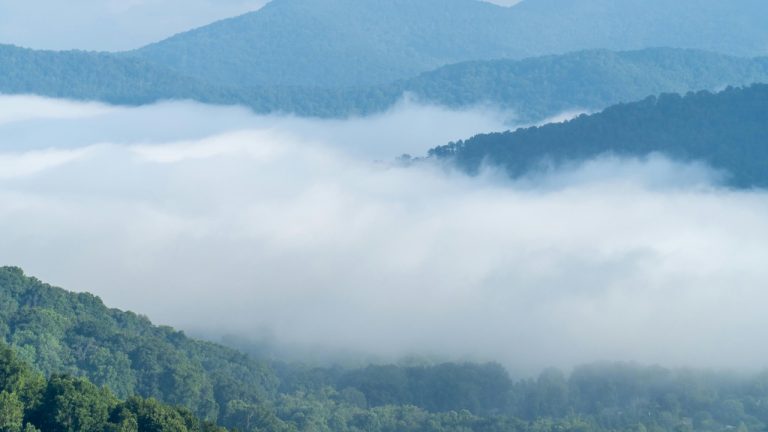
The cameras were deployed across the Annamite Mountains, a long spine of forested peaks that runs along the border of Laos and Vietnam and reaches into parts of Cambodia. This region, sometimes shortened to the Annamites, is known among biologists for steep slopes, dense evergreen forest and deep river valleys that have isolated wildlife populations for millennia. Those same features that make the area hard to reach for people have allowed some animals to survive here after disappearing from more accessible lowlands.
On satellite maps and regional surveys, the Annamite Mountains appear as a green band squeezed between more heavily settled parts of Southeast Asia. Conservation groups describe them as one of the last large blocks of forest in this part of the world, but also as an area under growing pressure from roads and hunting. That combination of isolation and threat convinced researchers that any remaining large mammals would be concentrated here, if they existed at all.
Why researchers blanketed the forest with 300 cameras
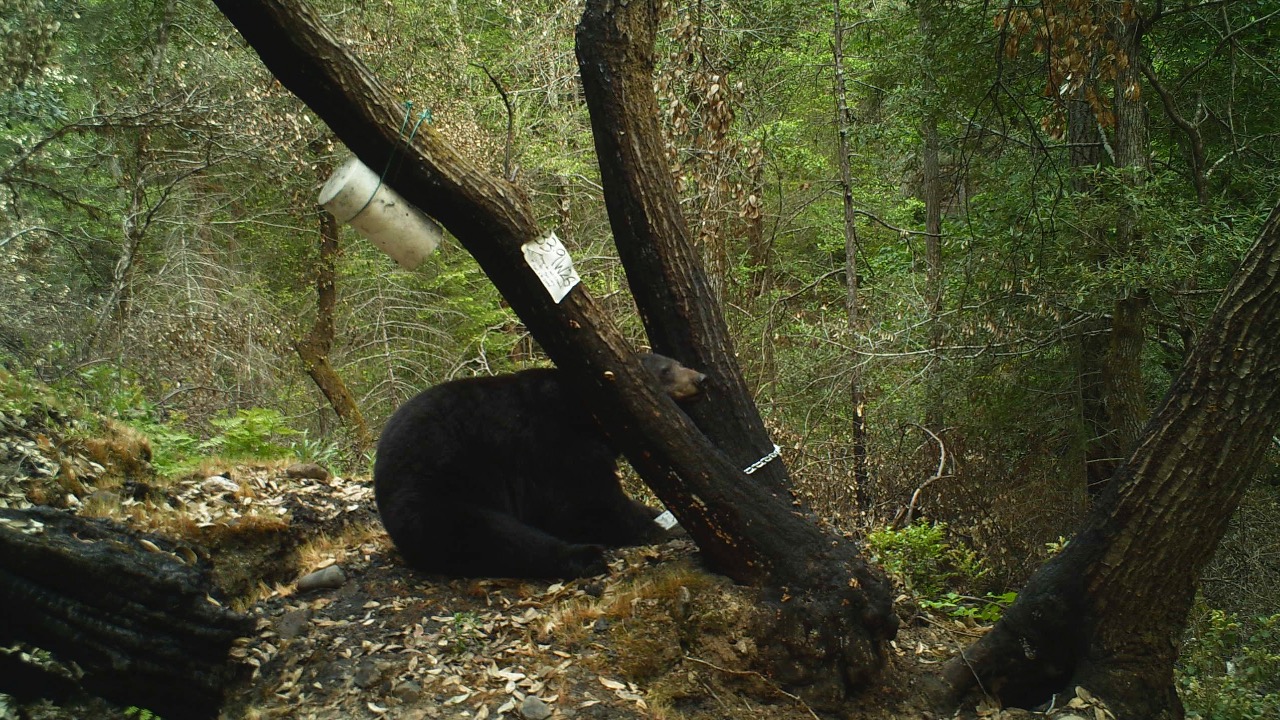
Biologists had spent years walking these ridges and valleys and still struggled to see the animals they were looking for, so they turned to a more patient observer. Rather than relying on chance encounters, they set up a grid of camera traps that could work day and night and record every passing creature whether or not a human was nearby. The decision to use exactly 300 devices was not symbolic; it reflected the scale needed to cover multiple watersheds, altitudes and habitat types across the range.
One report describes how teams placed 300 cameras across to capture footage of wildlife that rarely shows itself to people. Another account notes that conservationists set up more than 300 camera traps in three locations in the north, south and central parts of the range to study what still survives there. Together these descriptions paint a picture of a coordinated, large-scale survey rather than a handful of isolated cameras hung along a trail.
A “phantom of the forest” steps into frame
Among all the clips and still images, one animal in particular captured the imagination of the field teams. The cameras recorded a serow, a stocky, goat-like ungulate with coarse fur and short horns that has earned the nickname “phantom of the forest” because of how rarely it is seen. In the Annamite Mountains, serows live on steep, rocky slopes and tend to move at dawn and dusk, which makes them especially hard to spot during traditional surveys.
Coverage of the project describes this serow as a mystical presence in remote Asian mountains, turning up on film only after months of quiet monitoring. One detailed piece on serow in the explains that the species is among the rarest animals in the world and that even experienced local rangers can go years without a direct sighting. For scientists, seeing this animal calmly walking past a camera, rather than fleeing from people, confirmed that parts of the range still function as a refuge.
Other rare mammals caught by surprise
The serow was not the only forest heavyweight to wander into view. The survey also documented a suite of other large and medium-sized mammals that had declined sharply elsewhere in Southeast Asia. Among the most eye-catching was the gaur, a massive wild bovine that can stand taller than a domestic cow and that now survives in fragmented pockets from India to Malaysia. For field biologists who had learned about gaur from field guides rather than fieldwork, seeing one on screen in these mountains was a powerful moment.
One account of similar camera trap work describes how Another rare treat, a species that now appears in isolated herds between India and Malaysia. In the Annamites, the presence of such a large grazer hints at intact grass openings and forest edges that can support heavy animals, and it suggests that hunting pressure, while serious, has not yet removed every big-bodied species from the system.
Predators, hoofed mammals and the food web they reveal
Camera trap images did not stop at herbivores. Across the Annamites and in comparable tropical forests, similar networks of cameras have revealed predators and prey sharing the same trails at different hours. In Costa Rica’s Osa Peninsula, for example, a dense grid of devices recorded jaguars, pumas, Baird’s tapirs, agoutis, armadillos and falcons using the same forest corridors. That mix of big cats, large herbivores and smaller seed eaters shows how a full community of animals can still function when enough habitat remains.
One account of work in Central America notes that footage captured numerous, including Baird’s tapirs and big cats, in a single protected region. The Annamite cameras are revealing a similar pattern, with hoofed mammals like serow and gaur, smaller forest ungulates and carnivores all appearing in the same general zones. For ecologists, that kind of footage is a sign that the underlying food web is still operating, even if poaching and habitat loss are chipping away at its edges.
How poaching and snares shape what the cameras see
The mountain forests that produced these surprising images are also among the most heavily hunted in Asia. Large and medium-sized mammals in the Annamites are threatened by intensive poaching, often carried out with wire snares that can be set by the thousands and left unattended. These cheap, simple traps do not discriminate; they catch anything that steps into them, from barking deer to rare bovids, and they can empty a valley of wildlife in a few seasons.
Researchers working on critically endangered species in the region describe how Large and medium-sized have been pushed toward extinction by this snaring crisis. Camera traps pick up the results of that pressure, not only in the form of missing species, but also as clips of limping animals with snare scars or images of poachers themselves walking the same paths as wildlife. The fact that any rare mammals still appear in the footage is a sign of resilience, but also a warning that without stronger protection, the next survey could find only empty trails.
What other camera trap projects reveal about hidden strongholds
The Annamite survey is part of a wider shift toward using trail cameras as a core conservation tool. In Myanmar’s Htamathi Wildlife Sanctuary, for example, a network of devices recorded the world’s rare endangered species, including the Bengal tiger and the Malayan sun bear, as well as smaller cats such as Pardofelis temminckii. Those images confirmed that this protected area still shelters at least 23 mammal and 5 bird species and that it functions as a vital refuge in a country where forest loss has been rapid.
Reports from Htamathi describe how camera traps recorded, including Bengal tiger and Malayan sun bear, along with Pardofelis temminckii, among many other wild animals. That kind of detailed species list, drawn from silent cameras rather than direct sightings, gives park managers concrete evidence to justify funding and stronger enforcement. It also suggests that other remote sanctuaries in the Annamites could be harboring similar pockets of globally important wildlife that will only be documented if cameras are deployed at scale.
The human side of a high tech survey
Although the story often centers on the hardware, the success of the Annamite project depended just as much on people. Local rangers and community members helped carry equipment into the forest, chose safe locations for each device and returned to swap out memory cards under challenging conditions. Their knowledge of animal trails, salt licks and seasonal movements made the difference between empty frames and the kind of rich footage that later stunned researchers in distant offices.
One detailed account of the project notes that Bizarre sights unfolded recorded from the Annamite mountain forests, with animals that usually avoid people strolling past and sometimes even pausing to sniff the cameras. Those moments were only possible because field teams had patiently maintained the equipment for months in heat, rain and leech-filled undergrowth. In that sense, the camera network is as much a story of human persistence as it is of technological ingenuity.
What the footage means for the future of the Annamites
Viewed together, the evidence from these projects shows a mountain range at a crossroads. On one hand, the presence of serow, gaur and other large mammals demonstrates that the Annamites still function as a living refuge, not just a green patch on a map. On the other, the documented impact of snares and the spread of access roads suggest that this refuge could shrink rapidly if protection does not keep pace with exploitation.
Regional overviews describe how the remote Asian mountains of the Annamites and nearby protected areas such as Cambodia’s Virachey National Park still hide some of the rarest animals on Earth. The cameras have shown that these are not just stories or old records, but living populations that still move through the forest at night. Whether future surveys capture more of those animals or only empty paths will depend on how quickly governments, communities and conservation groups act on what the footage has revealed.

Leo’s been tracking game and tuning gear since he could stand upright. He’s sharp, driven, and knows how to keep things running when conditions turn.