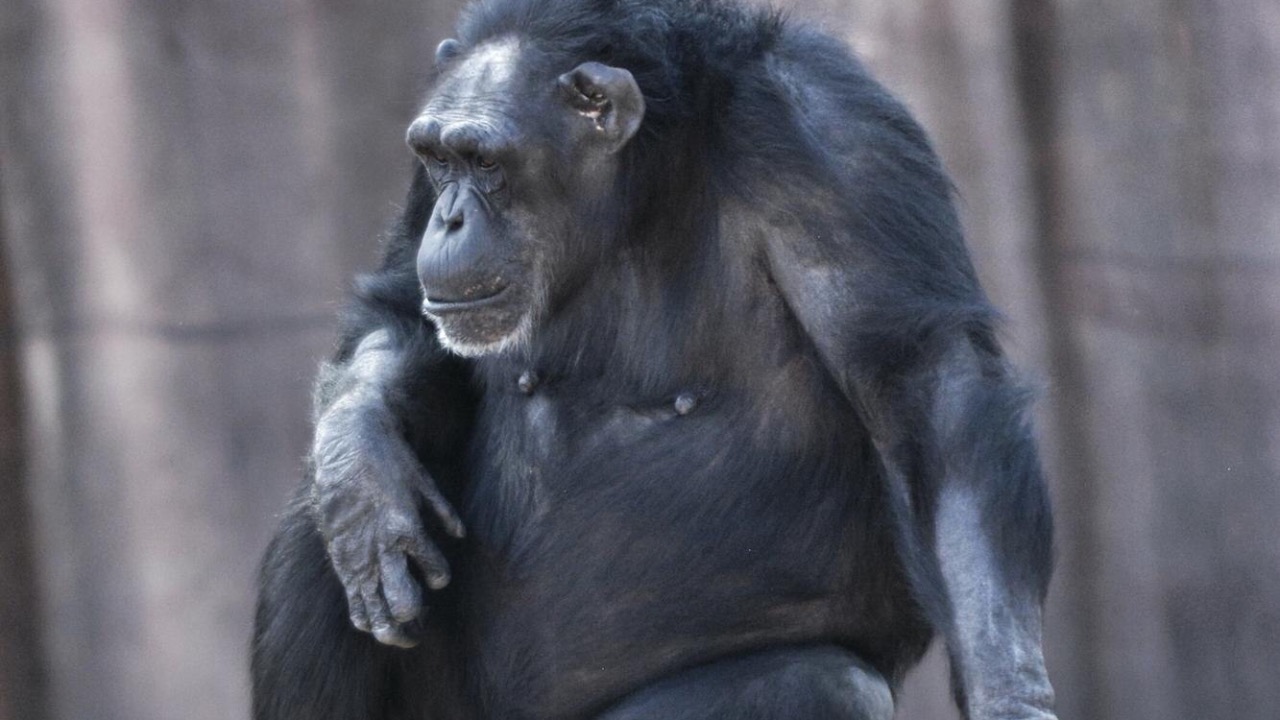
The largest chimpanzee ever recorded — and how big it actually was
Stories about giant apes have long gripped the human imagination, from movie monsters to online rumors about supersized chimps stalking remote forests. Among those tales, one claim stands out: that the largest chimpanzee ever recorded rivaled a gorilla in size. Sorting myth from measurement reveals a more interesting reality, where real animals, careful fieldwork and a few misunderstood numbers collide.
The record for a truly huge chimp turns out to be less about a single freak specimen and more about a distinctive population in a remote corner of Central Africa, the so‑called Bili or Bondo apes. To understand how big they really are, it helps to start with what an ordinary chimpanzee looks like on paper.
What counts as a “normal” chimpanzee size
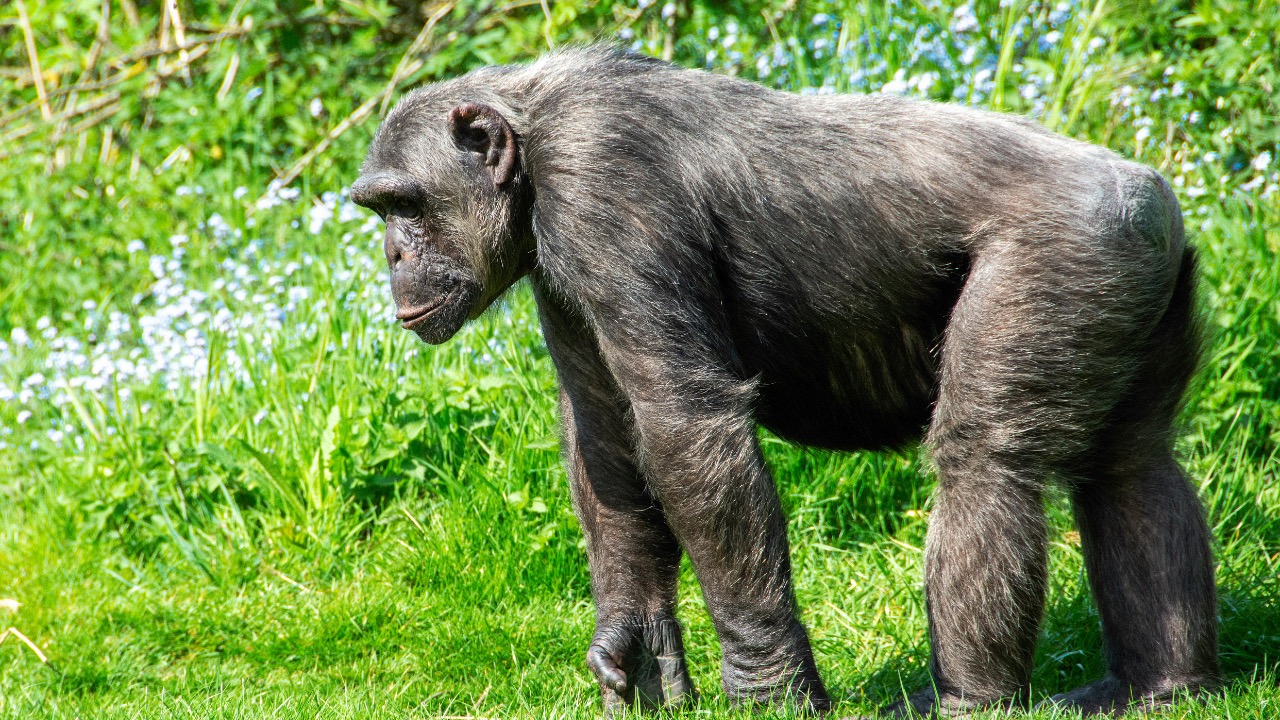
Modern chimpanzees, classified in the genus Pan, are already powerful by human standards. General references on the chimpanzee describe a medium sized great ape with long arms, robust shoulders and a relatively short trunk. Males and females differ noticeably in size, a pattern biologists call sexual dimorphism.
Detailed measurements from wildlife databases list adult body length, measured from head to rump, between 635 and 925 mm, and note that Physical Description entries emphasize how much of that length is concentrated in the torso rather than the legs. When standing upright, a typical adult does not match a tall human, but the torso and arms pack dense muscle that makes even a relatively short chimpanzee extremely strong.
Other summaries of the species, including zoo profiles and field guides, describe males that can weigh from 57 to 110 pounds, with one comparison noting that Size Chimpanzees stand about 150 cm when fully upright. These are averages, not records, but they set the baseline for what biologists expect in the wild.
How big do wild populations usually get
Within that overall pattern, there are clear regional differences. The common chimpanzee, Pan troglodytes, is split into several subspecies that occupy different parts of equatorial Africa. Conservation profiles for the common chimpanzee describe these subspecies and stress that habitat quality, diet and hunting pressure all influence body size.
Central chimpanzees are often cited as the largest subspecies. A focused account of the Size, Weight, Lifespan, chimpanzee reports average males around 130 cm tall when standing, with weights that can exceed 130 pounds in well fed adults. That already pushes the upper limit of the general ranges given for the species as a whole.
Eastern populations have their own profile. Overviews of eastern chimpanzees describe animals that are slightly more slender on average, although still muscular and capable of walking bipedally for short distances. This is the subspecies that becomes central once the story shifts to the forests around Bili in the Democratic Republic of the Congo.
Where the Bili or Bondo apes fit in
For decades, hunters and villagers around Bili and Bondo in northern Congo spoke about unusually large apes that nested on the ground and had a reputation for killing lions. Online forums picked up the tale, with one widely shared post describing a Bondo or Bili ape as a giant species of Chimpanzee from the Congo growing to the size of a Gorilla.
Early popular accounts leaned into that framing, suggesting a mysterious new species. Genetic work told a different story. A summary of the Genetic testing explains that DNA from these apes matched the eastern chimpanzee, Pan troglodytes schweinfurthii, rather than a new taxon. In other words, they are chimpanzees with some unusual traits, not a separate giant ape.
Even so, field teams who reached the region reported that these chimps really do look big. A conservation post focused on the Congo population describes them as substantially larger than their eastern chimp cousins and notes that they are commonly seen walking upright. The same account states that they can stand up to 5.5 feet tall and leave footprints larger than those of a gorilla, and mentions a gorilla like prominent brow ridge that makes their faces distinctive.
The numbers behind “the largest chimpanzee ever”
So how does that translate into a record? Coverage that focuses on Bili Apes as a distinct topic points out that ordinary Chimpanzees typically only grow to reach a maximum of 5.5 feet tall, and that males can reach about 150 pounds. One overview titled Bili Apes specifies that figure and ties it directly to the question of whether these apes are the largest chimpanzees ever documented.
Another section in the same source, labeled The Average Chimpanzee, repeats that Chimpanzees typically only grow to reach a maximum of 5.5 feet tall and notes that Chimps are sexually dimorphic, with males heavier than females. The key point is that the reported maximum height for the Bili population sits at the very top of the species range, not outside it.
That suggests that the largest individual Bili chimpanzees probably weigh somewhere around the top of the known male range, in the neighborhood of 150 pounds or slightly more. A Reddit discussion about how tall chimpanzees can get mentions a 4 foot 10 inch animal at 220 pounds as massive, with one commenter remarking that They are part of the GREAT APES for a reason. That anecdote falls in a similar bracket: very large for a chimpanzee, but still far from gorilla size.
Mythmaking, lion killers and ground nests
Part of what inflated the legend of the Bili apes was behavior as much as body size. Reports from the region describe them nesting on the ground, which is unusual for chimpanzees that typically sleep in trees. A long running rumor also claims they routinely kill lions, a reputation that one explainer on Bili apes credits with adding to their mystique.
Researchers who have spent time in the area suggest a more grounded picture. The same conservation post that highlights their size also notes that researchers speculate the population is inbred, which could explain some of the distinctive skull features and behavior. It also stresses the immediate threat from poachers who began entering the area around 2007, reporting that adults have been killed for meat while babies are sold in local markets. Those details anchor the story in conservation reality rather than cryptid folklore.
How Bili apes compare to other great apes
Putting the largest Bili chimpanzees in context means looking at other primates. A general entry on the Chimpanzee notes that humans, gorillas, orangutans and chimpanzees are all great apes, but they occupy different size classes. Lists of the Largest non human primates place gorillas and orangutans above chimpanzees in both height and mass.
Fossil apes stretch the scale even further. Articles on ancient species explain that Gigantopithecus blacki, often shortened to Gigantopithecus, may have stood close to 10 feet tall and weighed around 600 pounds. A separate discussion framed as What Was The repeats that Gigantopithecus is the largest ape that ever lived. Against that backdrop, even the most imposing modern chimpanzee is a mid sized primate.
The contrast also highlights how modest the Bili claims look once numbers are checked. A 5.5 foot, 150 pound chimpanzee is impressive, but it is still significantly smaller than a large male gorilla and far from any fossil giant. The idea that a Bili ape is “the size of a Gorilla” reflects perception in the forest rather than strict measurement.
Why the record matters for conservation
Arguing over the largest chimpanzee ever recorded might sound like trivia, but it carries real stakes. Conservation groups working with wild populations need accurate data on body size, diet and behavior to plan protection. Projects such as the national survey described in How to Count Wild Chimpanzees Counting explain how difficult it is to estimate numbers in dense forest, where Because direct observation is rare and some sort of estimate must be made from nests and signs.

Asher was raised in the woods and on the water, and it shows. He’s logged more hours behind a rifle and under a heavy pack than most men twice his age.