The military sniper systems shaping modern long-range warfare
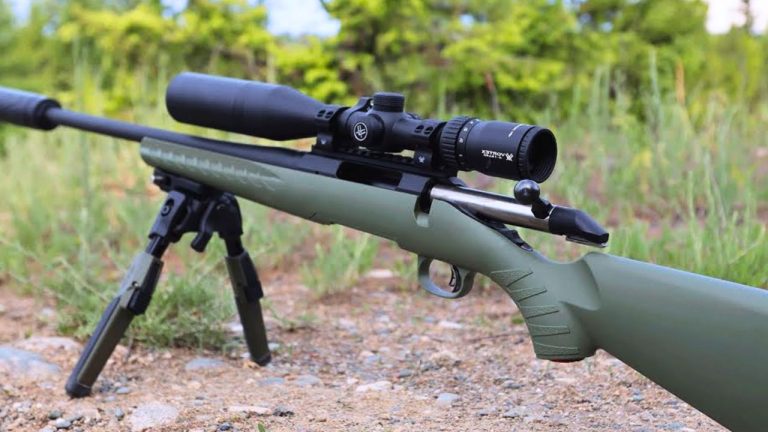
Long-range sniper systems have quietly reshaped how modern armies project power, turning small teams into assets that can influence battles from several kilometers away. Precision rifles, optics, and digital tools now allow trained marksmen to strike specific targets instead of relying on massed fire, changing both tactics and the political risk calculus of using force. The military sniper rifles and supporting gear now in service show how far this form of warfare has evolved from the bolt-action designs of the last century.
From multi-caliber rifles that replace entire arsenals to .50-caliber heavy hitters that can disable vehicles, these systems are engineered as integrated packages of weapon, ammunition, optics, and software. They are built not just for extreme distance, but for repeatable accuracy under stress, across climates, and in complex missions that range from counterterrorism to counter-drone defense.
From early bolt-actions to purpose-built sniper systems

Modern long-range warfare rests on a century of incremental changes that turned ordinary infantry rifles into dedicated precision tools. Early designs such as The Gewehr 98 introduced a strong, controlled-feed bolt action that became the template for later sniper weapons, and its rugged receiver and locking system allowed accurate fire with then-new spitzer bullets. That pattern, refined through conflicts from the First World War to the Vietnam era, set the baseline for how a precision rifle should handle pressure, recoil, and field abuse.
Later in the twentieth century, designers continued this progression with rifles such as the Gewehr 41, which appears in studies of Modern Snipers, Techniques and Technology that track how the sniper role changed after the Second World War. These historical platforms lacked today’s modular rails and digital aids, but they created the expectation that a sniper weapon must hold zero in rough conditions and deliver first-round hits at ranges that ordinary infantry rifles could not match. Current systems still rely on that basic mechanical reliability, then layer on advanced optics, sensors, and ammunition.
How precision rifles changed the battlefield
As sniper rifles grew more capable, they altered the balance between massed formations and small, well-trained teams. Analyses of long-range conflicts describe how precision tools allowed commanders to reduce the need for large infantry assaults, a shift captured in work on How Precision Sniper. Instead of advancing entire companies to suppress a position, a pair of snipers could neutralize key threats, from machine-gun crews to command vehicles, at standoff distances.
Lists of Sniper weapons that warfare describe how engagement ranges expanded from under 300 meters to well beyond 1,000, with some systems reaching multiple kilometers. That expansion did more than extend reach; it made precision fire a planning factor at the operational level. Commanders now integrate sniper overwatch into raids, convoy security, and counter-IED operations, treating these teams as force multipliers that can shape an engagement before conventional troops even come into contact.
The McMillan TAC-50 and the rise of ultra-long-range fire
Few rifles symbolize modern extreme-range capability like the McMillan TAC-50, which appears in technical references as the McMillan Firearms TAC-50 with a focus on its bolt action that handles powerful .50 caliber cartridges. Specifications for the TAC family highlight the role of that bolt mechanism in maintaining accuracy under heavy recoil, while multiple language editions on Wikipedia repeat the 50 designation that signals its place among heavy sniper rifles. Built around long barrels and match-grade components, it is optimized for shots that stretch beyond what most military shooters ever attempt.
Operational reporting notes that when it comes to long-range precision, few rifles rival the TAC-50, which is why it is a staple in many Navy SEAL missions that demand hits from up to 6,500 feet away. That kind of reach allows snipers to disable enemy hardware or neutralize threats from positions that are difficult to detect or counter. Analysts examining The Sniper Systems That Performed Better in Combat Than Anyone Predicted describe how the TAC-50 was built for harsh environments and how combat revealed strengths that changed how commanders viewed long-range precision warfare, especially in mountainous and desert terrain.
Barrett M107 and the .50-caliber anti-materiel role
Alongside bolt-action heavy rifles, semi-automatic .50-caliber systems have become central to modern long-range doctrine. The M107 Semi Automatic Long Range Sniper Rifle (LRSR) fires 50-caliber ammunition and is capable of delivering precise, rapid fire against personnel and equipment at extended distances. Official descriptions of the M107 Semi Automatic Long Range Sniper Rifle explain that it augments the M110 or M24 sniper rifles by adding heavy-caliber punch against vehicles, light fortifications, and communications gear.
This anti-materiel role matters because modern battlefields are filled with sensors, antennas, and lightly armored vehicles that can be disabled with a few well-placed 50-caliber rounds instead of artillery. The M107’s semi-automatic action and large magazine let snipers engage multiple targets quickly, from parked aircraft to improvised explosive device triggers. In practice, units use such rifles not just for long-range counter-sniper work but also to destroy key infrastructure, making them strategic tools that punch far above their weight in terms of cost and manpower.
MK22 and the modular future of sniper arsenals
While heavy .50-caliber rifles dominate the anti-materiel niche, many militaries are shifting their core sniper inventories toward modular, multi-caliber systems. A centerpiece of that shift is the Barrett MK22 MRAD Precision Sniper Rifle, a platform designed to replace several legacy rifles with one system. Commentators such as Chris Cappy have explained in video breakdowns why every Ame service branch is moving toward this approach, emphasizing that the Barrett MRAD Precision Sniper Rifle can run multiple calibers including .338 Lapua Magnum and .300-class cartridges with quick barrel and bolt swaps.
The United States Army has formalized this transition through the Advanced Sniper Rifle program. At PICATINNY ARSENAL, N.J., the Army awarded a 49.9 millio dollar contract (described as $49.9 m, $49.9 in official language) to Barrett Firearms for the new Army sniper weapon system that standardizes the MK22 across units. A related image from the same effort shows new Army shooters training with Barrett Firearms products, underscoring how one chassis and optic suite can be tuned for urban missions one day and extreme-range overwatch the next, simply by reconfiguring barrels, bolts, and magazines.
MK22 in doctrine: the Army’s 21st century sniper solution
Beyond the contract figures, internal doctrine documents describe how the MK22 is meant to change sniper employment. An analysis labeled MK22: The Army Sniper’s Solution to a 21st Century Threat explains that the rifle is intended to improve on the current inventory through increased accuracy, portability, versatility, munitions, and both day and night target acquisition. The study, dated in Sep, frames the weapon as a response to adversaries who use longer-range small arms and who operate in complex terrain where snipers must shift between urban rooftops and open countryside. That context shows why the MK22 is not just a hardware refresh but a doctrinal pivot.
The same document outlines how integrated optics and accessories turn the MK22 into a complete system rather than a bare rifle. By combining variable-power optics, clip-on night vision, and ballistic tools, the platform supports engagements from mid-range to beyond 1,500 meters without changing the shooter’s core workflow. The Sep analysis emphasizes portability as well, noting that folding stocks and lighter materials allow snipers to carry the weapon on long patrols or airborne insertions where older systems were too bulky. In practice, that means commanders can assign precision overwatch to more missions without overloading small teams.
Sniper optics, ballistic calculators, and digital aids
Modern sniper systems are defined as much by their optics and electronics as by their barrels and triggers. Industry surveys of high-tech sniper gear note that when shooters look back at older scopes, they see simple crosshairs replaced by MIL Dot and ballistic reticles that encode holdovers and wind calls directly into the glass. These reticles, paired with exposed turrets, let snipers dial or hold for precise corrections without consulting paper charts under fire.
Digital tools extend that precision further. Commentators on sniper metrics explain that if a shooter takes one of the ballistics calculators available as an app on a Smartphone or as a dedicated device, they can input range, wind, temperature, and ammunition data to generate accurate firing solutions in seconds. Articles on sniper metrics describe how these calculators, combined with laser rangefinders and weather meters, have become standard in military and law enforcement planning. The result is a system where rifle, scope, and software work together, reducing the cognitive load on the shooter and increasing first-round hit probability at extreme distances.
Special operations preferences and evolving mission sets
Special operations units have been early adopters of advanced sniper systems, in part because their missions demand both discretion and reach. Reporting on the guns SEALs actually prefer for long-range work notes that whether the job is counterterrorism, overwatch, or disabling enemy hardware from afar, certain rifles have proven themselves as indispensable weapons inside the SEAL toolbox. These include long-action bolt rifles like the Mk 13 Mod 7, which, as described in a separate analysis, reflects modern warfare’s emphasis on extreme-range precision and was adopted so SEAL snipers could dominate open terrain. That piece, dated in Feb, refers to the Mk 13 Mod 7 as a response to environments where adversaries use long-range weapons and where U.S. forces need to strike first.
Heavy rifles like the TAC-50 also feature prominently in special operations arsenals. A profile of SEAL-grade firepower explains that When SEAL teams need to reach out to 6,500 feet, they rely on the TAC-50 and its 50 caliber ammunition to deliver the necessary energy. Those same rifles appear in lists of Legendary Sniper Rifles That Redefined Long Distance Shots, which describe how they pushed confirmed engagement distances far beyond earlier records. Together, the Mk 13 Mod 7, TAC-50, and MK22 give special operations snipers a toolkit that can be tailored to urban hostage rescues, ship-boarding operations, or long-duration reconnaissance in remote regions.
Training, metrics, and the human factor
Even the most advanced rifle is only as effective as the shooter behind it, which is why modern doctrine puts heavy emphasis on training and quantifiable performance. Articles on sniper metrics describe how instructors now track hit probability at various ranges, time to first shot, and performance under stress rather than relying on subjective impressions. One training video on Weapons of Modern War notes that a target 2,000 meters away gives a person only 0.8 seconds to react to a sniper’s bullet, an illustration of how little margin for error exists at long distances. That figure, cited in a War Is Algebra episode dated in Jan, highlights the need for disciplined fundamentals and rapid decision-making.
Training pipelines also incorporate modern roles that go beyond traditional counter-sniper tasks. Analyses of Sniper Rifles, The Evolution of Long Range Engagement explain that contemporary snipers may be tasked with identifying VBIEDs, guiding airstrikes, or coordinating with drones while still maintaining readiness to fire. Studies grouped under Modern Snipers, Techniques and Technology describe how snipers are now as likely to be intelligence gatherers and forward observers as they are trigger-pullers. That expanded mission set influences weapon design, favoring rifles and optics that are lighter, more ergonomic, and compatible with a wide array of accessories so shooters can stay engaged in complex field operations for extended periods.
Where long-range sniper systems go next
Current trends suggest that future sniper systems will push range and integration even further. Corporate overviews from companies like Beretta describe how modern military sniper rifles are designed for precision engagement from 800 meters to over 2,500 meters, with chassis and stocks tailored to the ergonomic and tactical needs of individual snipers. The Modern equipment portfolio emphasizes modularity, suggesting that future rifles will accept new barrels, suppressors, and sensors as easily as current models accept optics.

Asher was raised in the woods and on the water, and it shows. He’s logged more hours behind a rifle and under a heavy pack than most men twice his age.