The sniper stories that shaped modern military legend
Modern military legend has been shaped as much by lone figures behind rifle scopes as by armored columns or airpower. Sniper stories travel fast, blending battlefield fact with myth and raising uncomfortable questions about skill, morality, and the cost of precision killing. From frozen forests to Iraqi rooftops and Afghan ridgelines, a small group of shooters has come to define how the public imagines war at long range.
These narratives are not just about marksmanship. They trace how technology, training, and media have turned snipers into symbols of national pride, psychological warfare, and, for some veterans, lifelong burden. The most famous names show how a single rifle and a steady trigger finger can reshape both tactics and storytelling.
The White Death and the birth of the modern sniper myth
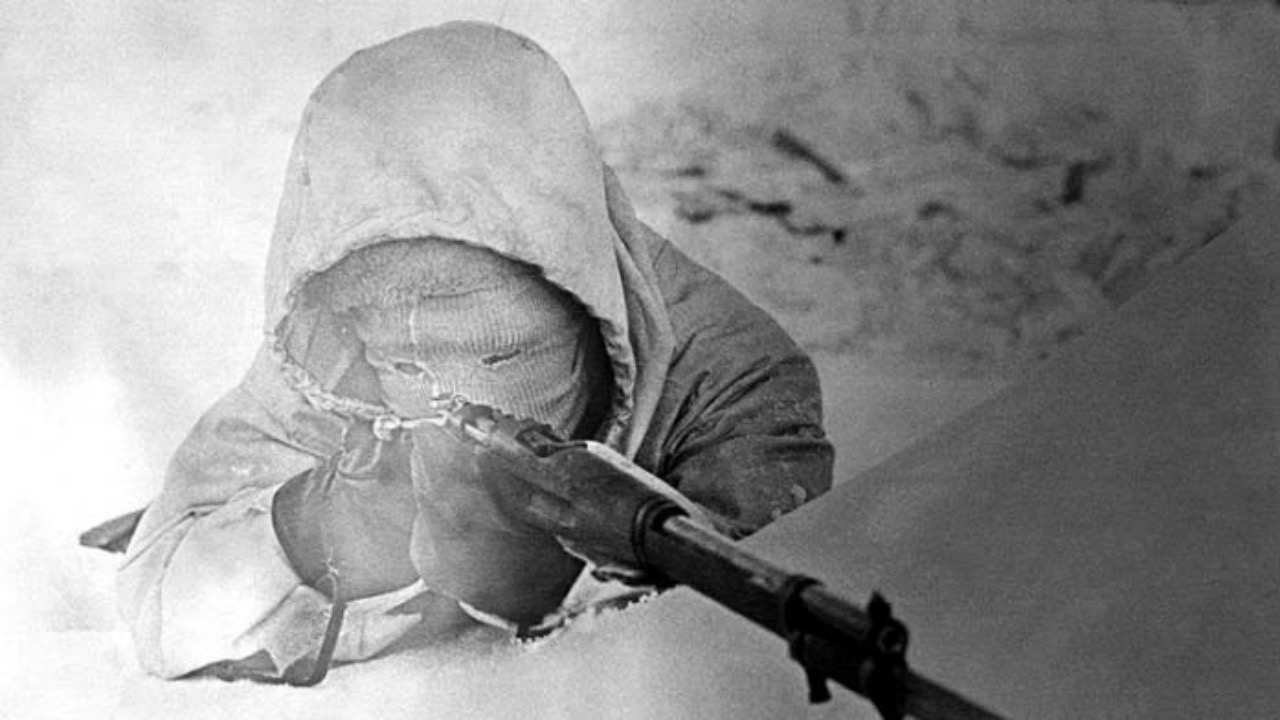
Long before thermal optics and laser rangefinders, a Finnish farmer named Simo Häyhä helped set the template for the modern sniper legend. During the Winter War between Finland and the Soviet Union, Häyhä reportedly used iron sights, not a scope, to avoid glare and reduce his profile in deep snow. His tally, often cited in the hundreds, turned him into a ghost story among Soviet troops who nicknamed him the White Death.
Accounts of Simo Häyhä describe a hunter who carried his civilian fieldcraft into war, using careful camouflage, snow-packed firing positions, and short exposure times to survive countersniping and artillery. His story still anchors discussions of sniper discipline, especially the idea that patience and concealment matter more than exotic hardware.
Modern military instructors often point to Häyhä as an example of how a sniper can shape a campaign beyond raw numbers. Soviet units diverted resources to hunt a single man, which gave Finnish forces time and space elsewhere. The White Death legend also shows how quickly a sniper can move from obscure soldier to national icon, a pattern that repeats across later conflicts.
Chris Kyle and the American sniper era
If Häyhä belongs to the age of bolt actions and iron sights, Chris Kyle is the face of the digital, media-saturated battlefield. A U.S. Navy SEAL who served multiple tours in Iraq, Kyle became widely known for his high confirmed kill count and for his portrayal in a major Hollywood film. Public fascination with Chris Kyle helped push the sniper from specialist role into mainstream pop culture.
Reporting on his deployments describes Kyle positioned above urban streets, protecting U.S. Marines and soldiers as they moved through cities like Fallujah and Ramadi. The film adaptation of his life dramatized that overwatch role, but the underlying accounts stress how his job mixed technical skill with split-second moral choices. Each trigger pull had to balance the risk to friendly forces against the possibility of misidentifying a civilian.
Coverage that tracks Kyle’s record notes that he became one of the most lethal snipers in U.S. history, a label that both elevated his status and stirred debate about how such figures are celebrated. His memoir and the subsequent movie turned individual engagements into national talking points about the Iraq War itself.
The real-life story behind the film also highlights gaps between screen and street. Accounts of Kyle’s career compare dramatized scenes with after-action reports and fellow SEAL recollections, showing where events were compressed or altered. That contrast underlines a broader pattern: once sniper stories leave the battlefield, they are reshaped by publishers, studios, and audiences who may favor clear heroes over moral ambiguity.
Kyle’s legacy continues to evolve in public memory. Searches that track his biography show how often his name is still invoked in debates over veterans’ mental health, rules of engagement, and the line between necessary violence and glorification.
Craig Harrison and the age of record-breaking shots
Where Kyle’s reputation rests on sustained urban combat, British Corporal of Horse Craig Harrison of the Blues and Royals became famous for a single extraordinary shot. During operations in Afghanistan, he used an L115A3 sniper rifle to kill a Taliban machine gun team at a distance reported as 2,475 meters, or 2,707 yards. That engagement, described in detail in assessments of the longest confirmed shots, briefly set a world record for combat marksmanship.
Analyses of long-range shooting emphasize how unusual such a hit is, even for elite professionals. At that distance, the bullet’s flight time, wind changes, air density, and even subtle shifts in the shooter’s position can move the point of impact by meters. Harrison’s story illustrates how modern optics, ballistic calculators, and specialized ammunition have extended the reach of snipers far beyond the ranges common in earlier wars.
Public interest in these extremes has grown alongside lists that track the evolution of longest. Such compilations place Harrison among a small group of shooters whose engagements are measured not only by tactical impact but by meters and yards, turning ballistics into a kind of competitive benchmark.
Harrison has since spoken publicly about the psychological cost of his service. Interviews and podcasts, including episodes of Extraordinary Lives, describe how repeated combat tours and the pressure of his role contributed to post-traumatic stress. That tension between public acclaim and private struggle mirrors the experience of many high-profile snipers.
Abu Tahsin al-Salhi and the fight against ISIS
Not all influential sniper stories come from Western militaries. In Iraq, Abu Tahsin al-Salhi became a symbol of resistance against the Islamic State group. A veteran of earlier regional conflicts, he joined Iraqi forces and allied militias during the campaign to retake territory from ISIS, reportedly using his long-range skills to support ground advances.
Profiles of Abu Tahsin al-Salhi describe him as an older fighter who returned to the front despite his age, earning nicknames that translated to phrases like Sheikh of Snipers. His presence on the line carried psychological weight, both for comrades who saw him as a guardian and for ISIS fighters who knew a seasoned marksman was watching key approaches.
Accounts that track his later years frame him as a bridge between generations of Middle Eastern conflicts, from earlier wars to the brutal street fighting against ISIS. His story complicates the usual Western focus of sniper lore and shows how local fighters can become national legends in their own right.
From battlefield asset to cultural figure
Across these cases, the sniper shifts from hidden asset to public figure. Military analyses of the modern American sniper describe how doctrine has moved snipers from static observation posts to flexible teams that coordinate with drones, special operations units, and conventional infantry. They gather intelligence, guide airstrikes, and influence enemy movement through the mere possibility of a long-range shot.
Media and online culture have simultaneously turned their exploits into stories consumed far from the front. Long-form interviews, such as conversations on The Meet between former U.S. Marine sniper Cody Alford and British Army sniper Craig Harrison, give audiences direct access to unfiltered combat memories. Viewers hear about near-death experiences, moral injuries, and the technical details behind famous shots.
Online forums and Q&A sites, including discussions that ask users to name famous modern, further amplify these narratives. Some posts focus on ballistics and training, while others debate whether celebrating kill counts crosses a moral line. The result is a fragmented but intense conversation about what society expects from those who fight at long range.
The unseen burden behind the legend
Behind the statistics and dramatizations sits a quieter reality. Professional commentary on snipers on the stresses that their role is as much about restraint as about pulling the trigger. They spend long hours observing, pass up shots that do not meet strict rules of engagement, and live with the knowledge that a single mistake can have strategic consequences.
Podcast episodes and videos, including interviews where veteran marksmen recount their careers, often return to the same themes. Precision killing can save friendly lives, but it also leaves lasting psychological marks on those who perform it. Many of the most accomplished snipers speak openly about nightmares, guilt, and the difficulty of reconciling public praise with private doubt.

Asher was raised in the woods and on the water, and it shows. He’s logged more hours behind a rifle and under a heavy pack than most men twice his age.