Trump surprises with claim US has not hit Iran’s ‘moderate’ military hard
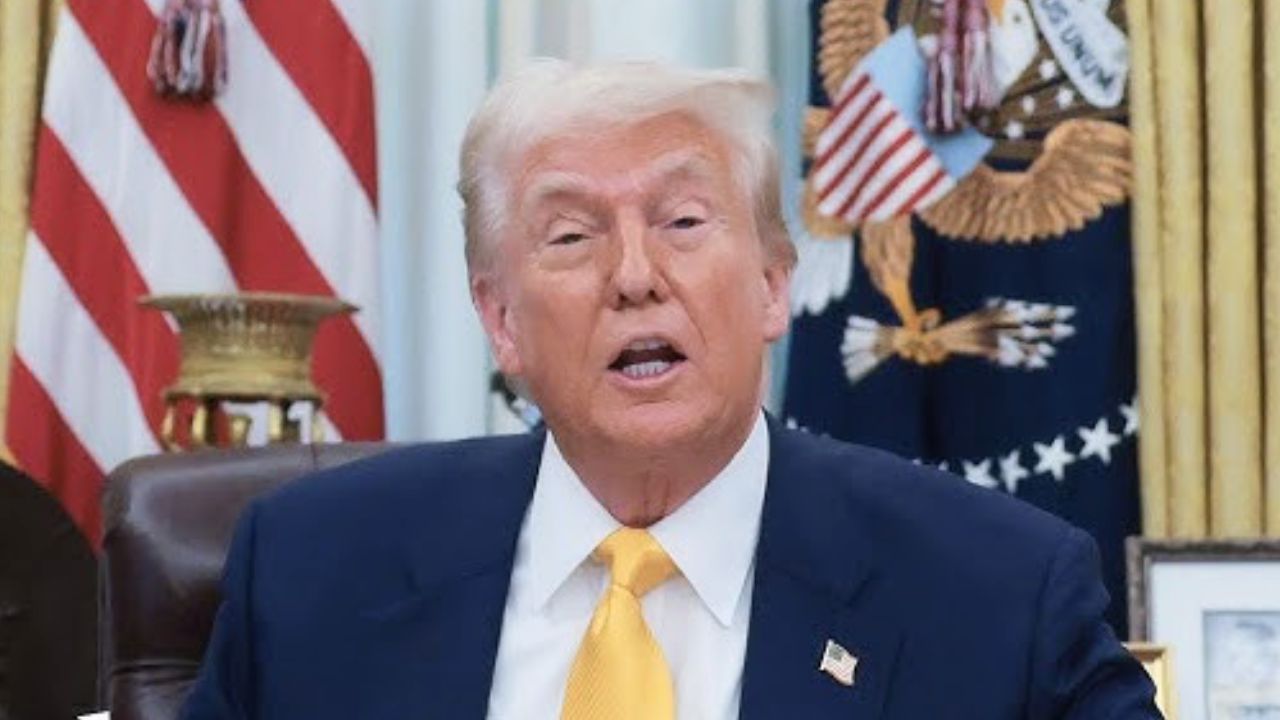
Donald Trump has startled foreign policy observers by arguing that the United States has not hit Iran’s “moderate” military hard, even as Washington and Tehran edge closer to direct confrontation. His comments, delivered as tensions flare across the Middle East, underscore a widening gap between his rhetoric and the Biden administration’s calibrated use of force.
The remark also signals how a potential Trump return to the White House could reshape expectations about future U.S. strikes on Iranian targets, including the Islamic Revolutionary Guards Corps and the regular army, which he cast as relatively untouched.
What happened
Trump’s comments came as U.S. forces responded to a sharp escalation in hostilities involving Iran and its network of regional partners. After months of tit-for-tat attacks, Iran launched a direct strike on Israel that included drones and missiles, prompting U.S. military support for Israeli air defenses and renewed debate in Washington over how far to go against Iranian assets.
Discussing that confrontation, Trump claimed that the United States had not truly gone after Iran’s “moderate” military, a reference understood to mean Iran’s conventional armed forces rather than the Islamic Revolutionary Guards Corps. He argued that previous U.S. actions had focused on proxies or limited targets and suggested that Tehran’s core military structure remained largely intact.
The current U.S. response has centered on targeted strikes against facilities linked to Iranian-backed groups and defensive operations to intercept incoming drones and missiles. According to live reporting on the conflict, American forces have concentrated on blunting immediate threats to Israel and U.S. personnel while avoiding a full-scale assault on Iran’s main military infrastructure inside its borders, a pattern that aligns with Trump’s characterization that Tehran’s central forces have not been hit “hard.” The broader context of these moves is tracked in ongoing coverage of the Iran war.
Trump’s framing also reflects his long-running focus on deterrence through overwhelming force. During his presidency he ordered the killing of Maj. Gen. Qassim Suleimani, the commander of the Quds Force, but stopped short of striking Iran’s regular army bases. His latest remarks revive that distinction, suggesting that he believes Washington still has significant unused leverage against Iran’s conventional forces.
Why it matters
Trump’s claim matters on several levels: it shapes domestic debate over how aggressively the United States should confront Iran, sends signals to Tehran about what a future administration might do, and complicates the Biden team’s effort to manage escalation.
His language puts pressure on current policymakers who are trying to calibrate force in a crowded theater. The Biden administration has framed its strikes as proportional and focused on deterring further attacks without sliding into a direct U.S.-Iran war. Trump’s suggestion that the United States has held back against Iran’s “moderate” military implicitly criticizes that approach as too cautious and invites hawks in Congress to argue for more expansive targeting.
The remark also feeds into Iranian threat perceptions. Tehran’s leadership already views U.S. deployments in the region and support for Israel as part of a broader strategy to contain or weaken the Islamic Republic. When a former president and leading political figure describes Iran’s main military forces as relatively untouched, Iranian commanders can interpret that as a warning that those units could move higher on the U.S. target list if political winds shift in Washington.
At the same time, Trump’s phrasing blurs a line that U.S. officials have tried to maintain between punishing Iran’s external activities and avoiding outright war with the state itself. By highlighting that the regular military has not been struck heavily, he draws attention to the restraint that current officials present as a feature of their policy, not a flaw. For critics, that restraint looks like hesitation. For supporters, it is a deliberate attempt to keep a regional conflict from spiraling into a direct clash between two states with large arsenals and deep networks of partners.
His comments also intersect with the 2024 campaign narrative about strength and deterrence. Trump has repeatedly argued that adversaries such as Iran, Russia, and North Korea tested limits less aggressively when he was in office. By asserting that the United States has not hit Iran’s central military hard, he positions himself as the candidate willing to consider more punishing options, even if he does not spell out specific targets in these remarks.
That framing will likely resonate with voters who prioritize displays of military strength, but it also raises questions among allies about predictability. Regional partners like Saudi Arabia, the United Arab Emirates, and Israel watch U.S. domestic politics closely for clues about future security guarantees. If they interpret Trump’s comments as a sign that a future administration might rapidly escalate against Iran’s conventional forces, they may adjust their own risk calculations, either by hardening defenses or by preparing for a more volatile environment.
The statement also matters because it touches on a sensitive internal Iranian dynamic. Analysts often describe a divide between the Islamic Revolutionary Guards Corps, with its ideological mission and external operations, and the regular army, which is sometimes portrayed as more professional and less politicized. By labeling one part of Iran’s forces as “moderate,” Trump enters that debate from the outside. Tehran’s leadership is unlikely to welcome any narrative that suggests one branch is more acceptable to Washington than another, and his words could complicate internal civil-military balances if they are interpreted as an attempt to drive a wedge between institutions.
What to watch next
The immediate question is whether Trump’s comments influence U.S. policy in the short term or remain largely rhetorical. The Biden administration has so far signaled that it will continue focusing on defensive measures and limited strikes tied to specific incidents, rather than shifting to a broader campaign against Iran’s conventional forces. Any sudden change in target selection, such as direct hits on regular army bases inside Iran, would mark a significant departure from that approach and would likely be read as a response to mounting political pressure.
In Congress, lawmakers may seize on Trump’s framing to push for resolutions that either endorse or constrain more aggressive action. Hawks could argue that Iran’s calculus will only change if its core military assets are put at risk, while skeptics will warn that such a move could trigger a region-wide conflict that entangles U.S. forces from the Mediterranean to the Gulf. How those debates unfold will shape the range of options available to whoever occupies the White House next.
Allies and partners will also be watching for signs of a shift in U.S. red lines. Israel, which has already absorbed direct Iranian fire, has its own calculus about striking inside Iran. If Israeli leaders sense that a future U.S. administration would back deeper attacks on Iran’s regular military, they may feel emboldened to test those boundaries. Conversely, European governments that are trying to keep diplomatic channels with Tehran open will worry that such rhetoric hardens positions on both sides and narrows room for negotiation.
Inside Iran, the leadership’s response will be closely scrutinized. If commanders in the Islamic Revolutionary Guards Corps and the regular army interpret Trump’s remark as a credible threat, they may accelerate efforts to harden key facilities, disperse assets, or deepen ties with partners like Russia. They may also step up asymmetric pressure through regional proxies in an attempt to raise the cost of any future U.S. escalation.
Another factor to watch is how Trump and his advisers refine this message in future speeches and interviews. If he continues to emphasize that Iran’s main military has been spared the worst of U.S. power, that theme could become a central plank of his foreign policy pitch. Analysts will parse whether he signals any conditions under which he would support direct strikes on those forces or whether he uses the line primarily as a critique of current policy without committing to specific actions.

Leo’s been tracking game and tuning gear since he could stand upright. He’s sharp, driven, and knows how to keep things running when conditions turn.