USS Abraham Lincoln strike group repositions amid rising Middle East tensions
The USS Abraham Lincoln carrier strike group has shifted into the heart of the U.S. military’s Middle East theater just as tensions with Iran spike again, closing a rare gap in American carrier coverage and signaling Washington’s intent to deter any rapid escalation. The move pulls a powerful naval formation from the Indo-Pacific into waters where Iranian missiles, drones, and proxy forces are already shaping a volatile standoff. It is a repositioning that blends hard power, political messaging, and real operational risk for everyone involved.
As the strike group settles into its new operating box, it joins a broader surge of U.S. air and naval assets that has unfolded over the past several weeks. The deployment is being paired with multi day aerial drills, new missile defense systems, and increasingly sharp rhetoric from President Trump and Iranian officials, turning the Abraham Lincoln’s arrival into a focal point for a much larger contest over deterrence, escalation, and regional influence.
Carrier gap closes as Abraham Lincoln enters CENTCOM
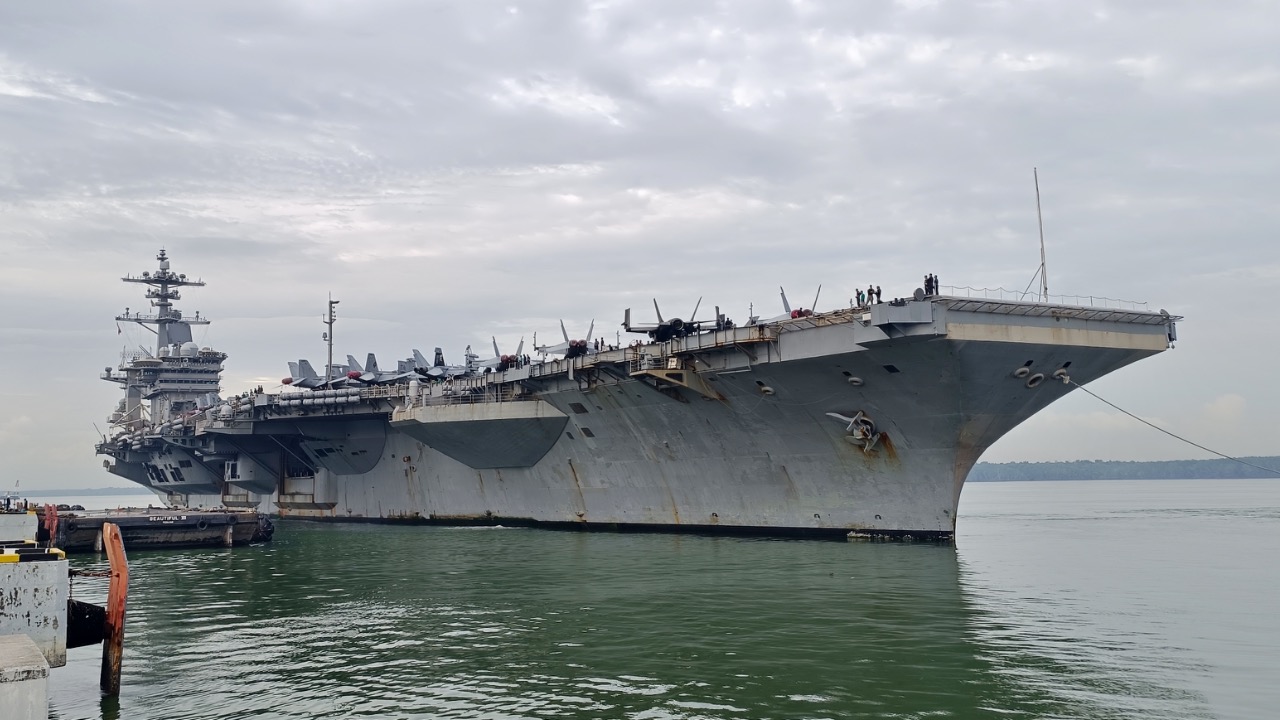
The first thing that stands out about the Abraham Lincoln’s arrival is that it ends what analysts describe as a rare pause in carrier presence in the U.S. Central Command area of responsibility. From January 5 to 25, 2026, no American aircraft carrier operated in CENTCOM, a gap that one assessment notes was the first such absence since Octo, and that absence became a talking point in debates over U.S. resolve in the Gulf region. That vacuum has now been filled as the Lincoln Carrier Strike Group Has Arrived In CENTCOM, Area Of Responsibility, with the aircraft carrier USS Abraham Lincoln repositioned from other duties to restore a visible symbol of American power projection in the Middle East.
Reporting on America’s broader buildup around Iran describes this shift as part of The Carrier Gap and Its Resolution, noting that it marks the fifth time in two years that a carrier was redeployed from Asia to the Middl region to respond to Iranian tensions. In other words, the Lincoln’s move is not a one off, it is the latest iteration of a pattern in which Washington repeatedly pulls high end naval assets out of Asia to shore up deterrence in the Gulf. That trade off, between commitments in Asia and the Middle East, is now playing out again as the Abraham Lincoln takes up station under CENTCOM’s operational control, with analysts warning that the pattern underscores how stretched American carrier forces have become in an era of simultaneous regional crises.
Inside the Abraham Lincoln strike group
To understand what is now on station, it helps to look closely at the composition of the Abraham Lincoln strike group and the capabilities it brings. The carrier itself, designated CVN 72, anchors a formation that includes guided missile destroyers, a cruiser, and an embarked air wing of strike fighters, electronic warfare aircraft, and helicopters. One detailed assessment of America’s Military Buildup Around Iran notes that the USS Abraham Lincoln (CVN 72) typically sails with F/A 18E/F Super Hornets, EA 18G Growlers, E 2D Hawkeyes, C 2A Greyhounds, and MH 60R/S helicopters, giving the group a mix of air defense, strike, surveillance, and anti submarine tools that can be tailored to everything from escort missions to deep strike planning.
On the flight deck, the tempo is already visible in the work of sailors like Navy Aviation Boatswain, Mate, Handling, Class Michael Cordova, who is shown directing an F series aircraft in imagery released as the group entered the region. That same report credits journalist Caitlyn Burchett with detailing how the strike group completed a port call in Guam before pushing west, and it notes that the carrier is now one of at least 36 major U.S. naval assets that can be surged or rotated through the broader theater. The combination of high end aircraft, Aegis equipped escorts, and logistics support means the Abraham Lincoln can sustain operations for extended periods, whether that involves air patrols over the Gulf, presence missions in the Arabian Sea, or integration with land based air forces in joint drills.
From Indo-Pacific to Gulf: a strategic pivot
The decision to pull the Abraham Lincoln out of the Indo-Pacific and send it toward Iran’s neighborhood reflects a deliberate strategic pivot. Earlier this month, the carrier and its escorts were operating in the Indo, Pacific, where they formed part of the U.S. posture aimed at deterring China and reassuring allies like Japan and the Philippines. According to one regional defense report, the USS, Abraham Lincoln, Middle East, Indo, Pacific redeployment underscores how Washington is willing to accept a temporary reduction in visible carrier presence in Asia in order to respond to a more immediate crisis in the Gulf, even as planners worry about the long term implications for deterrence in the western Pacific.
That pivot has been framed by some commentators as a sign that Iran, not just China or Russia, can still pull American attention and hardware across oceans when tensions spike. A separate account of the USS, Abraham Lincoln, Middle East, Iran, Minnesota Guardsmen move notes that the strike group had been supporting exercises and freedom of navigation operations in the Pacific before receiving orders to head toward CENTCOM, with Minnesota Guardsmen told to wear reflective vests in a separate domestic security advisory that underscored how global and local security narratives can intersect. By the time the carrier crossed into the new theater, the message was clear: Washington is prepared to reshuffle its global deck of naval assets when it believes Iran is testing red lines.
Approaching Iranian strike range
Once inside CENTCOM’s waters, the Abraham Lincoln did not simply loiter at a distance. Reporting from regional observers notes that the United States has stepped up its major military build up in the Middle East with the arrival of the USS, Abraham Lincoln, as the carrier strike group nears Iranian strike range. That phrase is not rhetorical, it reflects the reality that Iranian anti ship missiles, drones, and aircraft can reach large swaths of the Gulf and Arabian Sea, and that U.S. planners must now factor in both the deterrent value and the vulnerability of placing a large carrier within that envelope.
Another analysis of the U.S. carrier strike group nears Iranian strike range highlights that the group’s movement has been tracked closely by Iranian media and officials, who see the deployment as both a threat and an opportunity to showcase their own capabilities. The United States, Middle East, USS, Abraham Lincoln presence is therefore part of a two sided signaling contest, with Washington emphasizing that it can bring overwhelming air and naval power to bear within days, and Tehran reminding everyone that it has spent years investing in asymmetric tools designed to harass or damage large surface ships. The closer the carrier sails to Iranian shores, the more acute that balance between deterrence and exposure becomes.
Air and missile drills raise the stakes
The naval buildup is being matched in the air, where the U.S. is organizing multi day exercises that are explicitly framed around the Iran standoff. Officials have announced that Exercises in the Middle East, Iran will involve a mix of U.S. and partner aircraft flying complex missions over several days, with President Trump describing the drills as an unmistakable signal of American readiness. One report notes that the exercises will include bomber flights, fighter escorts, and refueling operations designed to rehearse both defensive and offensive scenarios, from protecting shipping lanes to striking Iranian targets if ordered.
In parallel, the Air Force, Middle East, Iran, USS, Abraham Lincoln is preparing its own set of Middle East drills that dovetail with the carrier’s arrival. According to aerospace focused reporting, the US Air Force prepares Middle East exercises amid rising Iran tensions and force buildup, with planners emphasizing integration between land based jets and the carrier air wing to demonstrate seamless command and control. The combination of aerial drills and naval repositioning is meant to show that Washington can generate a joint force package on short notice, but it also raises the risk that a miscalculation in crowded skies or contested airspace could trigger a wider confrontation neither side claims to want.
Washington’s ‘armada’ and the politics of pressure
In Washington, the Abraham Lincoln’s deployment has been folded into a broader narrative of maximum pressure on Tehran. One widely shared social media post described how Washington, Middle East, Iran, USS, Abra has deployed a massive military force to the Middle East amid Iran tensions, referring to the carrier and its escorts as part of a U.S. armada in the region. That language is not accidental, it is meant to evoke both historical memories of U.S. naval power and a sense that the current buildup is larger and more coordinated than routine rotations, even if the actual number of ships reflects a mix of new arrivals and existing assets.
At the same time, President Trump has sharpened his rhetoric, warning that Time is running out and urging Tehran to MAKE, DEAL in comments highlighted by reporting on ten U.S. warships now present in the theater. Iranian diplomats at the United Nations pushed back, with Tehran, United Nations officials accusing Washington of escalating tensions and insisting that Iran will not negotiate under threat. The political theater on both sides feeds into the military moves at sea and in the air, turning the Abraham Lincoln’s repositioning into a symbol of a larger contest over sanctions, nuclear constraints, and regional influence that has been building for years.
Commanders in the crosshairs
The buildup is not only about hardware, it is also about the people directing it, and Iranian officials have been explicit about that. One report on American, Iran, Tehran, USS, Abraham Lincoln, Middle East warns that American military leaders in Iran’s line of fire if US attacks Tehran as USS Abraham Lincoln reaches Middle East, with Iranian figures suggesting that senior U.S. commanders could be targeted if Washington launches strikes. That threat echoes earlier Iranian statements after the killing of Qassem Soleimani, and it underscores how Tehran seeks to deter U.S. action by raising the personal stakes for decision makers overseeing these operations.
In a strategic show of force, the same account notes that the Abraham Lincoln’s arrival has been accompanied by high profile visits and briefings for the leaders overseeing these critical operations, reinforcing the sense that Washington wants Tehran to know exactly who is in charge. For their part, U.S. officials argue that such transparency is meant to clarify lines of authority and reduce the risk of miscalculation, but the Iranian focus on individual commanders suggests that any conflict could quickly move beyond anonymous exchanges of fire. The human dimension of this standoff, from carrier strike group admirals to Iranian Revolutionary Guard generals, is therefore becoming as central to deterrence as the ships and aircraft themselves.
Additional ships, surveillance jets, and air defenses
Beyond the carrier itself, the U.S. is quietly thickening its posture with additional ships and specialized aircraft. One detailed account of a destroyer, electronic surveillance jet joins U.S. forces massing in Middle East notes that new surface combatants and an electronic intelligence platform have been added to the regional mix, giving commanders more tools to monitor Iranian movements and protect high value assets like the Abraham Lincoln. In addition, online flight tracking indicates the movement of new air and missile defense systems to the Middle East, a sign that Washington is not only projecting power but also hardening its bases and ports against potential Iranian strikes.
Those reinforcements sit alongside the Lincoln Carrier Strike Group Has Arrived In CENTCOM, Area Of Responsibility, USS, Abraham Lincoln deployment, which itself includes escorts equipped with advanced radar and missile systems. Analysts point out that the layered defense now forming around the carrier and key regional hubs is designed to handle everything from ballistic missiles to small drones, reflecting lessons learned from past attacks on Saudi oil facilities and U.S. bases in Iraq. The more the U.S. builds out this defensive architecture, the more it signals that it is preparing for a scenario in which deterrence fails and Iran or its proxies attempt to test the limits of American resilience.

Asher was raised in the woods and on the water, and it shows. He’s logged more hours behind a rifle and under a heavy pack than most men twice his age.