Veteran Police K-9 Dies Protecting Handler Hours Before Retirement
Hours before a long-planned retirement, a veteran police K-9 was killed while moving to shield a handler from danger. The loss has reopened a difficult conversation about how departments use and protect their four-legged officers, and what communities owe them once the sirens go quiet.
Across the country, stories of K-9s that die on duty or shortly after retirement show how tightly their lives are bound to the people they protect. The final call for one dog is never just about a single incident, but about the human bond and institutional choices that shaped every shift.
The final call for a veteran partner

In Austin, a patrol dog named Jax had been scheduled to leave active service in less than two weeks when he was killed while working with his handler on a tactical operation. Local reports on the Austin Police Patrol unit describe a veteran K-9 nearing the end of a long career, still deployed on high-risk calls because his experience made him a trusted first contact with dangerous suspects.
Within the same community of handlers and trainers, another dog, Atlas, has become a symbol of that sacrifice. In a tribute shared by Jan, colleagues described Atlas as both a fierce tactical operator and a gentle giant within the unit, a Belgian Malinois that died while assisting on a high-risk warrant service after years of work in the field. The remembrance for Atlas stresses that he was trusted to go through doors and into uncertainty so human officers did not have to.
Those details mirror the account of the veteran K-9 who died protecting a handler just hours before retirement. In each case, the dog stepped into the most dangerous part of the encounter, absorbing the risk that would otherwise fall on a partner whose safety the animal had been trained to prioritize above all else.
A pattern of sacrifice near the finish line
The timing of these deaths has shaken many inside law enforcement. The idea that a dog can survive years of intense operations only to be killed on the cusp of retirement has become a recurring and painful theme.
In one memorial post titled with the words END OF WATCH and ATLAS, colleagues describe how K-9 Atlas died in service after a long career, with the phrase “ultimate sacrifice” used to capture his decision to place himself between danger and a human partner. The tribute for END OF WATCH echoes the same heartbreak felt in Austin when a patrol K-9 died less than two weeks before leaving the job.
Another case from California involves K-9 Mateo, a dog with the Roseville Police Department. A message that opened with the word Please asked the public to keep the Roseville Police Department, California, K-9 Mateo and handler in their thoughts and prayers after it was learned that Mateo had suffered a serious medical crisis connected to his work. Supporters rallied around Roseville Police Department, as they faced the possibility of losing another experienced dog.
These stories do not stand alone. They fit into a larger record of K-9s that die on duty or shortly after leaving service, often from injuries or health conditions linked to years of high-stress deployments. The veteran dog who died saving a handler hours before retirement is part of that pattern, a reminder that the line between a long career and a tragic ending can be heartbreakingly thin.
How K-9s are trained to protect their handlers
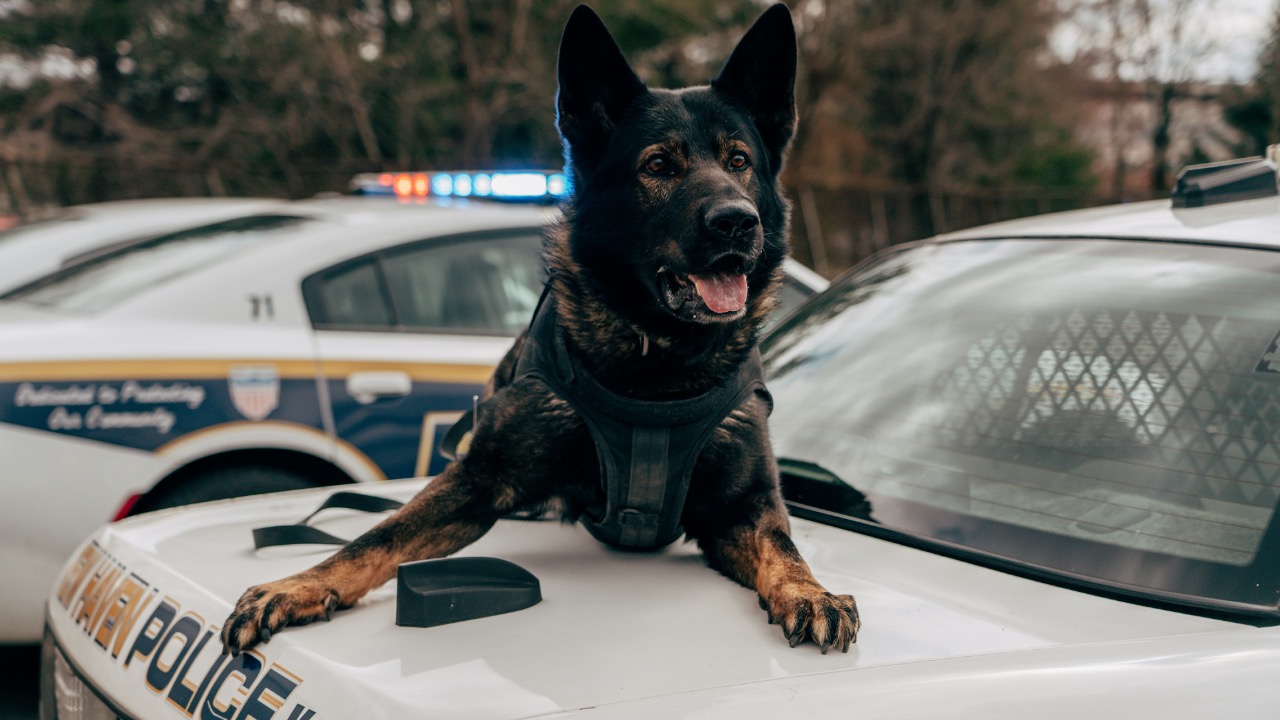
Modern police K-9 programs rely heavily on breeds such as Belgian Malinois and German Shepherds, chosen for their drive, agility, and ability to bond tightly with a single handler. Many of these dogs, including Atlas and Jax, spend their entire adult lives cycling between patrol cars, training fields, and crime scenes.
Training typically begins with basic obedience and quickly moves into specialized skills. Dogs learn to track scents, search buildings, and apprehend suspects on command. Central to that training is a clear priority: the handler comes first. A well-trained K-9 is conditioned to position itself between a threat and the human officer, to push forward into gunfire, knives, or physical attacks so the handler can stay back and coordinate.
Public information about K-9s highlights how these dogs are also socialized to be safe around children and community members during demonstrations, which is why Atlas could be described as both a tactical operator and a gentle giant. The same dog that bites on command in a dark hallway is expected to sit calmly while a child tugs on its vest at a school event.
That dual role makes their protective instinct even more striking. When a veteran K-9 chooses to move in front of a handler during a confrontation, it is not a random reaction. It is the result of years of repetition that teach the dog that the person at the other end of the leash is the center of its world.
Grief inside the unit and across the community
The death of a veteran K-9 rarely stays within the walls of a department. In Union Township, a community gathered to say goodbye to a dog simply called “the K9,” described in a local video as more than just a police dog and as part of the family for the men and women of Union Township who serve and protect residents. The farewell to Union Township’s dog showed officers openly emotional, a scene that mirrors vigils and processions held for K-9s in other cities.
Handlers often speak of their dogs as partners rather than tools. When a veteran K-9 dies on duty, the handler loses a colleague that has shared every long night and high-risk call. That loss is compounded when the death comes at the edge of retirement, after years of planning for a quieter life together at home.
Public responses frequently include makeshift memorials at department headquarters, social media tributes, and community members lining streets as a K-9’s body is transported under escort. For the veteran dog that died shielding a handler just hours before retirement, colleagues described a similar outpouring, with residents and officers recognizing the dog as a fallen officer in everything but legal status.
Life after the badge and the cost of service
Not every story ends in a line-of-duty death. Some K-9s manage to retire and spend their remaining years at home with their handlers. Even then, the toll of the job can be evident.
One widely shared account described a Retired police K-9 that died with his handler by his side, with the farewell message including the words “You protected us well.” The department wrote that the dog’s favorite reward had been a ball, a small detail that humanized a career built on high-pressure deployments. The tribute to the Retired police K-9underlined how retirement is often short and medically complicated for these animals.
Another memorial for K-9 Diesel captured the same mix of pride and sorrow. The post opened with the word Oct and stated that it was with profound sorrow that the department announced the passing of K-9 Diesel in the line of duty. The message stressed that Diesel was never just a canine and ended with a wish that he rest in the peace he so rightfully earned. The remembrance for Diesel made clear that his identity inside the agency had been closer to that of a sworn officer than a piece of equipment.
For the veteran K-9 that died protecting a handler hours before retirement, those examples show what was lost. The dog had been on the brink of trading patrol cars and training fields for couches and backyard games. Instead, the final act of service came on the same streets where the dog had worked for years.
Leo’s been tracking game and tuning gear since he could stand upright. He’s sharp, driven, and knows how to keep things running when conditions turn.