Why Some Popular Guns Are Falling Out of Favor
In a market that once rewarded tradition and familiarity, some of the most recognizable firearms are quietly losing ground. Shifts in technology, training, and consumer taste are pushing certain guns and calibers to the margins, even as overall ownership remains widespread. I see a pattern emerging in which capacity, modularity, and cost efficiency matter more than nostalgia, and that is reshaping which guns stay in the safe and which end up in the classifieds.
From revolvers and lever actions to .40-caliber duty pistols and mid-tier AKs, the story is less about sudden obsolescence and more about incremental disadvantages piling up. As manufacturers chase new buyers and agencies refine their requirements, once-dominant designs are being outpaced by platforms that are easier to shoot, cheaper to feed, and simpler to customize.
From six-shooters to striker-fired: why classic handguns slipped

The decline of the service revolver is one of the clearest examples of how practical tradeoffs can dethrone an icon. Police agencies that once relied on wheelguns gradually shifted to semi-automatic pistols because the old guns carried limited ammunition and were slow to top off under stress. As one detailed explanation of why revolvers fell out of favor with police notes, officers were typically working with only six rounds and even enhanced loads like 38 Special +P+ could not compensate for the simple fact that reloads were again slower to perform.
That shift did not mean revolvers vanished altogether. Enthusiasts still buy them for concealed carry, hunting, or collecting, and some argue they never truly went out of style. One commentator, William Connell Cawthon, an Author and Consultant on Second Amendment Issues, points out that They remain common enough that the ATF still tracks them as a significant category. Yet in duty holsters and training academies, the center of gravity has moved decisively toward high-capacity, striker-fired pistols that are easier to teach and faster to run under pressure.
The .40 S&W retreat and the rise of softer-shooting calibers
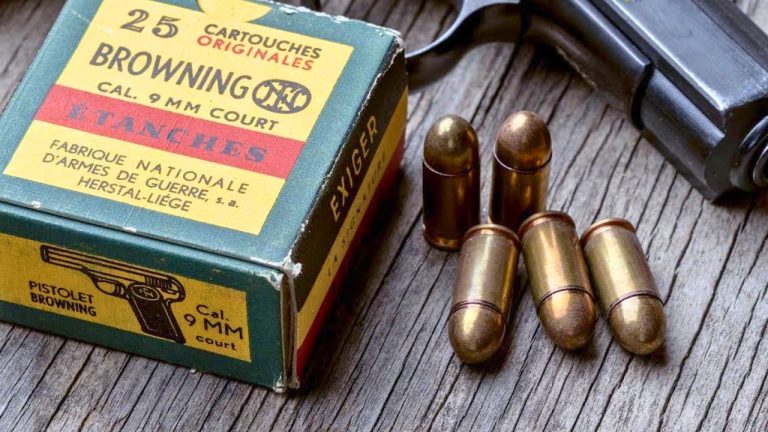
Few cartridges illustrate changing priorities as starkly as .40 S&W. Law enforcement agencies that once embraced it for perceived stopping power have been moving back to 9 mm, citing better shootability and modern bullet design. One detailed account of why agencies left 40 S&W behind notes that improved 9 mm loads now meet performance standards once reserved for larger calibers, while producing less recoil and allowing higher magazine capacity.
On the civilian side, shooters are debating whether .40 is truly dying or simply settling into a niche. In one Apr discussion, users insist it is not going away, even if many pistols have dropped it from their standard offerings, and one commenter using the handle FRIKI DIKI TIK argues that ammunition makers will keep producing it as long as there is a base of owners. At the same time, a combat handgun overview notes that Over the past several years there has been a decline in the popularity and availability of pistols that dish out extra power, and While they still exist, they are no longer the default choice for new buyers.
Rifles that feel dated: lever actions, AKs, and awkward feeds
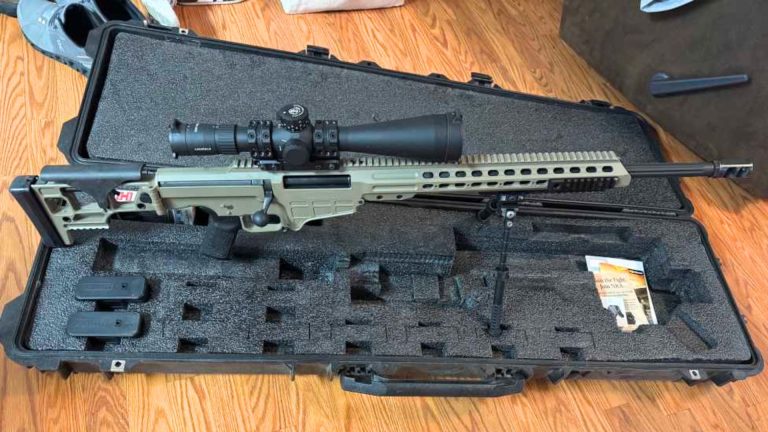
Long guns are undergoing a similar winnowing, particularly where older designs clash with modern expectations around optics and ergonomics. Lever-action rifles, once the archetypal American carbine, are now often described as charming but impractical compared with semi-automatic platforms. A detailed breakdown of why lever guns have faded points to higher cost, more difficult maintenance, lower tolerance to dirt, and the fact that they are harder to shoot from prone, with one Jan analysis adding that the platform is simply viewed as old-fashioned.
Even some once-budget-friendly semi-autos are losing their edge. In a video asking why AK-pattern rifles are slipping, one creator notes in the Comments that the issue is price, with Low-end AKs starting around 1K while comparable ARs start at about 600. A separate thread on what brands have changed in the past decade echoes that sentiment, with one user saying AKs on the American market are $1,000 or more and that the quality has improved along with the price.
Feeding systems are another fault line. Enthusiasts dissecting why side or top feed rifles have disappeared point out in one Jan thread that top-feeds make mounting optics awkward and side-feeds tend to unbalance the weapon laterally. The same Comments Section includes a user named One-Strategy5717, who argues that modern bottom-feed magazines simply integrate better with current training and accessory setups, especially when shooters expect to run red dots and lights on almost everything.
Shotguns and niche calibers squeezed by standardization
Standardization is also pushing some gauges and cartridges into the background. The 16-gauge shotgun, once a common compromise between 12 and 20, has steadily lost share as militaries and hunters converged on 12 gauge as the default. One detailed explanation of why the 16 has faded notes that the military’s adoption of 12 gauge gave generations of service members hands-on experience with that bore, and that Mar discussions of the gauge often boil down to Several factors: limited factory loads, fewer gun models, and the convenience of sticking with what is on every store shelf.
Handgun calibers face similar pressure. The 38 Super, for example, is praised in one Aug analysis as an excellent round that qualifies for major power factor in competition, where 9 mm is typically scored as minor. Yet the same discussion concedes that mainstream buyers gravitate toward 9 mm and .45 ACP, leaving .38 Super as a specialist’s choice with limited factory support. When ammunition makers and gun companies chase volume, cartridges that do not fit the dominant molds inevitably see fewer new guns and less shelf space.
Law enforcement, modularity, and the fall of double-action duty guns
Institutional buyers have outsized influence on which guns thrive, and their preferences are shifting toward simpler triggers and modular frames. Traditional double-action/single-action pistols that once defined police sidearms are now rare in new contracts. One industry-focused review notes that At the present time only a few agencies still issue Beretta or Smith & Wesson double-action pistols, a stark contrast with the 1990s and early 2000s.
Behind that shift is a broader move toward modular, striker-fired designs that can be tailored to different hand sizes and missions. Retailers now emphasize that Firearms are more modular than they were even a decade ago, with frames, slides, and optics plates that can be swapped or upgraded without a gunsmith. Ammunition buyers in the military and law enforcement sectors are also prioritizing cost efficiency and waste reduction, with one market analysis noting that End-consumers in these groups are giving more importance to cartridges that are waste-reducing and offer greater tactical agility. In that environment, complex trigger systems and proprietary parts look less attractive than standardized, easily supported platforms.
Market whiplash, brand shakeouts, and the new definition of “popular”
All of these design-level shifts are unfolding against a volatile sales backdrop. After a historic surge in 2020 and 2021, national gun sales cooled, then began to stabilize. One detailed analysis of background check data notes that What the industry saw in those peak years was not sustainable from a market standpoint, and a researcher named Metzl points out that But many more people now own guns than before that spike. Another review of monthly trends notes that After an extended period of declines, the last two years have reversed course with an upward trend in sales.
Manufacturers are feeling the hangover. One financial report shows that Gunmaker Smith & Wesson reported second-quarter net sales of $121 m, a decrease of 47.5% from the same quarter the year before, with net sales also described as $121 million. A separate video on struggling brands warns that sometimes being affordable is not enough when lawsuits and changing tastes hit at once, singling out Remington Arms and other legacy names as vulnerable.
Within this churn, the definition of a “popular” gun is narrowing around a few dominant platforms. A data-driven ranking of the Most Popular Guns in the U.S., Updated for 2025, notes that The Ruger 10/22 remains the most popular rifle in the country, a semi-auto .22 that is inexpensive to shoot and endlessly customizable. That kind of modular, low-recoil platform fits neatly into the new consumer landscape, while heavier, harder-kicking, or more idiosyncratic guns struggle to compete for attention.
Ammunition, technology, and the quiet pressure on older designs
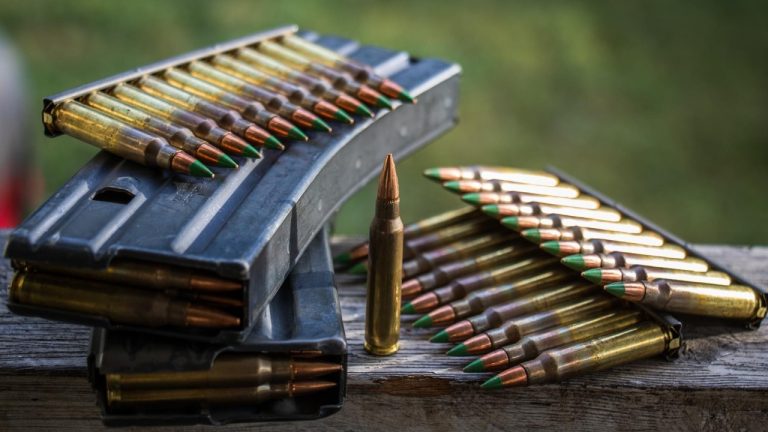
Behind every fading firearm is an ammunition story. During the early pandemic, one local report captured the scramble when buyers discovered that they could not find ammunition for a lot of popular firearms, including 556 and 223 for AR-15 rifles. That experience reinforced the appeal of guns chambered in widely produced calibers and highlighted the risk of relying on niche rounds that vanish from shelves when supply chains tighten.
At the same time, ammunition technology is evolving in ways that favor newer platforms. One industry forecast notes that Technology advancements in the design of ammunition, including non-lead, environment-friendly bullets and enhanced cartridges, are driving the market forward. Another analysis of the Russia-Ukraine conflict observes that These innovations have further shifted the focus away from traditional, massive firepower to more precise and efficient means of warfare. In that context, guns that cannot easily mount modern optics or that rely on outdated ballistic assumptions are at a structural disadvantage.
Even perceptions of build quality are changing. In one widely read thread, a user named Jun and others argue that if you want a gun made to early 20th century standards, you need to pay early 20th century prices, a point echoed in a separate SakanaToDoubutsu comment that modern buyers often prioritize features over heirloom-level machining. Meanwhile, a video previewing 10 new rifles for 2026 opens with the line Think you have already seen every rifle worth buying, then answers itself with Because the 2026 lineup is stacked with brand-new designs. The message is clear: innovation is relentless, and guns that do not keep up risk being left behind.
Even as some platforms fade, the overall ecosystem is not shrinking so much as reorganizing. A detailed ammunition market study notes that are waste-reducing and give greater tactical agility, reinforcing the trend toward lighter, more efficient cartridges. Meanwhile, a combat handgun feature points out that powerful pistols still have their fans, but the mainstream is gravitating toward controllable, high-capacity designs that are easier to train with and cheaper to feed. In that environment, the guns falling out of favor are not necessarily bad, they are simply out of step with what today’s shooters, agencies, and manufacturers now value most.

Leo’s been tracking game and tuning gear since he could stand upright. He’s sharp, driven, and knows how to keep things running when conditions turn.