Why urban deer populations continue to grow year-round
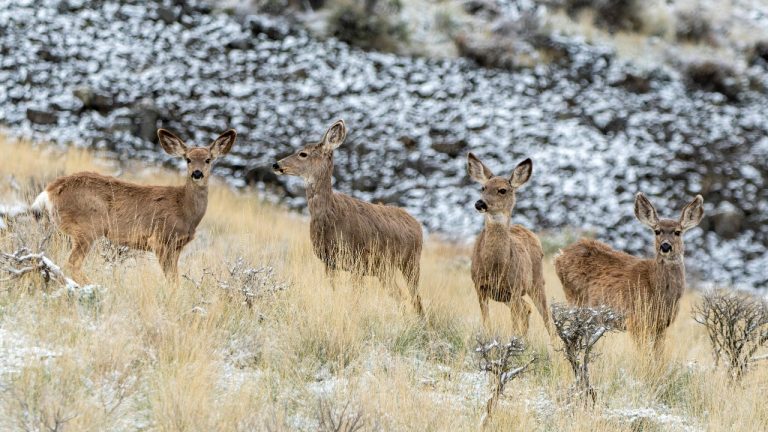
Across much of North America, whitetails are no longer creatures you glimpse only at dawn on a backwoods logging road. They are bedded behind strip malls, browsing in cul-de-sacs, and trotting across four-lane arterials at noon. Urban and suburban deer are not a seasonal fluke tied to the fall rut. They are a permanent, year-round presence, and their numbers keep climbing even as cities grow denser.
I have spent enough time glassing backyard woodlots and watching hoofprints appear in fresh sidewalk snow to know this is not a passing phase. To understand why these herds keep expanding on the city’s edge, you have to look at how we rebuilt the landscape, changed our attitudes toward hunting, and unintentionally created perfect habitat that feeds and shelters deer twelve months a year.
From near wipeout to year-round neighbors

Within a human lifetime, white-tailed deer went from scarce to seemingly everywhere. Earlier in the twentieth century, unregulated shooting and heavy logging hammered whitetails so hard that some states were down to remnant pockets of animals, and one account notes that less than 100 years ago the population was so low that some states closed seasons entirely. Wildlife agencies responded with strict regulations, restocking programs, and habitat protections that worked better than anyone expected. As one state summary puts it, after rampant deforestation and uncontrolled hunting wiped out over 95% of the country’s deer, modern management brought them roaring back.
Those same protections did not stop at the city limits. As suburbs spread, deer followed, and the animals that had once been scarce in deep timber adapted quickly to fragmented woods and backyard shrubs. Agencies now talk openly about overabundance, especially in developed or agricultural areas where food and cover are abundant. The recovery story has turned into a crowding problem, and nowhere is that more obvious than in neighborhoods where deer are visible in every season.
Edge habitat: how suburbs became prime deer country
Whitetails are built for edges, not endless old-growth. When we carved forests into house lots, roads, and small parks, we unintentionally created miles of transition zones that deer love. One conservation group notes that Agriculture and suburban development began to carve up forests, creating ideal habitat where deer flourish at the edge of the woods and open spaces. Those edges grow the shrubs, forbs, and young trees that whitetails prefer, and they are refreshed every time a lot is cleared or a storm knocks down mature timber.
In many metro areas, the best deer habitat is now a patchwork of golf courses, retention ponds, powerline cuts, and backyard gardens. State biologists in Maryland point out that white-tailed deer thrive on the suburban fringe, where small woodlots and ornamental plantings provide both cover and browse close to homes, and they emphasize that home landscapes can be as productive as farm fields. Once you understand that, it is no surprise that deer are not migrating away from town after the rut. They are living in a year-round buffet that stretches from one subdivision to the next.
Food on every corner, in every season
Deer are opportunistic browsers, and modern landscaping feeds them twelve months a year. Ornamental shrubs, fertilized lawns, vegetable beds, and community gardens all provide high-quality forage that stays green longer than native plants. Maryland officials remind residents that Many people incorrectly presume deer belong in deep woods, but whitetail are browsers, not grazers, and they are perfectly content to work through azaleas, hostas, and fruit trees instead of acorns.
Commercial growers and homeowners are feeling that pressure. One yard-care expert notes that with less hunting and fewer natural predators, deer are overpopulating and chewing through plantings in much of the country, a trend he ties directly to the way we landscape and irrigate our yards, and he points out that this is happening across most of the country except the Southwest, where conditions are harsher for deer, in a piece on yard damage. When food is that reliable, deer do not need to migrate far or reduce herd size in winter. They can hold tight to small home ranges and ride out the lean months on ornamental browse and handouts like birdseed and spilled pet food.
Predators and hunters: the missing checks on city deer
In wild country, whitetails are shaped by teeth and lead. In town, both are scarce. Large predators that once kept deer wary and moving, like wolves and mountain lions, are largely absent from metro areas. A detailed look at the modern surge in whitetails notes that there are now Fewer Predators in many suburban areas where deer thrive, which means fawns and adults survive at higher rates than they would in big timber or open prairie.
At the same time, hunting pressure has dropped in many states, especially near cities. In Michigan, for example, one analysis points out that Fewer hunters are heading afield, and that decline is described as perhaps the biggest cause of deer overabundance there. Urban and suburban townships often restrict firearm discharge, limit bowhunting access, or face public pushback against lethal control. The result is a patchwork of safe zones where deer can live long lives, raise multiple fawns, and move between small refuges without ever encountering a serious threat.
Why urban deer survive so well
Once deer move into town, they tend to stay alive. Traffic and disease take a toll, but the odds are still better than in many wild settings. A study of urban whitetails found that Urban White Tailed Deer Habitat in developed landscapes can provide refuge for growing populations, even as people complain about damage. These deer learn traffic patterns, bed in thickets that people rarely enter, and move mostly at dawn, dusk, and at night, which cuts down on direct conflict.
Young deer may have it best of all. Work in Indiana’s In the Bloomington area at Griffy Lake Nature Preserve found that urban life can be very good for fawns, with survival rates higher than in more remote forests where predators and harsher conditions take a bigger bite. When fawns survive at those levels year after year, the local herd does not need a huge influx of migrants to grow. It can expand from within, filling every vacant pocket of cover around neighborhoods and office parks.
Winter behavior and why deer do not leave
Many city residents assume deer will thin out once the leaves drop and snow piles up. Instead, the animals often become more visible, bunching up in small groups and hammering what greenery remains. Rangers at one state park explain that when winter hits and natural food sources become scarce, deer tend to group up more than at any other time of year. They note that In order to conserve more energy during these times, deer move less and work together to find food more efficiently.
In urban settings, that winter strategy plays out in tight clusters of deer around evergreen plantings, bird feeders, and south-facing slopes where snow melts first. Because they are conserving energy, they are not migrating miles to find food. They are doubling down on the same neighborhoods they used all summer, which makes the winter herd feel even larger to the people who suddenly see ten or fifteen animals in a single yard. The behavior is natural, but the concentration is amplified by the way we stack food and cover into small, sheltered spaces.
Carrying capacity and “ecosystem overload” in town
Every landscape has a limit to how many deer it can support, but in cities that limit is often defined by people’s tolerance rather than starvation. One biologist describes an Ecosystem overload, explaining that each environment has a carrying capacity, the number of individuals and resources it can support, and that our “deer problem” begins when herds push past that point. In urban areas, deer can exceed the ecological carrying capacity long before they run out of ornamental shrubs, because they are stripping native understory plants, hammering regeneration, and reshaping the plant community.
State agencies warn that when deer densities stay high in developed or agricultural areas, the impacts ripple out. New York officials note that Deer normally find the most favorable habitat in these developed or agricultural areas, which is exactly where people live and work. That overlap leads to more vehicle collisions, crop damage, and conflicts over gardens and parks. Yet because the animals are healthy and well fed, they keep reproducing, and the ecological damage to native plants and songbird habitat can be severe long before the deer themselves show signs of stress.
Human attitudes that lock in high numbers
Even where managers see a clear need to thin herds, public opinion often pulls in the opposite direction. Many residents enjoy watching deer and oppose lethal control, especially in neighborhoods where hunting has been absent for generations. One state overview of Why There Are points to Public Attitudes as a key factor, noting that after the early wipeout, people demanded protection and came to view deer as a valued part of the landscape. That mindset has been slow to adjust now that herds are far larger and more concentrated.
At the same time, fewer people grow up hunting or even comfortable with firearms. A detailed look at the modern Deer Population Explosion notes that The Factors Behind the Surge Several include reduced hunting participation and changing cultural attitudes. When you combine that with local ordinances that restrict hunting in city limits, you end up with large pockets of land where deer are effectively off limits. The animals learn those boundaries quickly, and the year-round herd reflects that safety.
What it means for the future of urban deer
Looking ahead, there is little sign that urban deer numbers will drop on their own. Commenters in one Comments Section on deer abundance point out that, Additionally, since many deer now live in areas also populated by humans, these deer and infrastructure like lawns and gardens effectively expand the habitat around currently inhabited residential buildings. That pattern is not going away. As long as we keep building low-density suburbs with pockets of woods and irrigated lawns, we are extending the welcome mat for whitetails.
Some communities are experimenting with controlled hunts, sharpshooting, and nonlethal tools like fencing and repellents to push numbers back toward a level the land and people can live with. Analysts who ask Why deer numbers are surging point to Suburban Development, Reduced Hunting, and Fewer Predators as the core drivers. Unless we address those fundamentals, urban deer will keep doing what they do best: finding edges, raising fawns, and filling every niche we create for them, season after season.

Asher was raised in the woods and on the water, and it shows. He’s logged more hours behind a rifle and under a heavy pack than most men twice his age.