

15 firearms that prove reliability never goes out of style
Across more than a century of conflict, policing and hard civilian use, a small group of firearms has built reputations that outlast marketing cycles and fads. These guns keep running in mud, sand and neglect, and they stay in service long after newer designs arrive. Taken together, they show why true reliability never goes out of style, whether the platform is a polymer duty pistol or a 19th century lever rifle.
The following 15 firearms are not just popular. They are repeatedly cited by armorers, shooters and historians as machines that work when everything else fails, with track records measured in decades and, in some cases, in more than 100 years of continuous use.
What makes a gun “reliable” for the long haul
Across forums, training circles and historical records, a few themes recur whenever shooters talk about the guns they would trust for life. A long running discussion of “most reliable, longest lasting guns” notes that some designs have been in front line service for roughly 100 years, giving them a depth of proof no marketing claim can match, and users there highlight how simple construction and generous tolerances help those firearms keep working under abuse.
Experienced armorers also stress that reliability is not just about the base design. A detailed guide to home and self defense reliability argues that good magazines, consistent lubrication and quality ammunition are “Good” starting points, and that long term performance depends on maintenance habits as much as mechanical pedigree. In other words, a legendary pistol can be crippled by bad mags, while a modest carbine can run for decades if it is fed and cleaned correctly.
With that context, the guns below are not museum pieces. They are platforms that combine rugged engineering with real world track records, from trench warfare to modern law enforcement ranges.
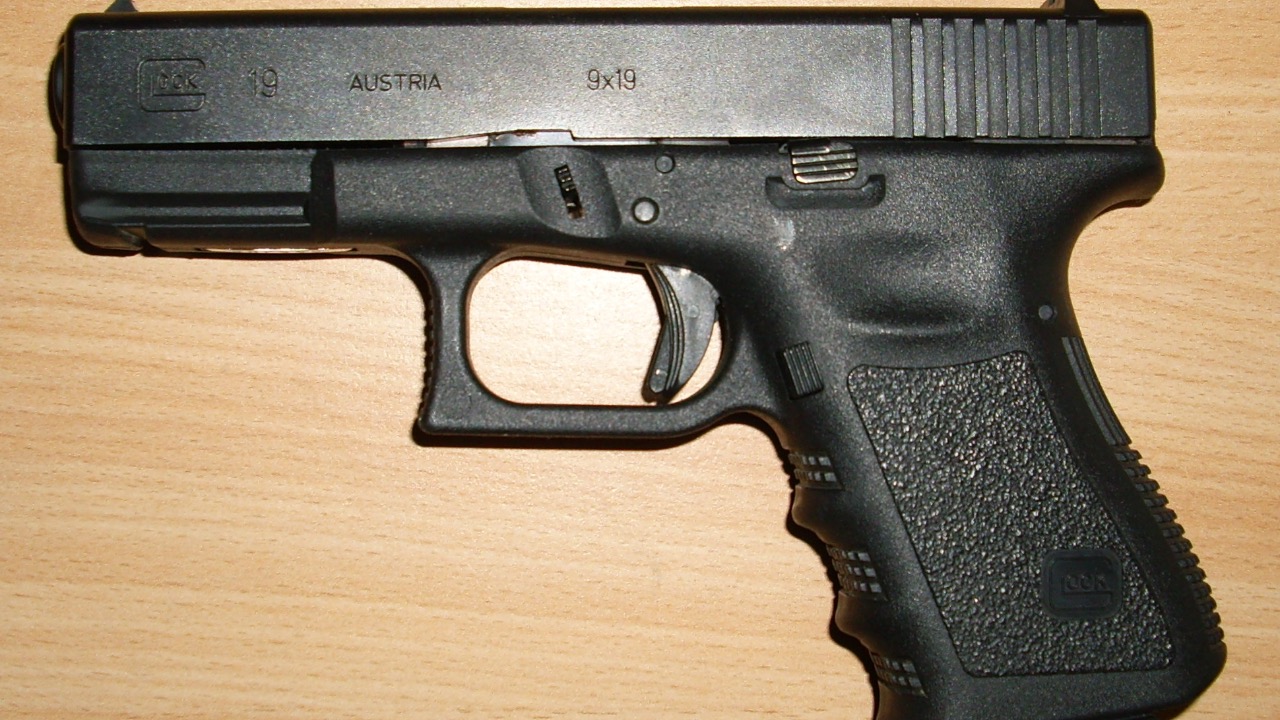
1. Glock 19 and the polymer workhorses
When shooters on reliability focused forums are asked to name a do everything sidearm, the answer “Handgun: Glock 19” appears with predictable regularity. In a discussion of firearms people would trust with their lives, the compact Glock is singled out as a top contender, alongside high end carbines like the Lewis Machine and Tool CQB, because of its combination of simplicity, parts availability and tolerance for neglect.
That consensus extends across communities. In a long running “Buy it for life” thread, one commenter notes that “As for handguns, Glocks have a great reputation for being ugly and durable,” capturing the brand’s image as a tool first and status symbol last. Another thread on the “most reliable handgun of all time” opens with the observation that Glock has roughly 40 years of track record behind it, which is remarkable for a polymer framed design that arrived long after the steel service pistol era.
Glock’s reliability reputation rests on a few concrete traits. The striker fired mechanism has relatively few parts. The loose enough tolerances and generous feed ramp geometry let the pistols digest a wide range of ammunition, including some hollow points that choke more finicky designs. The Tenifer style surface treatment resists corrosion in sweat and adverse weather, which matters for guns that live in holsters all day.
Other polymer duty pistols have earned similar praise. A video countdown of “guns you can trust your life with” opens its list with the Sauer P226 and goes on to highlight modern service pistols that, like Glock, combine high capacity with proven reliability in police and military contracts. While brand loyalties differ, the through line is clear: simple internals, consistent manufacturing and decades of field use add up to trust.
2. The 1911: a century of service
Any list of enduringly reliable firearms has to include the M1911. In the same “Buy it for life” discussion that praises Glocks, users point out that the 1911 has been in service for roughly 100 years, a figure that reflects both its original adoption and its continued use in modernized form.
That century of service spans trench warfare, island campaigns in the Pacific, Cold War skirmishes and competition ranges. The single action trigger, heavy for its size .45 ACP cartridge and all steel construction give the platform a character that many shooters still prefer over lighter polymer designs. More importantly for reliability, the original military pattern 1911 was built with generous clearances and a focus on feeding ball ammunition, which let it run in mud and grit that would stop tighter tolerance target pistols.
Modern interpretations complicate the story. Match grade 1911s with tight bushings and fitted barrels can be less forgiving of dirt and imperfect ammo. Yet the underlying design remains sound, and properly built duty oriented 1911s continue to serve in specialized military and law enforcement units. The platform’s longevity is less about nostalgia and more about a track record of delivering fight stopping hits under pressure.
3. SIG Sauer P226 and the metal service pistols
While polymer pistols dominate modern duty holsters, the classic metal framed service pistol still has a strong claim to long term reliability. The SIG Sauer P226 is a prime example. In a video roundup of “guns you can trust your life with,” the narrator starts with the P226 and positions it as a reference point for reliability among full size pistols.
The P226 earned that reputation in part through military and police contracts, where it demonstrated the ability to endure high round counts and rough handling. Its double action or single action trigger system, robust external extractor and locked breech design have proven durable in both 9 mm and .40 caliber configurations. For shooters who prefer an alloy frame and traditional controls, the P226 and its close relatives remain a benchmark for a service pistol that will keep running for decades.
Other metal framed designs share similar reputations, from classic Beretta and CZ pistols to more recent offerings. What unites them is not fashion, but a long record of real world use and a design philosophy that prioritizes function over weight savings.
4. Heckler and Coke USP and the overbuilt school
At the heavier end of the reliability spectrum sits the USP family. A recent ranking of “most reliable pistols ever made” places the USP at the top and describes how every ounce of the USP feels purpose built for survival. The same video singles out the Heckler and Coke USP as the clearest expression of that philosophy, with a slide and frame that many shooters describe as overbuilt.
The USP’s recoil reduction system, large controls and generous slide mass all contribute to its ability to digest high pressure loads and extended training cycles. It may not be the lightest or most ergonomic pistol on the market, but its reputation for running under adverse conditions has kept it in service with specialized military units and law enforcement teams long after newer designs appeared.
For shooters who prioritize long term durability over concealability, the USP represents a design school that treats extra material and conservative engineering as virtues, not liabilities.
5. Remington 870 and Mossberg 500: pump shotguns that never quit
When shotgun owners talk about longevity, two models dominate the conversation. In the “Buy it for life” thread on long lasting guns, one commenter writes that “And in regards to shotguns, the Remington 870 and Mossberg 500 have been used by military and police for the better part of a cent…” The same discussion highlights how these pump guns, in their basic configurations, have seen everything from patrol car trunks to duck blinds.
Another shooter, asked directly about the best shotgun for longevity and reliability, answers simply: “Remington 870, or Mosberg 590.” The specific reference to the 870 and 590 underscores how those model numbers have become shorthand for dependable pump guns that can be passed down across generations.
The reasons are straightforward. Both the Remington and Mossberg designs use twin action bars and steel receivers that can handle high round counts. Their manual pump action tolerates a wide range of loads and is less sensitive to fouling than many semi automatic systems. Parts and accessories are abundant, which makes it easy to keep them running even after decades of use.
In police and home defense roles, the ability to load, fire and cycle in harsh conditions gives these pump guns a staying power that newer, more complex designs have struggled to match.
6. AR 15 carbines and the modern reliability debate
Few rifles generate as much argument about reliability as the AR platform. In one widely shared discussion, a user asks which AR 15 will withstand dirt and water, and the top response states that “The AR 15 is an inherently accurate platform and it’s been developed so much, your mid tier ARs are easily as accurate as your che…” The same commenter suggests that with proper assembly and maintenance, even non premium rifles can deliver both accuracy and dependability.
Elsewhere, in the thread on firearms people would trust with their lives, the Lewis Machine and Tool CQB is named as a go to AR 15 pattern rifle. That endorsement reflects the belief that high quality manufacturers, who control their parts and testing, can produce carbines that run reliably in the same kind of dirt and sand that once fueled criticism of the platform.
Modern AR 15s benefit from decades of incremental improvements in gas port sizing, buffer systems and coatings. When paired with good magazines and ammunition, they have become a standard choice for defensive carbines, competitive shooting and patrol rifles. The key lesson is that the platform’s reliability depends heavily on build quality and maintenance, which is why experienced shooters emphasize buying from proven makers rather than chasing the lowest price.
7. AK 47 and its variations: reliability as legend
Any conversation about dependable firearms eventually reaches the AK family. In a discussion of the most dependable firearm of all time, one answer traces the evolution of rugged designs “to even modern versions” and then adds that these rifles should not be outdone by “Lee Enfield and or Springfield 1903.” In the same answer, the writer singles out the AK 47 and its variations as examples of guns that have earned legendary status for reliability.
The AK’s reputation stems from its loose tolerances, long stroke gas piston and curved magazines, all of which help it feed and fire in mud, sand and ice. It is not the most accurate service rifle, and its ergonomics lag behind more modern designs, yet its ability to function after neglect has been demonstrated in conflicts around the world.
That reputation has cultural weight as well. A Reddit thread ranking iconic firearms lists the AK 47 near the top, alongside the M1911 Pistol and the Winchester Model 1873, which reflects how strongly the AK’s image is tied to the idea of a gun that always goes bang.
8. Mauser 98 and the bolt action standard
For bolt action rifles, one design is repeatedly described as the obvious answer when reliability is the question. A detailed discussion of the most reliable guns states, “For the bolt action, the obvious answer is the Mauser 98, the most produced and copied gun in all of history.” That claim is echoed in historical analyses that list the Mauser 98 alongside other stalwarts of the early 20th century.
The Mauser’s controlled round feed system, large claw extractor and robust locking lugs make it highly resistant to extraction and feeding problems. These traits proved valuable in trench warfare and harsh colonial campaigns, where mud and debris were constant threats. The action’s strength also allowed it to handle powerful cartridges, which is why many dangerous game rifles still use Mauser pattern actions today.
A separate overview of the best and most reliable rifles used in the world wars lists the Mauser 98 alongside the British Enfield 303, the Mosin Nagant and the M1903A1, and notes that the first 440,000 M1903A1 rifles were all machined rifled. That context reinforces how the 98 and its contemporaries set a standard for durability that modern hunting rifles still follow.
9. Lee Enfield, Springfield 1903 and the other great service bolts
The same Quora discussion that highlights the AK 47 also reminds readers “Not to be outdone by Lee Enfield and or Springfield 1903,” placing those rifles in the same conversation about long term dependability. Both the British Enfield and the Springfield combined rugged construction with battlefield accuracy, and both remained in service long after newer semi automatic designs appeared.
In the overview of world war rifles, the British Enfield 303 is listed alongside the Mauser 98, Mosin Nagant and M1903A1 as among the best and most reliable rifles of those conflicts. The mention of the 303 cartridge and the detailed production figure for the M1903A1 underline how seriously historians take the engineering quality of those early 20th century rifles.
For modern shooters, surplus Enfield and Springfield rifles still attract attention as durable, all steel machines that can be kept running with basic maintenance. Their longevity reflects both the materials and the manufacturing standards of their era.
10. Mosin Nagant: the rough but relentless rifle
The Mosin Nagant is often described less as a refined rifle and more as a tool that simply refuses to quit. In the same historical summary that lists the British Enfield 303 and Mauser 98, the Mosin Nagant appears as one of the key rifles used in the world wars, a role that exposed it to some of the harshest combat conditions imaginable.
Its long, heavy barrel and simple bolt design are not elegant, but they are forgiving. The rifle’s ability to function in extreme cold, with minimal lubrication and crude ammunition, helped cement its reputation. For collectors and budget minded shooters today, surplus Mosins remain an entry point into full power rifle cartridges, in part because owners trust that the rifles will keep working even when their stocks are battered and their finishes worn.
11. M1 GARAND: semi automatic reliability in WWII
When semi automatic rifles were still a novelty, the M1 GARAND proved that a gas operated system could be both reliable and battle ready. A detailed history of iconic firearms notes that WWII was the ideal proving ground for the M1 GARAND, since its gas operated action provided a much higher rate of fire than bolt action contemporaries while still maintaining reliability in the hands of a skilled marksman.

Leo’s been tracking game and tuning gear since he could stand upright. He’s sharp, driven, and knows how to keep things running when conditions turn.


