Colombian security forces kill five members of a major cocaine cartel
Colombian security forces have killed five alleged members of one of the country’s most powerful cocaine cartels in a major operation that officials are touting as a strategic blow against organized crime. The raid unfolded just days before Colombia’s president is due to meet President Donald Trump in Washington, sharpening the political and diplomatic stakes around the country’s long fight against drug trafficking.
The dead are described as part of the Gulf Clan, a group that authorities regard as a dominant player in cocaine production and export, particularly through Colombia’s Caribbean corridor. Their deaths, and the capture of additional suspects, underscore how the country’s internal security battles are tightly intertwined with regional diplomacy, domestic politics and the evolving drug war agenda in both Bogotá and Washington.
The operation that left five cartel members dead
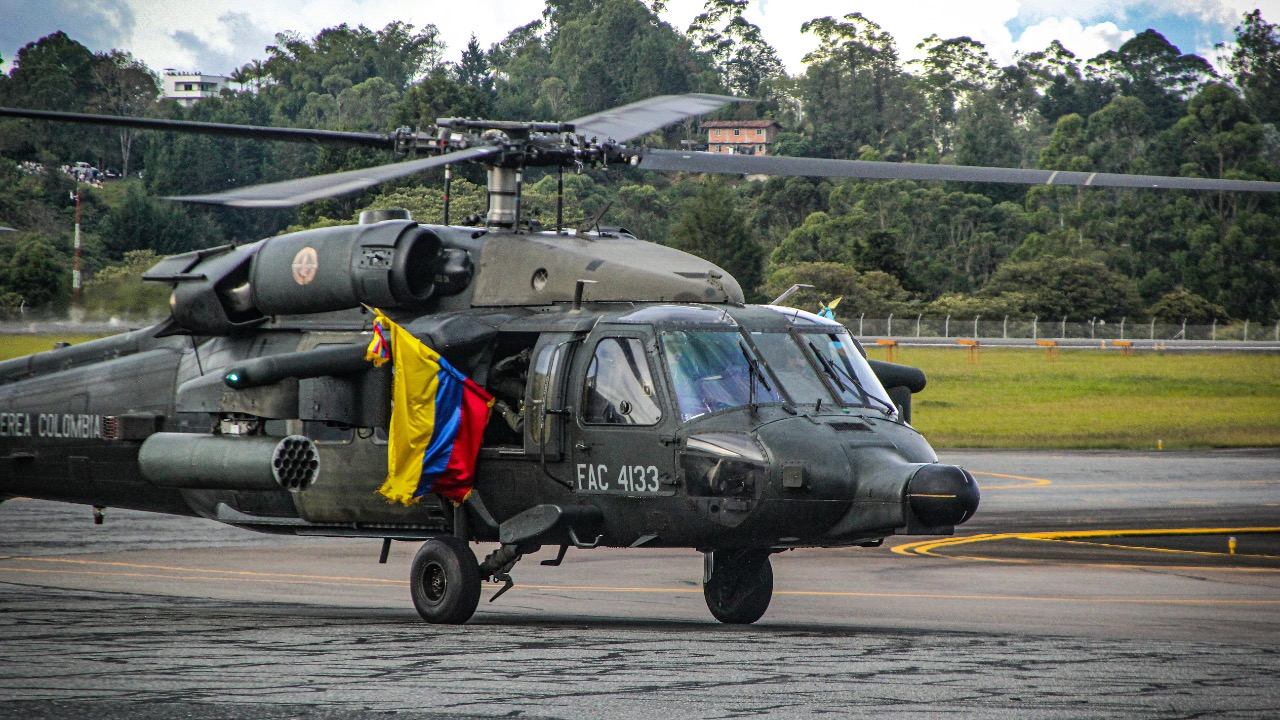
According to Colombian authorities, the latest offensive targeted a cell of the Gulf Clan that was operating in a strategic trafficking zone, and it ended with five suspected members killed and at least two others taken into custody. Officials have framed the raid as part of a broader push by Colombia to dismantle the cartel’s command structure, not just seize drugs or weapons. The clash reportedly involved elite units that specialize in tracking high value targets linked to cocaine production and export routes.
Initial accounts describe a coordinated security sweep in which troops and police converged on rural strongholds used by the group in the Caribbean region, where the Gulf Clan has long exploited coastal access to move shipments toward Central America and the United States. In the aftermath, Colombian commanders highlighted the number of suspects neutralized and detained as evidence that the operation went beyond a routine patrol, pointing to the five dead and two captured as a sign that the state is willing to confront heavily armed traffickers head on, even at the risk of fierce firefights with entrenched criminal networks.
Who the Gulf Clan are and why they matter
The Gulf Clan, sometimes described by Colombian officials as the country’s most powerful drug trafficking organization, grew out of the remnants of right wing paramilitary groups that demobilized in the mid 2000s. Over time, it consolidated control over key coca growing areas and coastal smuggling routes, turning itself into what security services now call a top cocaine cartel with a strong presence in the Caribbean region. Reports on the latest raid repeatedly identify the dead as members of this Gulf Clan structure, underscoring how central the group remains to Colombia’s cocaine economy.
Security officials have long argued that the cartel’s influence extends beyond drug trafficking into illegal mining, extortion and local political intimidation, particularly in rural communities where the state’s presence is weak. The group’s ability to corrupt local authorities and intimidate residents has made it a persistent challenge for successive governments, which now present operations like the one that killed five alleged members as part of a sustained campaign to weaken the cartel’s leadership and financial base. International coverage of the latest raid, framed as International News, reflects how the cartel’s activities resonate well beyond Colombia’s borders.
A carefully timed move before talks with Trump
The timing of the operation is politically charged, coming just days before Colombia’s president is scheduled to travel to the White House for high level discussions with President Trump. In Washington, drug trafficking and migration remain central themes in the bilateral agenda, and Colombian officials are keenly aware that concrete security gains can strengthen their hand in conversations about aid, trade and joint enforcement. By publicizing the deaths of five cartel members and the capture of others, Bogotá is signaling that it is delivering measurable results against cocaine networks that supply the U.S. market.
The operation also unfolds against a backdrop of political tension between Trump and Colombia’s leftist leader Gustavo Petro, who has often clashed rhetorically with the U.S. president over issues such as climate policy and approaches to the drug war. Reports on the raid note that the U.S. leader is preparing to host his “leftist sparring rival” Petro, which makes the showcase of a successful anti cartel strike a useful talking point for both sides. For Trump, it reinforces a narrative of pressure on producer countries, while for Petro it offers evidence that his government is not soft on organized crime even as it pursues broader social reforms.
How Colombian forces executed the raid
Colombian commanders have described the operation as a joint effort involving specialized security units that moved into a Gulf Clan stronghold after intelligence pinpointed the presence of key operatives. The clash reportedly unfolded in rugged terrain where the cartel has historically maintained camps and storage sites, and officials say the five suspects were killed in an exchange of fire as forces closed in. Accounts of the raid emphasize that two additional individuals were taken alive, with one source specifying that five were killed and two captured, a detail that appears in a version of the report that highlights how many suspects killed and two.
From a tactical perspective, the raid fits a pattern of Colombian operations that seek to decapitate cartel structures by targeting mid and upper level commanders in remote areas where they feel secure. Security services often rely on a mix of human intelligence, intercepted communications and aerial surveillance to locate such targets before sending in ground forces. In this case, officials have stressed that the group hit in the Caribbean region was considered a key node in a “powerful cocaine” network, language that appears in multiple accounts of the incident and is echoed in descriptions of powerful cocaine cartels that dominate the trade.
Regional and international reactions
The news of the raid has reverberated across the region, with outlets in neighboring countries highlighting that Colombian forces killed five members of the Gulf Clan ahead of talks with U.S. officials. Coverage framed as International News has stressed that the operation is not only a domestic security story but also a development with implications for Central American transit countries and the United States. Governments in the region, which grapple with spillover violence and corruption linked to Colombian cocaine, are likely to welcome any sign that Bogotá is degrading the capacity of major suppliers.
At the same time, human rights advocates and analysts will be watching closely for more detail on how the raid unfolded, including whether there were any civilian casualties or due process concerns around the treatment of detainees. Colombia’s security forces have faced scrutiny in the past over extrajudicial killings, and while there is no specific allegation of wrongdoing in this case based on available reports, the pattern of lethal raids inevitably raises questions about transparency and accountability. The fact that the story has been picked up by regional outlets that cater to users “in Belize and abroad,” as one Posted item notes, underlines how closely international audiences track Colombia’s security policies.
Petro’s balancing act on drugs and security
President Gustavo Petro has tried to redefine Colombia’s approach to drugs, arguing that decades of militarized policy have failed to curb cocaine production while inflicting heavy costs on rural communities. Yet his government continues to rely on security operations against groups like the Gulf Clan, and the killing of five alleged cartel members illustrates how difficult it is to shift strategy while powerful criminal organizations remain entrenched. Reports on the latest raid repeatedly refer to “Colombian security forces” killing five members of a “powerful cocaine” cartel, language that appears in accounts carried by outlets that describe the Colombian campaign.
Petro’s critics at home argue that his rhetoric about moving away from the traditional drug war risks alienating partners like the United States, while his supporters insist that social investment and rural development must accompany any security push. The latest operation gives the president an opportunity to show Trump that he is serious about confronting cartels even as he presses for changes in how both countries think about drug policy. References in coverage to the U.S. leader hosting his “leftist sparring rival” Petro capture the political theater around their meeting, which will now be framed in part by the images and statistics emerging from this raid.
What the numbers say about Colombia’s cocaine fight
While the killing of five cartel members is significant, it is only one data point in a much larger and more complex struggle. Colombia remains the world’s leading producer of cocaine, and groups like the Gulf Clan have repeatedly shown an ability to regenerate leadership and adapt routes when under pressure. The fact that security forces can identify and hit a cell in the Caribbean region, described in reports as a key area for a “top cocaine cartel,” shows that intelligence and operational capacity remain strong, but it does not by itself guarantee a lasting reduction in supply. Accounts that describe the group as a “powerful cocaine” cartel in the Caribbean highlight how deeply embedded it is in the country’s trafficking geography, a point underscored in versions of the story that refer to top cocaine groups.
For Washington, metrics such as hectares of coca eradicated, tons of cocaine seized and numbers of traffickers arrested or killed remain central to evaluating cooperation with Bogotá. The latest raid, with its clear tally of five dead and two captured, fits neatly into that framework and will likely be cited in talking points around the Trump Petro meeting. Yet long term success will depend on whether such operations are paired with efforts to reduce demand, disrupt financial flows and offer viable economic alternatives in rural areas. The description of the targets as members of a “powerful cocaine cartel” in multiple accounts, including those that simply refer to “Colombian security forces” killing five members of a cartel, as in one Colombian focused report, underscores how central such groups remain to the country’s security landscape.
Media framing and public perception
How the story is framed in domestic and international media will shape public perceptions of both the raid and the broader drug war. Some accounts emphasize the operational success and the description of the Gulf Clan as a “powerful cocaine cartel,” presenting the deaths of five members as a clear victory for the state. Others highlight the political context, noting that the operation comes just before high profile talks with Trump and that the U.S. leader is preparing to host his leftist counterpart Petro. One widely circulated version of the story, carried on a platform that republishes international content, underscores that Colombian security forces killed five members of a powerful cartel, a formulation that reinforces the image of a state on the offensive.
For Colombian audiences, the narrative may be more nuanced, filtered through years of experience with both cartel violence and heavy handed security responses. Skeptical readers will look for details about who the dead were within the Gulf Clan hierarchy, whether any civilians were harmed and how the operation fits into Petro’s broader promises of reform. Internationally, the focus is more likely to rest on the link to U.S. policy and the symbolism of a major raid just before a White House meeting. Another version of the story, which again stresses that Colombian security forces killed five members of a powerful cocaine cartel, feeds into a familiar storyline of producer countries trying to demonstrate progress to a demanding partner in Washington.
What comes next for Colombia’s drug war
The immediate aftermath of the raid will likely involve follow up operations as security forces exploit intelligence gathered from the site and from the two captured suspects. Historically, such arrests have sometimes led to further strikes against safe houses, laboratories or financial operatives linked to the same network. Colombian officials will be under pressure to show that the deaths of five Gulf Clan members are part of a sustained campaign rather than an isolated show of force timed for diplomatic effect. One detailed account that focuses on how security forces killed cartel members in the Caribbean region suggests that authorities see this as a key theater in which to keep up pressure.

Leo’s been tracking game and tuning gear since he could stand upright. He’s sharp, driven, and knows how to keep things running when conditions turn.