
Aldi Plans to Enforce Eight-Item Checkout Limit in New State, With $112 Fine for Violations
Aldi shoppers in one U.S. state are being warned about a strict new checkout rule: a hard cap of eight items in certain lanes, with a $112 penalty threatened for customers who ignore it. The policy, which has circulated widely among local shoppers and on social media, has sparked confusion and debate over whether a discount grocer can effectively police basket sizes with a traffic ticket–style fine.
The rule is framed as a way to keep express lines moving and protect the low-cost chain’s efficiency-focused model. Yet the idea of an eight-item ceiling backed by a triple-digit charge raises questions about consumer rights, store enforcement practices, and the growing tension between speed and fairness at the checkout.
What happened
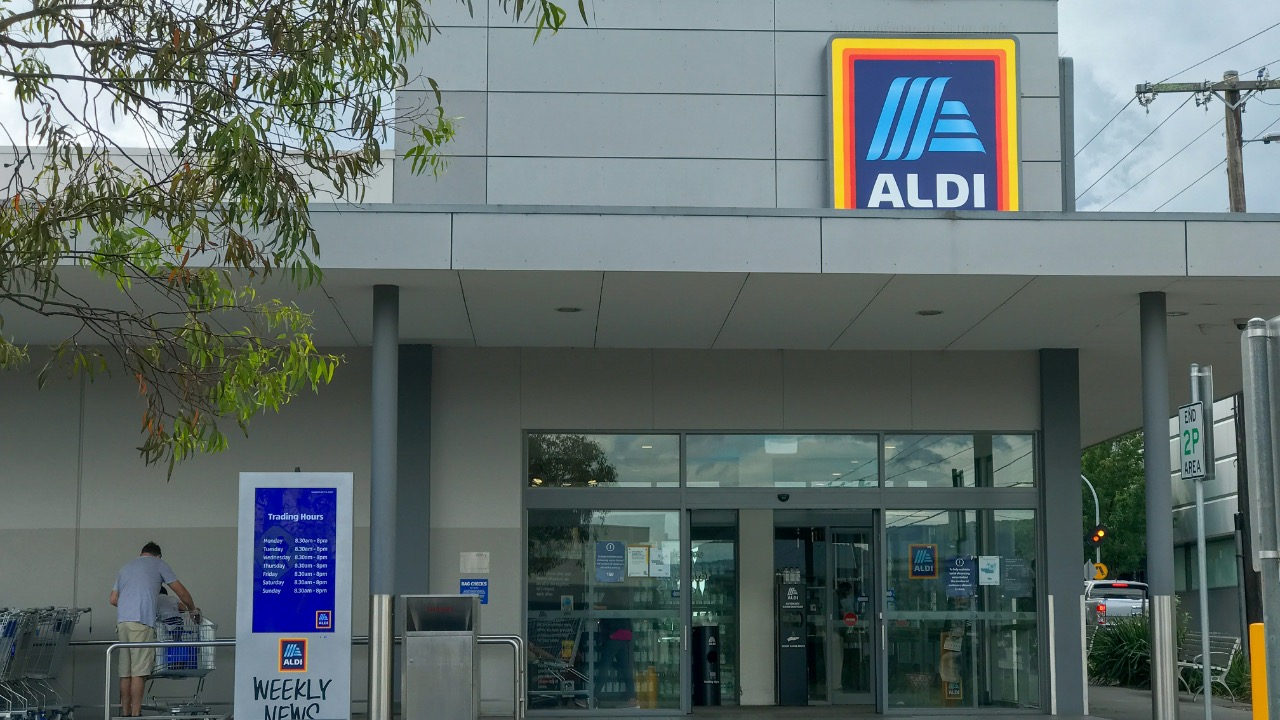
The controversy centers on an Aldi store policy in one U.S. state that limits customers in specific express lanes to a maximum of eight items. Signage and local chatter describe a system in which anyone who pushes a larger basket through those lanes risks a $112 penalty, framed as a fine rather than a simple store fee. The amount has caught public attention because it is unusually high for a retail setting, more in line with a traffic citation than a grocery store surcharge.
Details reported by shoppers indicate that the rule applies only to designated express checkouts, not to every register in the store. Regular lanes still accept full carts, while the express lanes are reserved for very small shops such as a handful of pantry items or a quick top-up trip. The eight-item threshold is significantly tighter than the 10, 12, or 15 item caps that many supermarkets use for express service, which helps explain why the rule has generated such intense reactions.
According to one widely shared account, the $112 figure is not arbitrary. It is presented as a formal penalty linked to local regulations, suggesting that the store is leaning on state-level rules around disorderly conduct or similar infractions to give the policy teeth. That framing has led some customers to assume that the fine would be enforced by law enforcement or a local court rather than just by store staff, which has only added to the confusion over what authority Aldi actually has in this context.
Reporting on the issue highlights that the policy has been associated with a specific U.S. state where Aldi has expanded rapidly in recent years and where local rules around minor offenses can carry set dollar amounts. A detailed account of the eight-item cap and the $112 charge appears in coverage of an Aldi express lane that has become a flashpoint for shoppers. That report describes customers who felt blindsided by the strict limit and the threat of a fine for what many see as a minor etiquette breach rather than a punishable offense.
In practice, enforcement appears to rely heavily on signage and cashier discretion. Shoppers say they have seen posted notices near the express lanes that spell out the eight-item rule and reference the $112 penalty. Some describe staff warning customers who approach with too many items and directing them to a regular lane instead of processing the order. Others say the fine is mentioned as a threat but rarely, if ever, actually imposed, which has fueled speculation that the penalty is more of a deterrent than a regularly applied charge.
There is no indication in the available reporting that Aldi has rolled out this exact policy nationwide. Instead, the eight-item limit and associated fine appear to be tied to a particular state and possibly even a subset of stores within that state. Even so, the story has spread widely as shoppers in other regions debate whether similar rules could appear in their own Aldi locations or at rival chains that also rely on tight staffing and fast-moving checkouts.
Why it matters
The dispute over an eight-item express cap and a $112 penalty touches several sensitive points in the modern grocery experience. For Aldi, which has built its brand on speed, low prices, and no-frills service, strict checkout rules are part of a broader operational philosophy. The chain already expects customers to bag their own groceries, return cart deposits, and move quickly through minimalistic aisles. A hard limit in express lanes fits that efficiency-first culture, at least on paper.
For shoppers, however, the introduction of a triple-digit penalty changes the tone from friendly guidelines to quasi-legal enforcement. Many customers are accustomed to seeing signs that say “8 items or less” or “10 items or fewer,” but those are usually treated as social norms rather than binding rules. People might sneak in an extra carton of eggs or a second loaf of bread without expecting more than a dirty look from the person behind them in line. The idea that a few extra items could trigger a $112 charge feels disproportionate to many and raises questions about proportionality and fairness.
The size of the penalty also matters in a period of elevated food prices and tight household budgets. A chain that markets itself as a budget-friendly option risks alienating its core customers if it appears to punish minor missteps with a charge that could exceed the cost of an entire week’s groceries for some shoppers. Even if the fine is rarely enforced, the perception that Aldi is willing to threaten such a penalty can erode trust and make shoppers feel less welcome or more anxious at the checkout.
There is also a legal and regulatory dimension. If the $112 figure is tied to state law, the policy blurs the line between store rules and government-backed sanctions. Customers may wonder whether a private retailer can effectively deputize itself to issue fines that resemble traffic tickets. Questions arise about due process, appeal rights, and what happens if a shopper refuses to pay. Without clear communication about how the penalty is structured and who actually collects it, the policy risks being seen as arbitrary or even abusive.
From a consumer rights perspective, transparency is the key issue. Shoppers expect to know the terms of any potential charges before they enter a transaction, especially when those charges are substantial. That means clear signage at store entrances, unambiguous notices at the express lanes, and consistent explanations from staff. Reports that some customers learned about the $112 figure only after approaching the register suggest that communication has not always met that standard.
The policy also reflects a broader shift in how retailers manage customer behavior. As more stores introduce self-checkout kiosks, digital receipts, and automated loss-prevention systems, there is growing friction between convenience and control. Some chains have experimented with weight sensors that lock self-checkout stations if an item is not scanned correctly, while others have hired additional security to monitor exits. Aldi’s eight-item rule, paired with a steep penalty, fits into this trend of using hard rules and potential sanctions to shape how customers move through the store.
At the same time, the reaction to the policy shows how quickly such measures can backfire in the age of social media. Stories of shoppers being warned or threatened with a fine spread rapidly, often stripped of nuance or local context. A rule that might have been intended as a targeted solution for one busy store becomes a symbol of corporate overreach in the public imagination. For a brand that relies heavily on word-of-mouth and loyal repeat customers, that kind of reputational damage can be costly.
Competitors are watching closely. If Aldi manages to enforce a strict express lane cap without significant backlash, other discount grocers or big-box retailers might be tempted to adopt similar policies. Conversely, if the $112 penalty becomes a cautionary tale about pushing customers too hard, rivals may highlight their more flexible approach to express lanes as a selling point. Either way, the episode is likely to influence how retailers think about balancing efficiency with customer goodwill.
There is also a cultural angle. Express lane etiquette has long been a source of low-level tension in supermarkets, with debates over whether a family with one full cart should split it between two people to qualify for the limit or whether a basket of 12 small items is really worse than 8 large ones. By tying that etiquette to a fixed financial penalty, Aldi’s policy effectively turns a social norm into a quasi-contractual rule. That shift can change how people relate to one another in the checkout line, replacing informal negotiation and courtesy with fear of punishment.
What to watch next
The next phase of this story will hinge on how Aldi responds to the public reaction and whether the policy is adjusted, clarified, or quietly dropped. One key question is whether the chain will issue a formal explanation of the eight-item cap and the $112 figure, including how often the penalty has actually been applied. A clear statement that the fine is a legal maximum rather than a routinely imposed charge, for example, could soften some of the backlash while preserving the deterrent effect.
Observers will also be watching for signs of regulatory interest. If the penalty is indeed tied to state law, consumer protection officials or local lawmakers might examine whether the arrangement is consistent with existing rules on unfair or deceptive practices. They may ask whether customers receive adequate notice, whether the fine is proportionate to the offense, and whether there is a clear process for disputing or appealing a charge. Any formal inquiry could push Aldi to revise the policy or provide more detailed disclosures.
Customer behavior will be another telling indicator. If shoppers in the affected state begin avoiding express lanes altogether for fear of triggering the penalty, Aldi may find that the rule undermines its own goal of speeding up small transactions. Long lines in regular lanes and underused express registers would be a visible sign that the policy is misaligned with shopper preferences. Conversely, if the rule succeeds in keeping express lines limited to very small baskets without widespread complaints, Aldi might view it as a success and consider extending similar caps to other locations, perhaps with better communication and without a formal fine attached.
There is also the possibility that other retailers will experiment with softer versions of the same concept. Instead of a fixed monetary penalty, a chain might adopt a system where customers who repeatedly violate express lane limits are asked to use only regular lanes for a period of time, or where staff are empowered to cancel a transaction and redirect the shopper if they exceed the item cap. Such approaches would still enforce the rule but without invoking state-level fines or legal language that can alarm customers.
Technology could play a role as well. As more stores invest in point-of-sale systems that can automatically count items and flag transactions that exceed a set threshold, enforcement of express lane limits may become more consistent. Aldi and its competitors might use those tools to nudge cashiers and customers toward compliance, for example by prompting a message when a basket in an express lane contains more than eight items. How retailers choose to use that data, whether as a gentle reminder or as part of a stricter enforcement regime, will shape the shopping experience.

Leo’s been tracking game and tuning gear since he could stand upright. He’s sharp, driven, and knows how to keep things running when conditions turn.