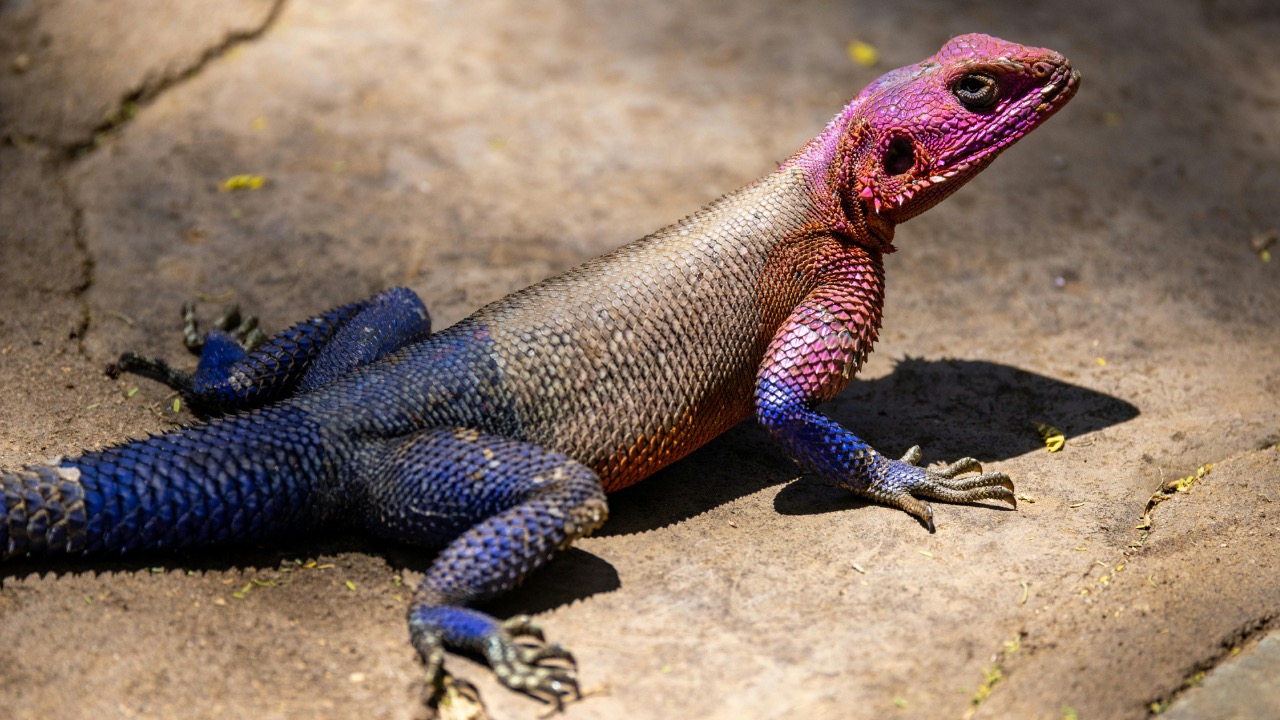
An invasive African reptile spreads in Florida, prompting concern from state officials
Florida has been ground zero for invasive reptiles for decades, but every so often a new species forces wildlife managers to recalibrate. This time, it’s the African red-headed agama, a fast-moving lizard that has quietly expanded its footprint across parts of the state. What started as scattered sightings has turned into established breeding populations in multiple counties.
You’ve probably seen photos of their bright orange heads and blue-gray bodies. They look exotic, almost ornamental. But state officials aren’t focused on their color. They’re focused on how quickly they reproduce, how well they adapt to disturbed habitat, and what that means for native wildlife already under pressure.
The Species Behind the Headlines
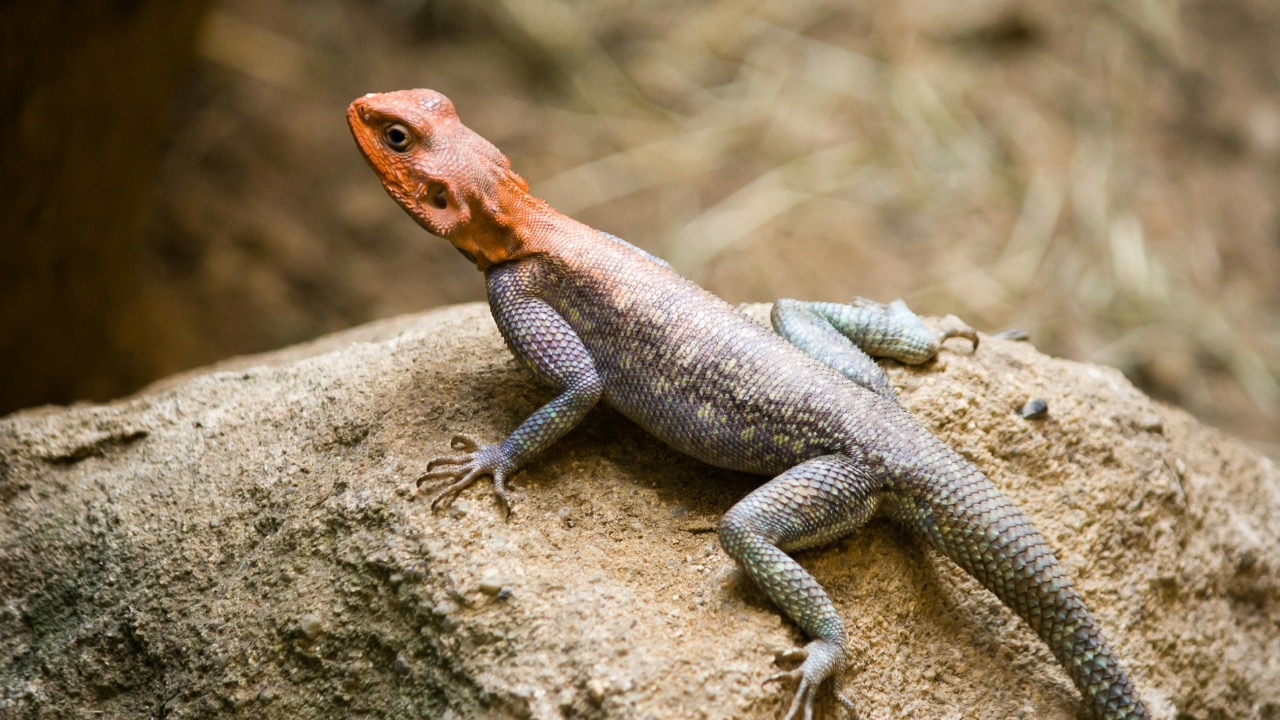
The African red-headed agama (Agama picticauda) is native to sub-Saharan Africa. Males are especially noticeable during breeding season, with vivid red and orange heads and darker bodies. Females and juveniles are more muted, which helps them blend into rock piles, fences, and roadside debris.
You’ll find them basking on concrete walls, woodpiles, and even utility boxes. They thrive around human development, which makes them hard to contain. Unlike some invasive reptiles that stick to wetlands, these agamas prefer dry, open areas. That flexibility has allowed them to expand steadily in urban and suburban environments.
How They Got Here
Like many of Florida’s invasive reptiles, the agama’s arrival traces back to the pet trade. Escapes from breeding facilities and intentional releases are widely believed to be the source of the original populations. Once established, the species spread naturally and through accidental human transport.
You don’t need a large founding group for a lizard like this to gain a foothold. Females lay multiple clutches of eggs each year, often in sandy soil or loose fill around construction sites. With Florida’s warm climate and year-round food sources, survival rates are high. That combination has allowed localized colonies to turn into expanding populations.
Where They’re Showing Up
Established populations are documented in South Florida, including parts of Miami-Dade and Broward counties. In recent years, sightings have also increased along the state’s Gulf Coast and in central regions. Reports often cluster near rail lines, industrial yards, and residential developments.
You might notice them darting across driveways or perched on fence posts. Their spread hasn’t been as explosive as Burmese pythons in the Everglades, but officials are tracking expansion carefully. When a nonnative species begins appearing in new counties, it signals that reproduction and dispersal are no longer isolated events.
Why Officials Are Concerned
At first glance, a colorful lizard might not seem like a crisis. But invasive reptiles compete with native species for food and habitat. The agama feeds on insects, small vertebrates, and even the eggs of other reptiles. That puts pressure on native lizards and ground-nesting wildlife.
You’re looking at a species that adapts quickly and tolerates human disturbance. That combination makes eradication difficult once populations mature. State biologists worry about long-term ecological impacts, especially in areas already stressed by development. Early detection and rapid response matter, and once a reptile becomes widespread, control becomes more expensive and less effective.
What Makes Them Hard to Control
These agamas are quick, wary, and capable climbers. They wedge themselves into cracks in concrete, beneath debris, and inside rock piles. That behavior makes them tough to trap or remove in large numbers. Traditional control methods don’t always scale well in dense urban environments.
You can’t rely on cold snaps to thin populations, either. While extreme freezes can reduce numbers, South Florida rarely stays cold long enough to eliminate established colonies. Their reproductive rate fills in gaps quickly. Wildlife managers face a familiar Florida challenge: a species that thrives in the same places people do.
What You Can Do as a Resident
If you live in affected areas, you play a role in slowing their spread. Avoid releasing unwanted pets, and report sightings through state wildlife reporting systems when requested by officials. Removing debris piles and sealing cracks around structures can make properties less attractive to nesting agamas.
Florida law allows humane killing of certain nonnative reptiles on private property without a permit, provided it’s done safely and legally. That approach has helped address other invasive species, but public awareness remains key. The earlier a new population is identified, the better the odds of keeping it contained before it becomes another permanent fixture in the state’s already crowded reptile scene.

Asher was raised in the woods and on the water, and it shows. He’s logged more hours behind a rifle and under a heavy pack than most men twice his age.