Black bear wanders into live report during violent incident coverage
A live television report from a quiet Monrovia cul-de-sac turned surreal when a black bear suddenly wandered into the camera frame behind a reporter who was describing a recent violent encounter between a local woman and a protective mother bear. The unscripted appearance briefly transformed a grim story about a clawing and an eventual euthanasia into viral video, even as neighbors processed the loss of a familiar animal and questioned how wildlife and people can safely share the same streets.
The scene captured a collision of modern news, suburban sprawl and wild instinct: a journalist speaking calmly into a microphone, a cameraman focused on composition, and a large bear padding into view only yards away. What viewers saw as a startling photobomb was, for wildlife officials and residents, another sign of how closely human life in the San Gabriel foothills now overlaps with the daily routes of hungry, habituated bears.
The Monrovia attack that set the stage
The live report that later went viral was originally focused on a frightening encounter in a Monrovia neighborhood, where a woman walking her dog had been clawed by a mother bear. According to coverage of the case, the woman suffered only minor injuries when the animal swiped at her, an outcome that authorities described as consistent with defensive behavior by a mother protecting cubs rather than a predatory attack. The incident unfolded on a residential street as the victim walked her pet, a routine errand that suddenly highlighted the risks of living near bear habitat.
Officials with the California Department of Fish and Wildlife were called in to investigate and to monitor the animal that had confronted the woman. Reports describe officials at the scene using traps and other tools in an effort to locate the bear and evaluate whether it posed an ongoing threat to public safety. The agency has broad authority to intervene when a wild animal injures a person, and in this case the presence of cubs, along with the relatively minor injuries, complicated the decision about what should happen next.
Neighbors in Monrovia were already familiar with black bears roaming the hillsides and occasionally venturing down into residential streets, trash cans and driveways. The city sits along a natural corridor that allows animals to move between the San Gabriel Mountains and lower elevations, and residents have long reported sightings around Oakglade Drive and similar foothill blocks. The attack on a woman simply walking her dog, however, shifted those sightings from curiosity to concern and set the context for a television crew to arrive and document the aftermath.
As the story spread, wildlife officials confirmed that the bear involved in the attack was eventually captured. That confirmation, along with the presence of state personnel in the neighborhood, helped explain why a television station sent a reporter and a camera operator to the scene for a live update. The crew arrived not to chase viral content but to cover a serious public safety case that had already prompted a petition from residents who hoped the mother bear and her cubs could be spared.
The surreal live shot and the bear behind the lens
The now famous live shot unfolded on a driveway in Monrovia, where reporter Erin Myers stood in front of a camera and prepared to describe the earlier attack. She was teasing the segment for viewers, explaining that she was in a neighborhood where a woman had been clawed and where wildlife personnel were working to manage a bear that had become a focus of both fear and sympathy. As she spoke, the camera briefly cut away to pre-recorded footage, then returned to the live scene.
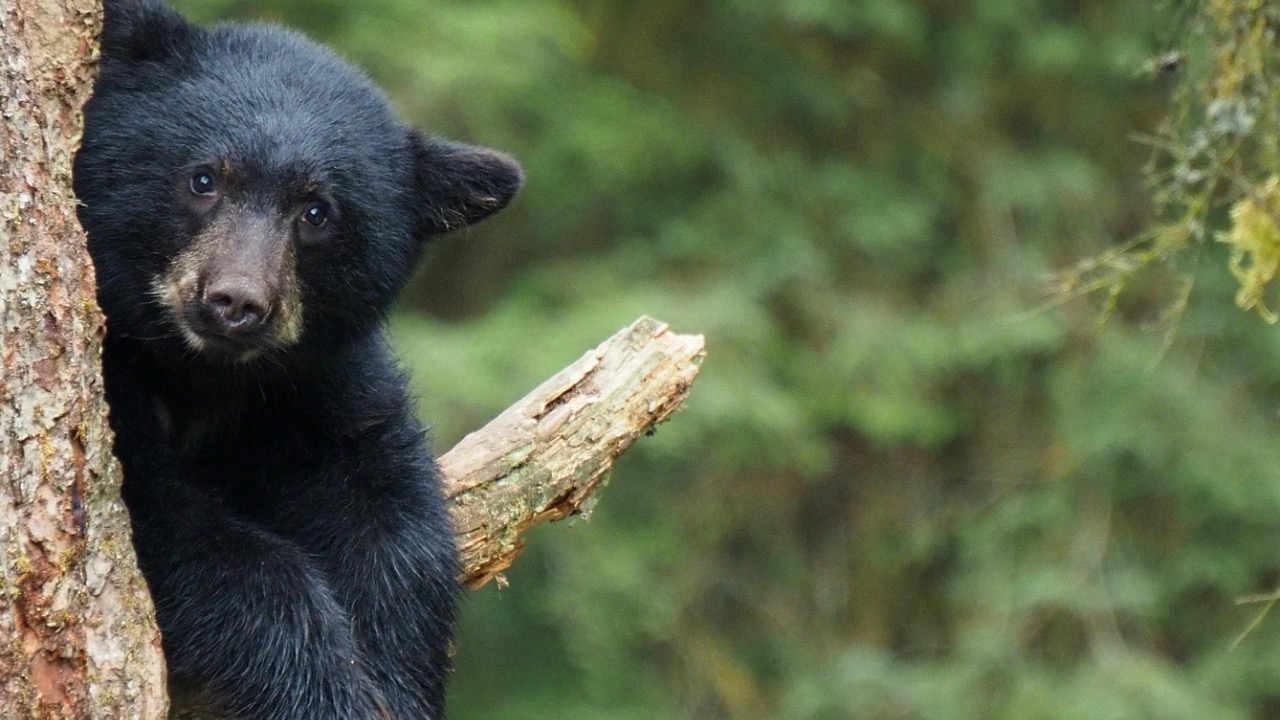
When the shot came back, a black bear had wandered into frame behind Myers, strolling across the driveway and into the yard as if it owned the property. The animal appeared calm rather than aggressive, sniffing around and moving at a steady pace, but its sheer size and proximity made the moment instantly dramatic. The cameraman adjusted the frame to keep both the reporter and the animal visible, creating a split-second decision about whether to prioritize safety or the story.
Video shared from the segment shows Myers stepping back from the scene as she realizes the bear is directly behind her. She keeps her composure, warning viewers and the studio that the animal is present and that she and the crew need to move away. The bear, seemingly uninterested in the humans, continues to wander through the property. The crew then pulls back and repositions, allowing the animal to pass while the control room reacts in real time.
Photography and video outlets later highlighted the moment as a striking example of how quickly a routine assignment can change. One detailed account described how a black bear wandered into a cameraman’s live shot during a news report on bear attacks, and how the crew responded by stepping back from the animal while still capturing the footage. That coverage emphasized the split-second judgment required when wildlife suddenly enters a controlled broadcast environment and the thin line between documenting an event and becoming part of it.
The surreal quality of the clip was amplified by the fact that the report itself was about bear encounters and safety. Viewers saw a journalist calmly discussing a recent attack, only to have a bear stroll into view behind her in the same neighborhood. The juxtaposition made the video instantly shareable, and within hours it was circulating widely online as one of those rare moments when live television and unpredictable nature collide.
Meet the bear at the center of the story
Behind the viral clip was a specific animal with a history in Monrovia. Local coverage identified the bear as a female that residents had nicknamed Blondie, a reference to her lighter coloring. Blondie had reportedly been involved in at least two encounters with people, including the clawing of the woman who was walking her dog and another earlier incident that raised concerns among wildlife officials.
Blondie and her cubs had become familiar sights in the neighborhood, with some residents sharing photos and videos of the family moving through yards and across streets. For many people in Monrovia, the bears were part of the local identity, a reminder that the city sits on the edge of wild country. That sense of shared space, however, was tested when one of those animals injured a person and forced state officials to weigh public safety against community sentiment.
Reports indicate that after the attack, wildlife personnel captured Blondie and her cubs as part of their response. The capture took place against a backdrop of public debate, with neighbors circulating a petition that urged officials to spare the mother bear. Social media posts and local interviews described residents as heartbroken at the prospect that the animal might be killed, even as they acknowledged the fear that followed the clawing incident.
Wildlife officials later confirmed that the bear responsible for the attack was euthanized. That confirmation linked the animal in the viral live shot to a much heavier outcome and turned what some viewers saw as a humorous interruption into a coda for a bear that had reached the end of her tolerance in a human dominated landscape. The cubs were also captured, and their fate became part of the broader conversation about how agencies handle young animals when a mother is removed.
In television follow ups, local journalists described Blondie as a Monrovia bear that had made headlines for attacking a woman and for photobombing a morning newscast. The dual identity captured the tension of the story: a wild animal that could both charm and injure, whose presence on camera delighted distant viewers while leaving nearby neighbors to grapple with the consequences of her behavior.
How the clip went viral and the social media reaction
Once the live shot aired, short clips of the bear walking behind Erin Myers were quickly clipped and shared across social platforms. One widely viewed segment showed the moment the bear entered the driveway behind Myers, along with the surprised reaction from newsroom staff members who were watching the feed in real time. The contrast between the calm tone of the report and the sudden appearance of the animal gave the video a cinematic quality that users were eager to repost.
National outlets picked up the footage, framing it as a wild bear wandering into a reporter’s live shot during a report about a bear attack. The story traveled far beyond Southern California, with viewers who had never heard of Monrovia suddenly learning the name of the city and seeing its quiet streets as a backdrop for a dramatic wildlife encounter. The clip was shared by major news accounts, individual journalists and ordinary users who marveled at the timing.
On Instagram, related coverage of the Monrovia bear attack drew significant engagement. One reel that updated followers on the bear attack and the decision to euthanize the mother bear attracted 5,021 likes and 960 comments, a sign of how intensely people responded to the story. Many of those comments came from users who expressed sympathy for the animal, frustration with officials, or support for the neighbors who had tried to save her.
Other social channels carried similar debates. Links circulated through platforms like X, where posts directed users to watch the bear emerging behind the television reporter during the live broadcast. Some users focused on the bravery and composure of Myers and her cameraman, while others zeroed in on the ethical questions raised by the decision to kill a mother bear that had been defending her cubs.
Photo and video communities also highlighted the technical and ethical dimensions of the clip. Comment threads discussed how the cameraman handled focus and framing as the bear entered the shot, and whether the crew should have cut away sooner. Those conversations often referenced the original footage of the black bear wandering into the live shot during a news report on bear attacks, using it as a case study in how quickly a relatively controlled environment can change when wildlife is involved.
Neighbors, petitions and a community in conflict
For people who live in Monrovia, the story looked very different from the viral clip that captivated distant viewers. Neighbors who had seen Blondie and her cubs in their yards described a mix of affection and anxiety. Some residents saw the bears as part of the neighborhood’s character, while others worried about children, pets and the possibility of another injury after the woman was clawed.
Local television coverage captured that tension. In one segment, a reporter spoke with neighbors who said they were devastated by the decision to euthanize the mother bear. They described learning that the animal had been put down despite a petition from the community that asked officials to spare her. The petition reflected a belief among some residents that Blondie had acted out of instinct rather than malice, and that relocation or other non lethal options should have been pursued more aggressively.
At the same time, other neighbors emphasized their fear after the attack. The woman who was injured had been engaged in a routine activity, walking her dog, when the bear swiped at her. Even though her injuries were described as minor, the incident shattered any illusion that the bears were harmless background characters. Parents spoke of being more cautious about letting children play outside, and dog owners reconsidered early morning or evening walks near the foothills.
The city itself was caught between those perspectives. Officials had to coordinate with the California Department of Fish and Wildlife, which operates under state laws and guidelines that prioritize human safety once a bear injures a person. That framework left limited room for local sentiment, even in a community where many residents saw Blondie as a neighbor rather than a threat.
The live shot with the bear in the background became a kind of Rorschach test for that divide. Some viewers saw a gentle animal minding its own business while humans intruded with cameras and lights. Others saw a large predator strolling through a suburban driveway only days after clawing a woman, a reminder that wild animals can cause real harm even when they appear calm on camera. Both views were present in Monrovia, often within the same block.
Wildlife officials, policy and the decision to euthanize
The decision to euthanize Blondie rested with wildlife authorities who must balance public safety, animal welfare and community sentiment. According to reports, officials with the California Department of Fish and Wildlife were on the scene in Monrovia, monitoring the bear and attempting to trap it after the attack. Once they confirmed that the captured bear was the same animal that had clawed the woman, they faced a policy framework that treats such incidents as serious threats.
State guidelines generally classify a bear that injures a person as a public safety risk, particularly when the animal has become comfortable moving through residential areas in search of food. In the Monrovia case, the fact that Blondie had been involved in at least two encounters heightened concerns that she might approach people again. Officials also had to consider the presence of cubs and the likelihood that they would learn similar behavior if allowed to remain in the same environment.
Wildlife officials confirmed that the bear responsible for the attack was captured and euthanized, a decision that aligned with those guidelines but clashed with the hopes of residents who had signed the petition. The agency framed the move as necessary to protect the community, especially given the popularity of the neighborhood among people who walk dogs, bike and hike near the foothills.
Local broadcasts later described the outcome as a sad update on the bear attack in Monrovia, with neighbors learning that the mama bear had been put down despite the petition to save her. Interviewed residents spoke of being heartbroken as the news spread, even as they acknowledged the fear that followed the clawing. The cubs, captured along with their mother, became a secondary concern, with questions about whether they would be relocated or placed in a facility.
The Monrovia case also intersected with broader coverage of bear encounters in Southern California. One widely shared story described a wild bear crashing a live news segment about an intense bear encounter in the region, underscoring how frequently such incidents now occur. Authorities in those cases similarly emphasized investigation, monitoring and, when necessary, removal of animals that repeatedly come into close contact with people.

Leo’s been tracking game and tuning gear since he could stand upright. He’s sharp, driven, and knows how to keep things running when conditions turn.