CCW holder says a simple parking stop led to his permit being taken — with no clear reason why
What begins as a routine encounter with police can quickly reshape a gun owner’s life. For concealed carry permit holders, a simple traffic or parking stop can be the moment when years of training, background checks, and state approvals collide with split-second decisions by officers and licensing authorities. When the result is a permit suspension with no clear explanation, it raises sharp questions about transparency, due process, and how far the government can go in the name of public safety.
The experience of one California permit holder, who says a brief stop led to his license being taken without a clear reason, mirrors a larger national tension. Across the country, courts, sheriffs, and state agencies are still drawing the lines on what police can demand from licensed carriers during a stop and how easily a permit can be stripped away afterward.
A driveway gunfight and a permit suddenly gone

In Los Angeles, a homeowner named Vince Ricci walked up to his front door one night with a coffee in hand and his young child and wife nearby. Security video later showed multiple armed men rushing through the gate toward the family. Ricci drew his concealed handgun and fired at the attackers, who scattered and fled in a dark-colored sedan. He had a valid concealed carry weapons license, often called a CCW, and had cleared the background checks and training that California demands of applicants.
Ricci later described the confrontation in a video produced for the NRA, appearing at a shooting range and recounting how he returned from the gym to find himself and his family facing armed intruders. The clip, shared with Fox News Digital, introduced him as a Los Angeles resident and married father of one who believed he had done exactly what a responsible gun owner is supposed to do when confronted with a direct threat. The video helped turn his case into a national flashpoint over self defense and licensing.
Not long after the shootout, Ricci said he was notified that his CCW had been suspended. In his telling, the permit was stripped away even though he had not been charged with a crime and had used his handgun against armed robbers on his own property. He framed the move as punishment for defending his family, and his story spread quickly through gun rights circles.
Local television coverage confirmed that the Los Angeles County Sheriff’s Department had in fact suspended Ricci’s concealed carry license. The department acknowledged that the homeowner had fired on armed robbers and that the incident was captured on security cameras, then confirmed that his permit was placed on hold while officials reviewed his compliance with licensing rules. In that coverage, the case was presented as a stark example of how a permit holder can go from vetted citizen to disarmed subject in a matter of days.
What the sheriff’s department says it is allowed to do
When pressed on why Ricci’s permit had been suspended, the sheriff’s department pointed to state level rules that govern who may carry a concealed handgun in public. In a statement, officials said that the California Department of Justice establishes guidelines for concealed carry licensing and that local sheriffs are responsible for enforcing those standards. The department stressed that it has a duty to ensure permit holders continue to meet the criteria for good moral character, responsible behavior, and use of a properly documented weapon.
According to that same statement, the department argued that it must investigate any use of a concealed handgun by a licensee, especially when shots are fired. The review can include how the gun was stored, whether it was listed on the permit, and whether the carrier followed instructions from responding officers. The sheriff’s office said that Ricci’s CCW could be reinstated immediately if he complied with certain follow up steps, which were not fully detailed in the public explanation. Officials framed the suspension as a temporary administrative action, not a permanent revocation.
At the same time, the department insisted that it supports self defense rights and wants to ensure that Second Amendment rights are protected. It characterized its own role as a balancing act between public safety and individual liberty, arguing that it must look closely at any use of deadly force by a permit holder. In the department’s view, that scrutiny justifies short term suspensions while investigators sort out whether licensing conditions were followed.
For permit holders like Ricci, however, the distinction between suspension and revocation can feel academic. Once the card is pulled, they are effectively disarmed in public and may be unable to carry at all while the investigation runs its course. That loss of status can follow a single encounter with police, even if the underlying incident began with a clear case of armed robbery or a simple traffic stop.
Ricci’s account of what really triggered the suspension
Ricci has offered a different explanation for why his permit was taken. In interviews, he said that after the shooting he was frustrated by how long it took officers to arrive and by what he saw as a lack of urgency in the investigation. He acknowledged that he raised his voice at LAPD officers who responded to the scene, and he later claimed that he was told the suspension was connected to that behavior.
According to Ricci, officials suggested that his “yelling” at officers and his criticism of the investigation showed poor judgment and disrespect for law enforcement. He has said that he believes this reaction, rather than any problem with his firearm or paperwork, is what cost him his CCW. That claim has not been fully confirmed by internal records, but it has resonated with gun owners who worry that subjective impressions of attitude or cooperation can be used against them.
Coverage of the case described how Ricci felt he had been punished for speaking out. He said he had complied with the law, used a permitted handgun, and then publicly questioned why his family had been targeted and why more was not being done to address violent crime. In his view, the suspension looked less like a neutral administrative review and more like a response to a vocal critic. The department has not publicly detailed any disciplinary rationale beyond the broad reference to licensing guidelines.
Ricci’s struggle to get his permit back has continued beyond the initial suspension. Later reporting described how he had to navigate multiple layers of bureaucracy and how he still lacked clarity on the exact steps required for full reinstatement. The narrative of a homeowner who defended his family and then fought to regain his license has become a rallying point for those who argue that California’s licensing system gives sheriffs too much discretion and too little obligation to explain themselves.
How a parking or traffic stop can become a CCW test
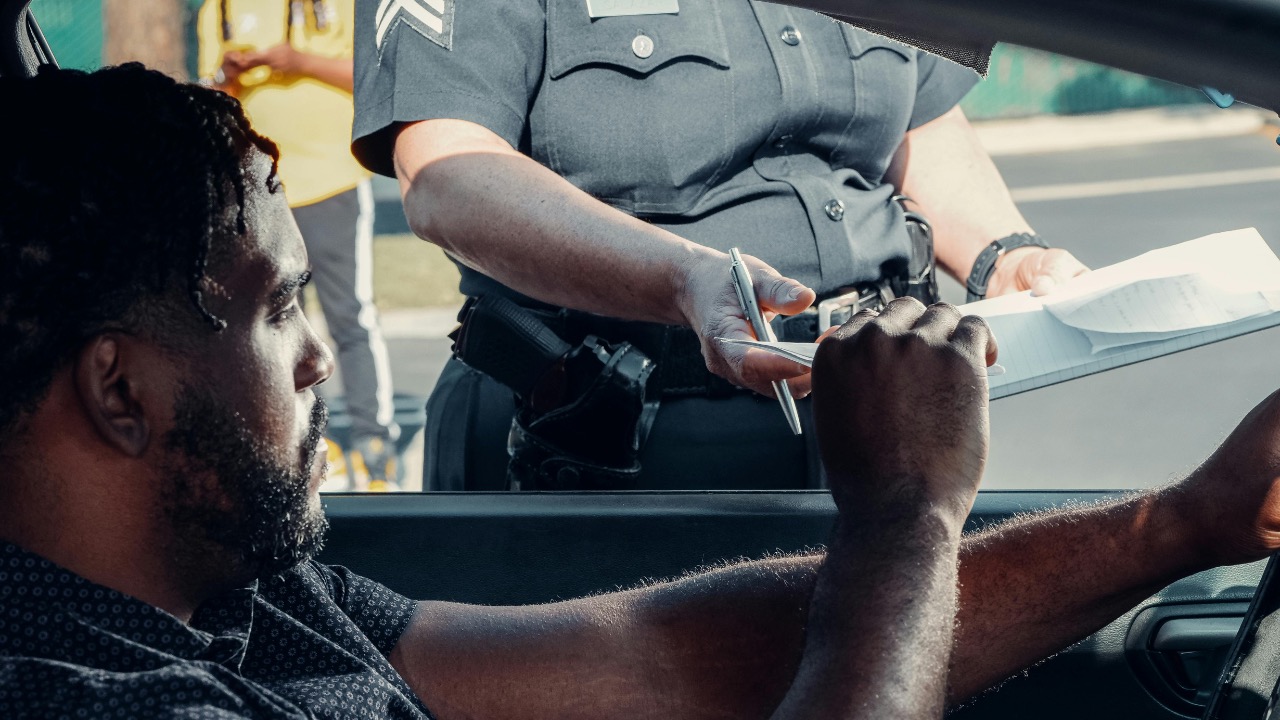
Ricci’s driveway shootout was dramatic, but the mechanics of his suspension echo what can happen in far more mundane encounters. Across the country, a traffic or parking stop is often the first contact between a permit holder and an officer who has the power to question their license, their firearm, and their behavior. What begins as a citation for a missing front plate or expired meter can quickly expand into a broader investigation of a driver’s right to carry.
Courts have repeatedly examined how far officers can go during these stops. In one recent case, a state supreme court upheld a traffic stop that led to the discovery of a gun in a vehicle. The court found that extending the stop to ask additional questions and check for weapons was constitutional, and that officers had acted within their authority when they continued to investigate instead of immediately issuing a ticket and leaving. The decision emphasized that officer safety concerns and reasonable suspicion can justify extra steps during what might otherwise be a brief roadside encounter.
Other courts have drawn sharper limits. In Wisconsin, The Milwaukee County Circuit Court granted Wright’s motion to suppress evidence after officers extended a stop based largely on the fact that he had a concealed carry permit. The court concluded that, although officers lawfully stopped Wright for the underlying traffic issue, they could not treat his status as a licensed carrier as automatic proof that he posed a threat to officer safety. That ruling highlighted a key principle: a permit alone does not convert a routine stop into a justification for a full search.
Legal commentary has also pointed to federal precedent like Glover, where the Supreme Court held that police may initiate a stop if a registered vehicle owner has a revoked license, provided there is no information suggesting that the owner is not the one driving. That reasoning has been used to support stops that begin with database checks and end with broader inquiries into a driver’s legal status, including whether they are allowed to carry a concealed weapon. For CCW holders, the same databases that confirm their license can also flag them for extra scrutiny.
California’s shifting rules for where and how people can carry
California’s regulatory backdrop has grown more complex in recent years, which affects how sheriffs treat permit holders who come into contact with police. A bulletin labeled Legal Updates Regarding CCW Licenses explained how a permanent injunction from the United States Distric court altered enforcement of some state level carry restrictions. That document, dated Aug 21 2025, described how certain provisions could no longer be applied in the same way, and it instructed deputies on how to adjust their practices around licensing and enforcement.
Another training document titled Factual and Procedural Background Senate Bill walked deputies through the impact of Senate Bill 2, which took effect at the start of 2024 and banned guns on more than two dozen types of property. The bulletin explained that even licensed carriers could no longer bring firearms into a wide array of “sensitive places,” including many public venues and private businesses that did not explicitly allow carry. For permit holders, that meant a new layer of restrictions that could be triggered during any police contact on those properties.
Local agencies have had to interpret these rules while also responding to high profile incidents like Ricci’s. In public statements, the Los Angeles County Sheriff’s Department has said that it relies on California Department of Justice guidelines for issuing and suspending CCW licenses and that it must ensure each permit holder continues to meet those standards. That includes verifying that firearms are properly documented, that carriers avoid prohibited locations, and that they follow instructions from law enforcement during any encounter.
At the same time, state and county officials have faced pressure from both sides. Gun control advocates have urged tighter screening and quicker suspensions when any question arises about a permit holder’s judgment. Gun rights advocates have argued that the new rules, combined with aggressive enforcement, risk turning technical violations into grounds for disarmament. Ricci’s case, in which a homeowner who shot at armed robbers ended up losing his license, has become a shorthand example in that debate.

Leo’s been tracking game and tuning gear since he could stand upright. He’s sharp, driven, and knows how to keep things running when conditions turn.