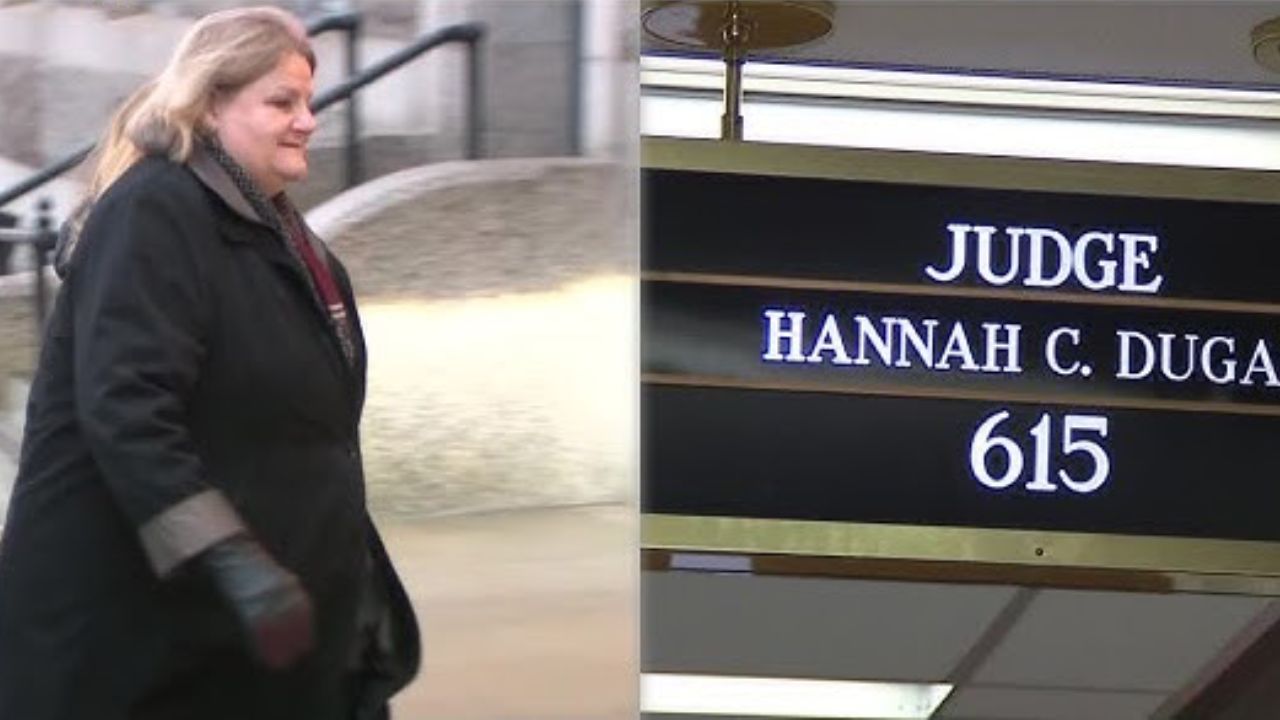
Former Milwaukee Judge Faces Sentencing in Illegal Immigrant Escape Case
A former Milwaukee County judge is awaiting sentencing after a federal jury found she helped an undocumented immigrant escape from law enforcement, a rare criminal case involving a member of the judiciary. The verdict has intensified debate over how far local officials can go in resisting federal immigration enforcement and what happens when a judge is accused of crossing the line from advocacy into obstruction.
The case centers on Hannah Dugan, who previously served on the Milwaukee County Circuit Court and was convicted on federal charges tied to an incident in her courtroom involving a noncitizen defendant. Her sentencing will test how the justice system responds when one of its own is found to have interfered with immigration authorities during a live case.
What happened
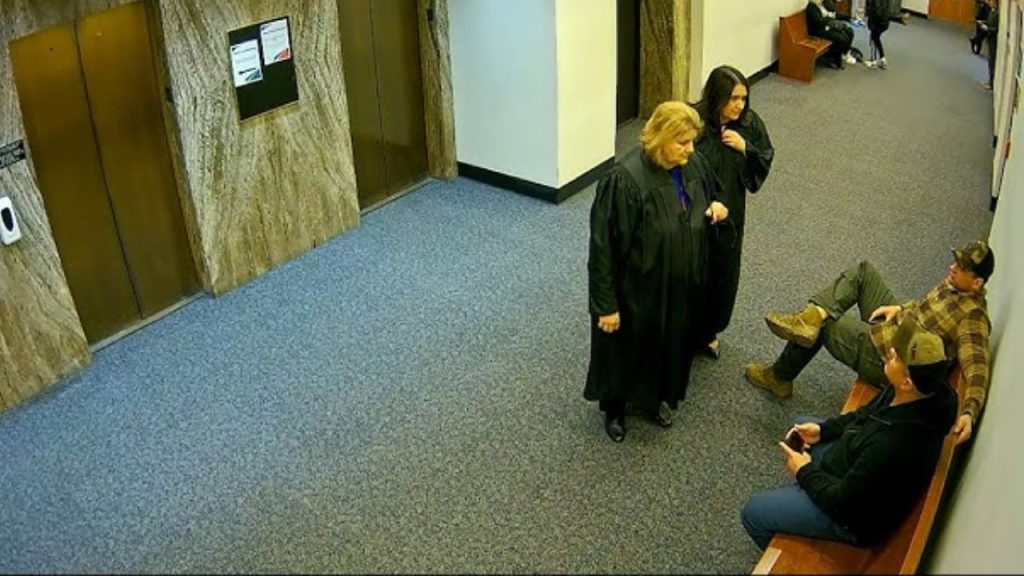
According to federal prosecutors, former Milwaukee County Circuit Judge Hannah Dugan used her authority on the bench to help a noncitizen defendant avoid contact with federal immigration agents who were waiting to take the person into custody. The government alleged that Dugan orchestrated the defendant’s exit from the courthouse in a way that prevented Immigration and Customs Enforcement officers from making an arrest, turning a routine court appearance into a contested act of resistance to federal law.
Jurors heard testimony that ICE agents were present at the Milwaukee County courthouse for a scheduled appearance by a defendant who was identified in federal filings as an undocumented immigrant. Prosecutors argued that Dugan, aware of the agents’ presence, directed courtroom staff and deputies to move the defendant through alternative corridors and exits rather than the standard path where agents were stationed. The government contended that this conduct was not a mere administrative choice, but a deliberate effort to thwart a lawful arrest and interfere with the execution of federal immigration law.
The case turned on whether Dugan’s actions amounted to obstruction of justice and aiding and abetting an escape. Federal charging documents described a series of communications in which Dugan allegedly questioned why ICE agents were in the courthouse, asked staff to avoid bringing the defendant through a public hallway, and ultimately ensured that the defendant left the building without contact with federal officers. Prosecutors said these steps were coordinated in real time as the hearing unfolded, and they presented the sequence as evidence of intent to prevent the arrest.
Dugan’s defense attorneys countered that she had broad discretion over courtroom security and the movement of defendants, and that her decisions were aimed at maintaining order and safety rather than undermining federal law. They argued that local judges frequently manage how and where defendants are escorted, especially in high-tension situations, and that Dugan did not give any explicit instruction to violate a federal order or to hide the defendant’s whereabouts. The defense also emphasized that the defendant had appeared for the scheduled court proceeding and that Dugan did not dismiss the case or alter its outcome on the merits.
Despite those arguments, a federal jury found Dugan guilty on multiple counts related to obstruction and assisting an escape, concluding that her conduct crossed from permissible courtroom management into criminal interference. The verdict followed detailed testimony from courthouse deputies, staff, and ICE personnel who described how the defendant was moved and how agents were left waiting in an area the defendant never reached. The jury’s decision confirmed the government’s theory that Dugan’s instructions were aimed at preventing a lawful immigration arrest, rather than simply avoiding disruption inside the courthouse.
The conviction marked a stunning turn for a jurist who had previously been seen as a prominent figure in Milwaukee’s legal community. Dugan had served on the bench and, before that, worked in roles that involved civil rights and public interest law. Her supporters described her as a judge who was attentive to the rights of defendants and skeptical of heavy-handed enforcement tactics. Federal prosecutors, however, argued that those instincts evolved into a willingness to disregard legal boundaries when faced with an immigration case she viewed as unjust.
With the verdict in place, the case has moved into the sentencing phase. Federal guidelines for obstruction and related offenses can include prison time, supervised release, and fines, with the final range shaped by factors such as the judge’s prior record, the nature of the interference, and whether the conduct involved abuse of a position of trust. The presiding federal judge will weigh arguments from both sides about whether Dugan’s status as a former judge warrants a harsher sentence as a deterrent or a more moderate one in light of her prior service and lack of criminal history.
Why it matters
The Dugan case has become a flashpoint in the national struggle over immigration enforcement inside courthouses, a setting where local and federal priorities often collide. For years, immigrant advocates have criticized ICE for making arrests in or near court buildings, arguing that the practice deters victims and witnesses from coming forward. At the same time, federal officials maintain that courthouse arrests are a lawful and efficient way to apprehend individuals who are already in custody or under court supervision. Dugan’s conviction, which grew out of an incident in a Milwaukee courtroom, brings that conflict into sharp focus.
Federal prosecutors framed the case as a straightforward matter of upholding the rule of law. In their view, a state judge cannot selectively shield defendants from federal agents simply because she disagrees with immigration policy. They argued that Dugan’s actions undermined cooperation between local institutions and federal authorities, and that allowing such conduct to go unpunished would invite other officials to impede enforcement when they personally object to the law. The jury’s verdict, in this framing, reinforces that even judges are accountable when they obstruct federal operations.
Immigrant rights supporters see the situation differently. They point to a broader pattern in which local officials in cities and counties with large immigrant populations have sought to limit their involvement with federal immigration enforcement. Sanctuary policies, noncooperation ordinances, and internal rules that restrict ICE access to local facilities all reflect a belief that civil immigration enforcement should not dominate local criminal justice systems. From that perspective, Dugan’s courtroom decisions fit into a larger resistance to the presence of immigration agents in spaces where defendants are supposed to access justice without fear.
The case has also raised questions about judicial ethics and the boundaries of discretion. Judges routinely make decisions about how to manage their courtrooms, including when to close proceedings, how to schedule cases, and how to coordinate with law enforcement. In many jurisdictions, judges have adopted policies that discourage or limit civil immigration arrests in court, often citing safety and access to justice. The Dugan verdict suggests that there is a line between setting such policies and actively helping a specific individual evade federal custody. Where that line lies is now a subject of intense debate among legal scholars and practitioners.
Some legal experts argue that the conviction could have a chilling effect on judges who are inclined to push back against federal immigration tactics. If judges fear that any decision that frustrates ICE could be construed as obstruction, they may defer more readily to federal agents, even when doing so conflicts with local priorities or raises concerns about fairness. Others contend that the case is narrow, tied to specific facts about Dugan’s alleged coordination of an escape, and that judges who simply set general policies about courthouse access are unlikely to face similar charges.
Public reaction in Milwaukee and beyond has been sharply divided. Critics of Dugan argue that she abused her robe to impose her personal politics on a live case, effectively deciding that federal immigration law should not apply in her courtroom. Supporters counter that she was responding to a climate in which noncitizen defendants fear that any trip to court could lead to deportation, and that her decisions were guided by a commitment to ensure that cases proceed without the disruptive presence of armed agents in hallways and waiting areas.
The verdict has also become part of a broader political narrative about immigration and the role of local officials. National figures who favor aggressive enforcement have cited the case as evidence that some judges and prosecutors are obstructing immigration law, while advocates for immigrants see it as an example of the federal government punishing local resistance. In that sense, the sentencing of a former Milwaukee judge is being watched not only by lawyers and judges, but by political actors who see it as a test of how far Washington will go to assert control over immigration policy at the local level.
The case has drawn particular attention because it involves a member of the judiciary rather than a mayor, sheriff, or city council. Judges are often seen as neutral arbiters, insulated from political battles. When a judge is accused of using the bench to interfere with federal agents, the incident cuts to questions about the separation of powers and the integrity of the courts. The outcome may influence how judicial conduct commissions and ethics bodies approach future complaints involving judges and immigration enforcement.
Federal authorities have signaled that they view the verdict as a message to other officials who might consider similar actions. By securing a conviction against a former judge, prosecutors have demonstrated a willingness to bring obstruction charges in cases that involve interference with civil immigration arrests, rather than only traditional criminal investigations. That approach could shape how local agencies respond when ICE appears at courthouses, jails, or police stations, and may prompt some jurisdictions to formalize their policies to avoid crossing legal lines.
Reporting on the case has highlighted that the jury found Dugan guilty after hearing detailed accounts of her conduct in the courtroom, including how she handled the defendant’s movement and her interactions with courthouse staff. One account of the verdict described how the jury sided with prosecutors who portrayed her as having intentionally aided an undocumented immigrant’s escape from federal agents, a narrative that has fueled national discussion about judicial resistance to immigration enforcement, as reflected in coverage of the jury ruling.
What to watch next
The next major development will be Dugan’s sentencing, which is expected to clarify how harshly the federal system treats obstruction tied to immigration enforcement when the defendant is a former judge. Sentencing guidelines provide a range, but the presiding judge has discretion to go above or below that range based on factors such as acceptance of responsibility, prior public service, and the perceived need for deterrence. Prosecutors are likely to argue that a significant sentence is necessary to discourage other officials from interfering with federal agents, while the defense will emphasize Dugan’s career and the nonviolent nature of the offense.
Observers will be watching whether the court treats Dugan’s status as an aggravating factor, on the theory that judges are held to a higher standard, or as a mitigating one, given her years of service and lack of prior criminal conduct. The sentencing hearing will also provide a forum for victim impact statements or broader commentary from ICE and local officials about how the incident affected their operations. Any written opinion that accompanies the sentence could become a reference point for future cases involving alleged obstruction of immigration enforcement.

Leo’s been tracking game and tuning gear since he could stand upright. He’s sharp, driven, and knows how to keep things running when conditions turn.