Green tip ammo has a reputation — here’s what it actually does
Green tip ammo has carried a reputation for years that doesn’t quite line up with reality. You’ve probably heard it called “armor-piercing” more times than you can count, usually by someone who hasn’t spent much time behind a rifle. The truth is more grounded—and a lot more useful if you actually shoot.
What you’re dealing with is a military-designed round built for consistency, penetration on light barriers, and reliable performance out of rifles like the AR-15. It’s not magic, and it’s not a gimmick either. Once you understand what it actually does, the conversation gets a whole lot clearer.
Green Tip Refers to M855, Not a Special Category
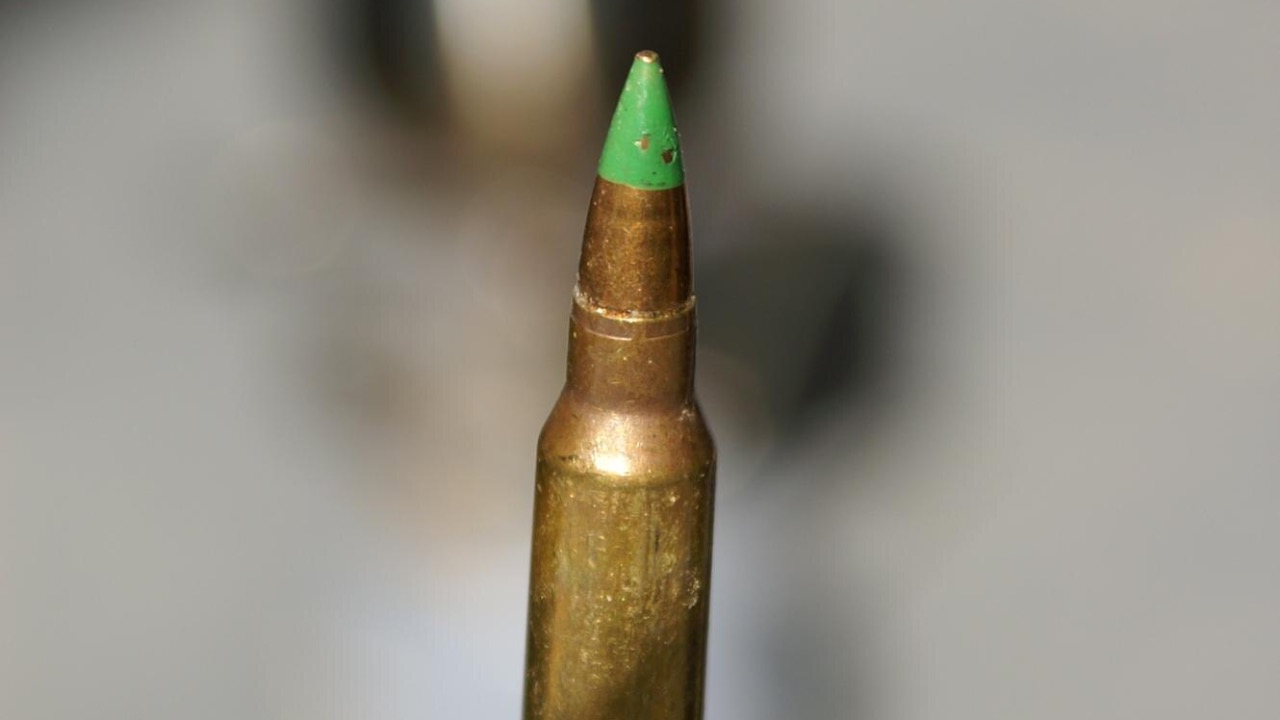
When you hear “green tip,” you’re talking about M855, a specific 5.56x45mm NATO round. The green paint on the tip isn’t decoration—it’s a military identifier. That’s it. It tells you what the bullet is, not that it belongs to some special class of ammo.
M855 was adopted to give standard-issue rifles better performance at distance and improved penetration on light obstacles. It’s a 62-grain bullet with a steel penetrator inside a lead core. That construction is what drives most of the conversation, but it’s still a standard military ball round at its core—not some exotic outlier.
It’s Not True Armor-Piercing Ammo
This is where most of the confusion comes from. M855 gets labeled as armor-piercing, but that’s not accurate in the legal or technical sense. True armor-piercing rounds are built with hardened cores designed specifically to defeat armor plate.
M855 has a mild steel penetrator, and that’s a different animal. It can punch through light materials better than standard lead-core rounds, but it’s not built to defeat modern body armor. In fact, many types of armor rated for rifle threats will stop it without much trouble. Calling it armor-piercing stretches the definition past what it actually does in the real world.
The Steel Penetrator Has a Purpose
That small steel insert in the nose of the bullet wasn’t added for hype—it serves a practical role. It helps the round maintain structure when passing through light barriers like sheet metal, glass, or thin wood.
Out in the field, that matters more than people think. A standard soft lead core can deform or fragment too early when it hits something before reaching the target. The penetrator helps the M855 stay intact a bit longer. You’re not getting unstoppable performance, but you are getting more consistency when obstacles get in the way.
Accuracy Isn’t Its Strong Suit
If you’re chasing tight groups, M855 usually isn’t your first choice. It’s built for battlefield reliability, not precision shooting. The mixed-core design can lead to slight inconsistencies in flight compared to match-grade rounds.
You’ll often see wider groupings compared to 55-grain FMJ or dedicated match ammo. That doesn’t make it useless—it still shoots fine for general use—but it’s not what you reach for when you’re trying to print clean groups at distance. It was designed to hit targets reliably under varied conditions, not win accuracy contests.
It Performs Differently on Impact Than You Might Expect
A lot of shooters assume M855 will hit harder or behave dramatically on impact because of the steel tip. In reality, its terminal performance can be less consistent than lighter, faster rounds.
Fragmentation—the thing that makes 5.56 effective—depends heavily on velocity. M855 often needs higher speeds to break apart the way people expect. Out of shorter barrels or at longer distances, it may pass through with less disruption than a 55-grain round. That surprises people who expect the penetrator to translate into more dramatic results on target.
It Can Damage Steel Targets
One place where M855 stands out—and causes problems—is when you shoot it at steel targets. That penetrator can pit or crater steel that would otherwise handle standard lead-core ammo without issue.
If you shoot steel regularly, this matters. Damaged plates aren’t only expensive—they can become unsafe. That’s why many ranges ban green tip outright. It’s not because it’s “too powerful,” but because it wears down targets faster and increases the risk of unpredictable ricochets.
It Was Designed for Military Use, Not Civilian Needs
M855 was built to meet military requirements, plain and clear. That means feeding reliably in service rifles, maintaining performance across a wide range of conditions, and offering some barrier penetration.
Those priorities don’t always line up with what you want as a civilian shooter. Whether you’re target shooting, hunting, or working on precision, there are often better options tailored to those roles. M855 still works, but it wasn’t designed with your specific use in mind.
Barrel Length Affects How It Performs
The performance of M855 changes depending on the rifle you’re running. Out of a longer barrel, you get higher velocity, which helps with both fragmentation and overall effectiveness.
Shorter barrels tell a different story. Velocity drops off, and with it, the round’s ability to perform the way it was intended. That’s why you’ll hear mixed opinions about it. A shooter running a 20-inch rifle may see very different results than someone using a compact carbine.
It’s Widely Available but Often Misunderstood
One reason green tip has such a strong reputation is how common it is. It’s been produced in large quantities for years, and it’s easy to find compared to more specialized loads.
That availability keeps it in circulation—and keeps the myths alive. People hear “steel penetrator” and fill in the blanks with assumptions. Once you strip that away, you’re left with a practical, middle-of-the-road round that does a few things well and a few things less so.
It Has Its Place—But It’s Not a Do-It-All Round
At the end of the day, M855 is a tool with a specific job. It handles light barriers better than basic FMJ and runs reliably in most rifles chambered for 5.56 NATO.
But it’s not the best at everything. There are better choices for accuracy, better choices for terminal performance, and better choices for specialized uses. Once you see it for what it is, you stop expecting it to cover every role—and start using it where it actually makes sense.

Asher was raised in the woods and on the water, and it shows. He’s logged more hours behind a rifle and under a heavy pack than most men twice his age.