How one invasive species is reshaping an island ecosystem
On a remote speck of land in the Pacific, one uninvited predator has rewritten the rules of survival. The brown tree snake on Guam has turned a once-noisy forest into something closer to a biological experiment in what happens when a single species takes over. I see that story as a warning for islands everywhere, where similar invasions are quietly reshaping entire ecosystems from the soil to the canopy.
By following what happened on Guam and comparing it with other islands, I can trace how one newcomer can trigger blackouts, silence birds, change how seeds move and even alter the future of forests. The same patterns are now emerging on Indian Ocean and Galápagos islands, where invasive ants and rats are pushing native wildlife to the edge while giving conservationists a stark test of what it takes to repair a damaged ecosystem.
Why islands are so vulnerable to invaders
When I look at islands, I see places that evolved in slow motion, with species that never had to face the kind of predators and competitors common on continents. That isolation is exactly what makes them so rich in unique plants and animals, and it is also what makes them extremely sensitive to any newcomer. Global assessments describe invasive alien speciesas one of the leading causes of species extinctions, with island biotas among the hardest hit.
On islands that evolved without large mammalian predators, native birds, reptiles and invertebrates often lack the defenses that would help them survive new threats. Global biodiversity agreements therefore single out islands as more, in part because they lack the natural predators and competitors that keep populations in check in source regions. When ships, planes and trade routes carry rats, snakes or ants into these contained systems, the result is less a gentle adjustment and more an ecological shock.
From ships to forests: how the brown tree snake reached Guam
Guam’s story begins with a hitchhiker. Historical reconstructions show that the brown treesnake, also known as the Brown Tree Snake and scientifically as Boiga irregularis, was accidentally introduced to Guam in the late 1940s or early 1950s, most likely in cargo or military shipments. In its native range, this snake coexists with other predators and prey, but on Guam it arrived in a landscape full of naïve birds and lizards that had never seen a tree-climbing nocturnal predator of this kind.
Once established, the snake spread across the island’s forests and into villages, exploiting everything from small birds to bats and even poultry. Wildlife agencies now describe the Snakes on Guam as having caused the extirpation of most native forest vertebrate species, while also crawling into electrical infrastructure and triggering thousands of power outages. What began as a stowaway in a crate turned into a dominant predator that now shapes both the island’s ecology and its economy.
Silencing the canopy: extinctions and blackouts
Accounts of pre-invasion Guam describe forests filled with bird calls. Today, those same forests are largely silent. Federal wildlife managers report that the brown treesnake is that has caused the extirpation or extinction of most of Guam’s native forest birds, along with severe declines in many lizard species and several bat species. Educators now use Guam as a textbook case of how an invasive predator can decimate local ecosystems and wipe out native bird populations.
The damage does not stop at the forest edge. Technical reports describe how the same snake that hunts in the canopy also climbs power poles and electrical equipment, causing repeated outages that disrupt homes, businesses and military installations. Guam’s invasion shows how ecological disruption and infrastructure risk can come from the same source. When I connect this to broader research, I see why scientists such as Vitousek and colleagues argue that invasive species have caused more species extinctions than any other single component of global environmental change.
What happens when the seed dispersers vanish
Once the birds disappear, the story shifts from feathers to fruit. Many island trees evolved to rely on birds and bats to carry their seeds across the landscape. On Guam, ecologists like Haldre Rogers have documented what happens when those partners vanish. In interviews and field studies, Haldre Rogers shares in which the exotic brown tree snake wiped out nearly all native forest birds, leaving fruit on trees but few animals to move the seeds. The trees still flower and fruit, but the next generation struggles to spread.
That pattern is now visible across multiple archipelagos. A global study of island seed dispersal found that islands studied, non native animals now make up a large share of the species that move seeds, often replacing extinct or declining native dispersers. On Guam and nearby Mariana Islands, Rogers contributed data showing that invasive brown tree snakes have wiped out most native forest birds, making the region one of the most extreme examples of how a predator can indirectly change plant regeneration. I see that as a second wave of impact, where the loss of animals sets up a slower but equally serious crisis for forests.
Guam as a global warning for island biodiversity
Guam’s experience has become a reference point for scientists and policymakers who work on island conservation. Biodiversity agreements now treat Aside from human, invasive alien species as the most important cause of species extinction in many island regions, with oceanic islands far more vulnerable to invasive species than continental ecosystems. Guam now sits in that larger pattern as one of the clearest cases where a single predator drove native wildlife to the brink.
Researchers who study biological invasions argue that islands act like amplifiers for global change. Work synthesized by Vitousek and others shows that invasive species have already caused more documented extinctions than habitat loss, pollution or climate change on their own. Lined up with Guam’s history, the island looks less like an anomaly and more like a preview of what can happen wherever trade routes carry opportunistic predators into isolated systems that never evolved to face them.
Silent destroyers: ants, crabs and invasional meltdown on Christmas Island
Guam is not the only island where one species has flipped an ecosystem. In the Indian Ocean, Christmas Island has become a case study in how invasive ants can trigger what ecologists call invasional meltdown. Field research describes how the yellow crazy ant, scientifically known as Anoplolepis gracilipes, invaded the island’s rainforest and formed super colonies that overwhelmed native species. The ants spray formic acid that blinds and kills animals, and they farm introduced scale insects for honeydew, creating a feedback loop that boosts their own numbers.
On Christmas Island, red land crabs are a keystone species that maintain the structure and species composition of the forest understorey by grazing and burrowing, as described in official profiles of Christmas Island and. When crazy ants attack these crabs, they remove that keystone, and the understorey shifts from an open leaf litter floor to dense thickets of seedlings and vines. Conservation agencies now describe how biocontrol programs target the ants’ key food sources, using indirect biological control to curb yellow crazy ant super colonies and give the island’s native species a chance to recover.
Rats, tortoises and the long shadow of predation
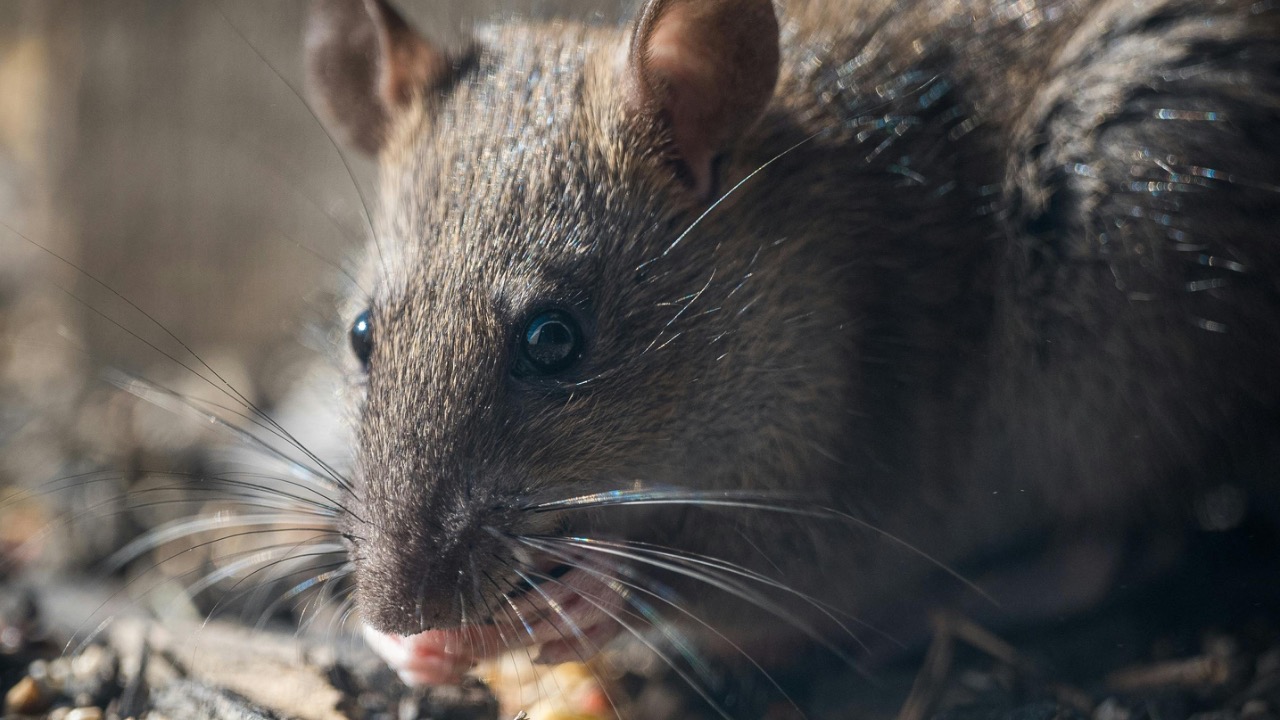
While snakes and ants dominate Guam and Christmas Island, rats play a similar role across many archipelagos. Conservation groups working in the Pacific report that they eradicated invasive black rats from the Palmyra Atoll National, where the rodents had been devastating native seabirds and crabs. On Norfolk Island, managers list invasive species such as rats, cats and Argentine ants as key threats to native birds, reptiles, land snails and other invertebrates, with Invasive predators and combining to pressure already small populations.
Nowhere is the long shadow of rat predation clearer than in the Galápagos. On Pinzon Island, conservation groups recount how nearly 150 years of the Pinzón giant tortoise, forcing managers to run an expensive captive breeding program since 1965. One scientific summary explains that one species, the Pinzon Island tortoise, had not produced any juveniles for over 100 years because non native black rats were preying on eggs and hatchlings. After rat eradication, young tortoises are now surviving and breeding, turning a centuries long stalemate into a rare conservation success.
How invasions ripple through food webs and genes
When I connect these island stories, I see more than separate tragedies. I see a pattern of food webs being rewired at high speed. The PHAROS project on Mediterranean and Atlantic islands describes how the Invasion of the, such as rats and other predators, can devastate native prey that lack evolutionary defenses. Those losses then cascade into changes in vegetation, soil processes and even coastal systems that depend on seabird nutrients.
At the genetic level, invasion biology research argues that species capable of spreading so quickly often carry traits that help them adapt and evolve in new environments. A quantitative genetic perspective on Biological invasions and frames invasive species as agents that not only respond to change but also drive it, by imposing strong new selection pressures on native species. On islands, where small populations and limited ranges already push species toward vulnerability, that kind of rapid shift can be the difference between adaptation and extinction.
What Guam and other islands teach me about prevention and repair
Looking across Guam, Christmas Island, Palmyra and the Galápagos, I see two linked lessons. The first is that prevention matters more than anything else. Once a predator like the brown tree snake or a super colony forming ant such as Anoplolepis gracilipes gains a foothold, eradication becomes enormously expensive and sometimes impossible. That is why island states and territories now invest in stricter biosecurity at ports, better cargo inspections and rapid response plans for any new detection.
The second lesson is that repair, while difficult, is possible when managers act at scale. On Pinzón, conservationists now describe Overview data from that list approximately 100 of the original old native tortoises and an estimated 400 repatriated tortoises now living on the island, numbers that would have been unthinkable while rats still dominated. On Palmyra Atoll, seabirds and native tree species began to rebound once black rats were removed. For Guam, experiments in snake trapping, toxic baiting and cargo screening show that even where full eradication is not yet realistic, aggressive control can protect power infrastructure and give surviving native species a measure of breathing room.

Leo’s been tracking game and tuning gear since he could stand upright. He’s sharp, driven, and knows how to keep things running when conditions turn.