North Atlantic Treaty Organization Confirms Deployment of Additional Forces to Eastern Europe
NATO has confirmed that additional forces are moving into Eastern Europe, deepening a long-running shift from light tripwire units to heavier, combat-credible formations along the alliance’s frontier. The buildup links immediate deployments to a wider program of exercises, new command structures, and upgraded logistics meant to deter Russia while keeping the door open to dialogue.
The decision forms part of a broader strategy that combines permanent forward presence with the ability to surge large reinforcements at short notice. From Hungary to the Baltic region and the Arctic, NATO planners now treat the eastern flank as a single, connected theater where ground brigades, air power, missile defenses, and naval assets must be able to move quickly and operate together.
From tripwire units to a fortified eastern flank
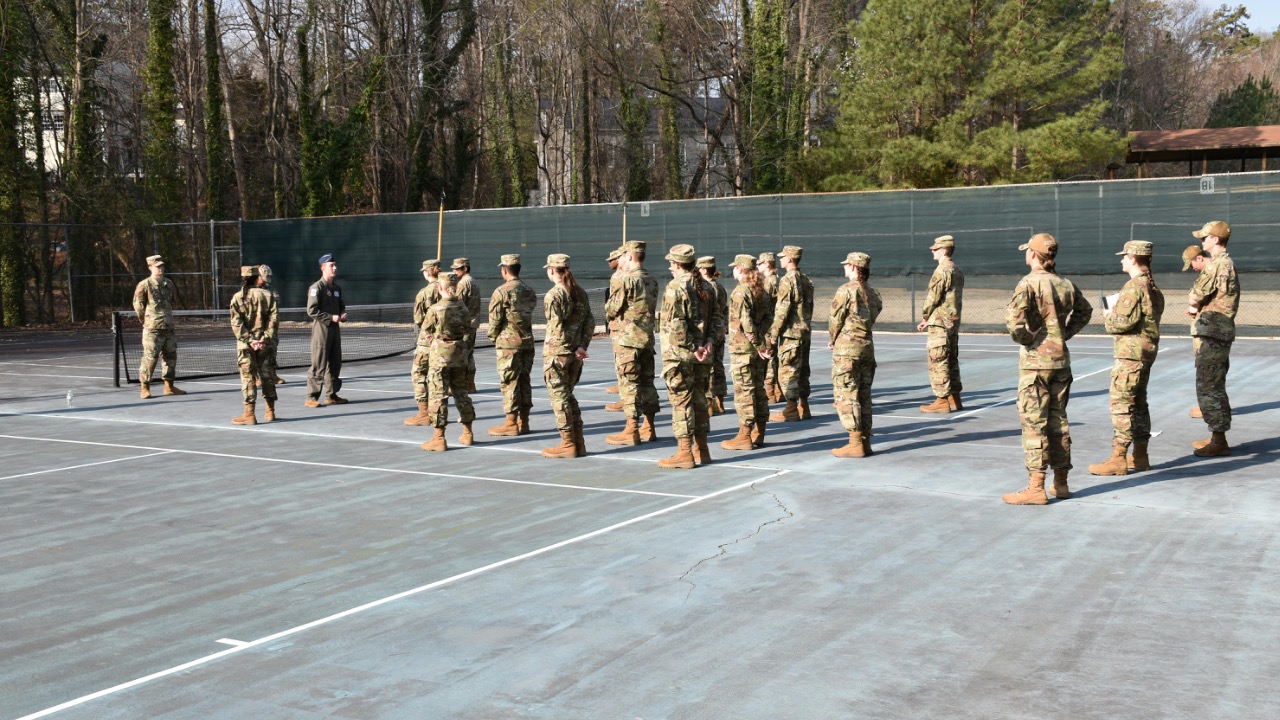
NATO’s latest troop movements into Eastern Europe build directly on a multiyear effort to strengthen what the alliance calls its eastern flank. After Russia’s initial invasion of Ukraine, allies began shifting from small reassurance contingents to a posture that aims to contest and defend territory from the outset, rather than relying on large counteroffensives later. That evolution is visible in the expansion of multinational formations such as the Forward Land Forces, including the battlegroup in Hungary where troops from several countries train and stand ready together as part of a broader effort to strengthen NATO’s eastern.
The new deployments are tied to a larger concept that treats deterrence and defense as a single continuum, with forward-based units backed by high-readiness reserves and prepositioned equipment. That approach is reinforced by the Deterrence and Defence of the Euro Atlantic Area, known as The DDA Concept, which provides a coherent framework for NATO Allies to contest, deter and defend against the Alliance’s main threats and enables rapid reinforcement by larger follow-on units where and when required, as described in the alliance’s readiness action plan.
Eastern Sentry and the logic of permanent vigilance
The operational centerpiece of NATO’s current reinforcement cycle is Eastern Sentry, a new initiative designed to tighten defenses along the entire eastern perimeter. When NATO announced Eastern Sentry, officials framed it as a flexible operation that can scale up or down depending on threat levels, with General Grynkewich explaining that the mission was built to respond quickly to incidents such as Russian drone incursions and to address emerging risks before they escalate. This concept of a standing, adaptable shield reflects a shift from episodic reassurance to what NATO describes as a continuous presence in the eastern part of the Alliance, a change detailed in analysis of how NATO is reinforcing.
Eastern Sentry also carries political weight inside Europe. The initiative was presented as a direct response to Russian activity that violated allied airspace and raised concerns in capitals from the Baltic states to the Black Sea. NATO described the plan as a way to strengthen Europe’s eastern flank, with the alliance stressing that the activity would commence in phases and allow rapid movement of forces where needed, as highlighted in reporting on Eastern Sentry in. The result is a posture that signals resolve to Russia while reassuring frontline allies that reinforcements are not just promised on paper but organized, exercised, and ready to move.
Steadfast Dart and the test of rapid reinforcement
Exercises are the visible proof that NATO’s reinforcement pledges can be turned into action, and none is more prominent this year than Steadfast Dart. NATO describes Steadfast Dart as its largest military exercise of 2026, a complex drill that is currently underway across multiple host nations and involves land, air, maritime and special operations forces practicing large-scale deployment into Eastern Europe. The scenario tests how quickly the alliance’s Allied Reaction Force can move heavy units, integrate them with local defenders, and sustain operations over time, a process detailed in NATO’s coverage of Steadfast Dart.
National militaries are treating the exercise as a real-world rehearsal for reinforcing the eastern flank in a crisis. The Bundeswehr describes Steadfast Dart 2026 as an operation in which the North Atlantic Treaty Organization’s Allied Reaction Force conducts an exercise of strategic deployment, moving units quickly over long distances and integrating them into a common command structure. German planners stress that Steadfast Dart is the largest NATO exercise in 2026 and highlight the role of logistics, host nation support, and interoperability in making rapid reinforcement credible, themes that run through the official description of Steadfast Dart 2026.
A year of constant drills across the eastern theater
Steadfast Dart is only one piece of a dense calendar of training events that are knitting together NATO’s eastern defenses. A detailed guide to NATO Exercises 2026 describes how allied forces are engaged in a rolling series of maneuvers that range from large joint operations to specialized drills in cyber defense, air policing, and maritime security. Among the most notable is Arctic Sentry, launched on 11 February, which focuses on operations in the High North and underscores how the alliance is preparing for challenges that stretch from the Baltic to the Arctic as part of a wider program of NATO exercises in.
Within this wider schedule, Steadfast Dart stands out as the main test of strategic mobility, but it is reinforced by specialized efforts that sharpen specific capabilities. One featured analysis of Arctic Sentry emphasizes the key role for maritime autonomous systems, arguing that unmanned vessels and sensors will be central to maintaining awareness and presence as allied activity in the region grows. The same logic applies along the eastern land border, where persistent surveillance, integrated air defense, and high-readiness ground units are being trained to operate as a single system rather than as isolated national contingents, a concept illustrated in discussion of Enabling Arctic Sentry.
Russia, deterrence, and the risk of escalation
Every new NATO deployment into Eastern Europe is judged in Moscow through the prism of alliance relations with Russia, which have deteriorated sharply since the first invasion of Ukraine. NATO’s own description of these relations states that the alliance has been enhancing its deterrence and defence since Russia’s initial invasion of Ukra, and that this effort accelerated after the full-scale attack that followed. The same overview emphasizes that NATO continues to combine military measures with political channels, but that practical cooperation with Russia has largely been suspended as the alliance focuses on enhanced deterrence and.
The scale of the current posture is significant. Public commentary on NATO readiness highlights that over 300,000 troops are now on high alert, prepared to respond quickly if Russia were to widen the conflict. One widely shared video segment describes how NATO is ramping up readiness in response to rising tensions with Russia and stresses that Over 300,000 troops are configured to move rapidly into frontline states if required, a figure that illustrates the magnitude of NATO’s 300,000 troops. At the same time, NATO’s own topic pages on deterrence and defence stress that the alliance does not seek confrontation and that its actions are defensive, a position that shapes how new deployments are framed both to domestic audiences and to Russia.

Leo’s been tracking game and tuning gear since he could stand upright. He’s sharp, driven, and knows how to keep things running when conditions turn.