Outnumbered 830 to 2,500, Colonel Merritt Edson rallied his Marines to hold the line
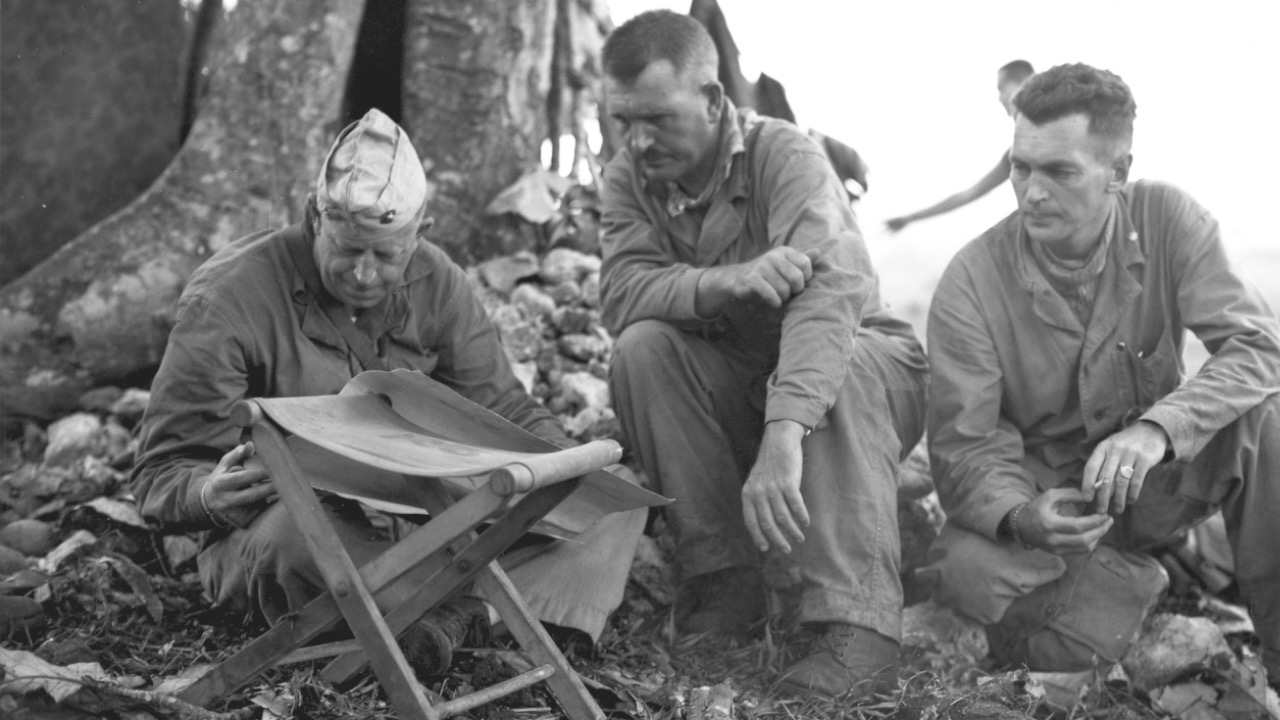
On a narrow jungle ridge above Henderson Field in September 1942, you would have found fewer than a thousand U.S. Marines bracing for an assault from a force roughly three times their size. The fight would become known as the Battle of Edson’s Ridge, part of the larger struggle for Guadalcanal. At the center of it stood Colonel Merritt A. Edson, a quiet, hard-driving officer whose leadership under fire kept the line from breaking.
You hear a lot about the scale of World War II. What matters here is something smaller and more personal—how a handful of Marines held ground that could not be lost, and how one colonel refused to let them give it up.
The Stakes at Henderson Field
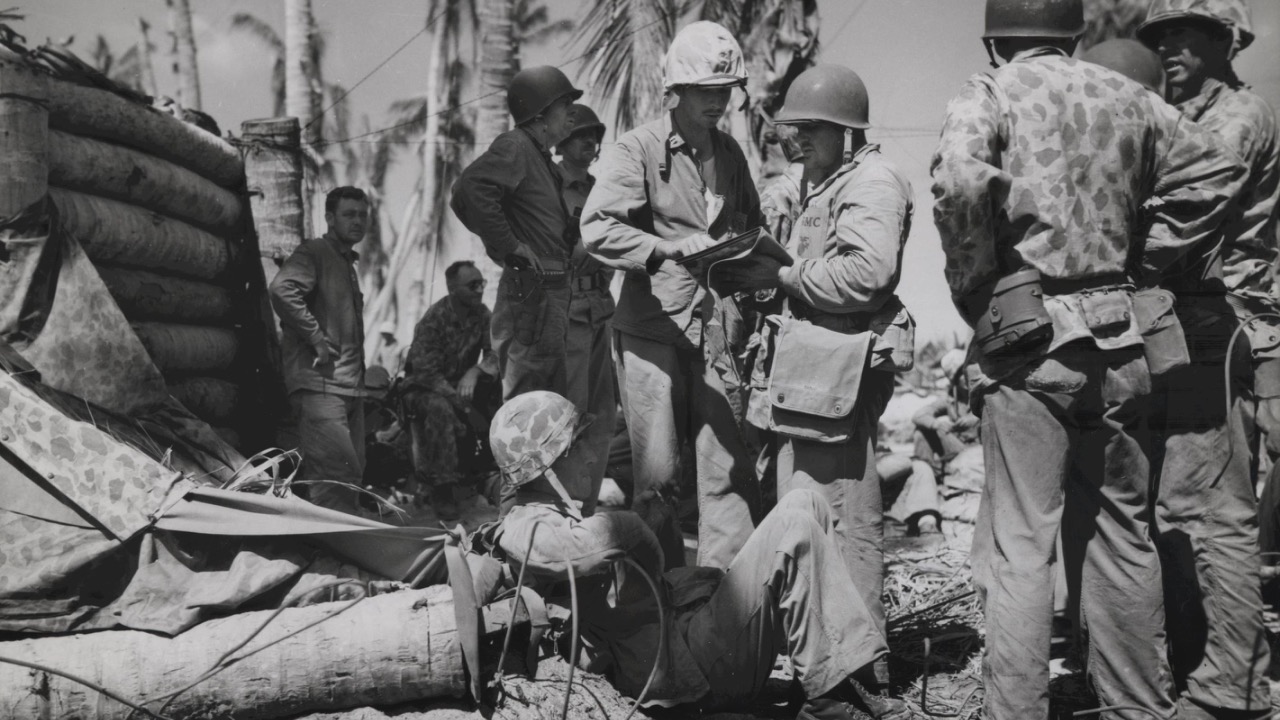
If you want to understand the fight, you have to understand Henderson Field. The airstrip on Guadalcanal was the hinge point of the campaign. Whoever controlled it controlled the skies over the surrounding waters. That meant control over resupply, reinforcement, and ultimately the fate of the island.
By mid-September, Japanese forces were determined to retake it. If they punched through the thin Marine lines and overran the airfield, the entire American foothold in the Solomons could collapse. Edson and his Raiders were positioned on a narrow ridge south of the field. If that ground fell, Henderson Field was exposed.
Edson’s Raiders Weren’t Line Infantry
Edson commanded the 1st Marine Raider Battalion, a unit trained for amphibious raids and aggressive small-unit action. These weren’t green troops, but they weren’t designed to dig in and absorb a full-scale night assault either.
You have to picture them stretched thin across broken jungle terrain, with limited artillery support and patchy communications. When word came that thousands of Japanese troops were advancing under Major General Kiyotake Kawaguchi, the Raiders understood they weren’t facing a probing attack. They were about to be hit hard and in the dark.
The Night the Ridge Nearly Broke
On September 12, 1942, Japanese forces launched repeated assaults up the slopes of what would later be called Edson’s Ridge. Flares lit the jungle. Machine guns chattered. Lines bent and, in places, collapsed.
At several points, the Marines were pushed back toward the final defensive positions overlooking Henderson Field. You would have seen men falling back in small groups, reforming behind shallow foxholes and scraps of high ground. It was confusion layered over exhaustion. Ammunition ran low. Officers were hit. The numbers told a grim story—about 830 Marines against roughly 2,500 attackers.
Edson Moved Where the Fire Was Hottest
What stands out isn’t a single speech or dramatic gesture. It’s movement. Edson didn’t stay to the rear. He walked the line, reorganizing units that had been scattered and plugging gaps where Japanese troops threatened to break through.
He ordered a controlled withdrawal to a tighter defensive perimeter along the ridge’s crest, a move that shortened his line and concentrated firepower. You can imagine the tension—pulling back under pressure without letting it turn into a rout. That decision likely saved the airfield. By dawn, the Marines were still there.
The Cost of Holding
When the fighting finally tapered off on September 14, the ground in front of the Marine lines was littered with Japanese dead. The attacking force had been shattered. Kawaguchi’s troops withdrew into the jungle, unable to take Henderson Field.
The Marines paid for it. Dozens were killed, and many more were wounded. The battalion had been pushed to its limit. But the ridge held, and so did the airfield. Aircraft flying from Henderson continued to strike Japanese ships and supply lines, tightening the grip on the island.
A Medal of Honor and a Campaign Shift
For his leadership during the battle, Edson received the Medal of Honor. The citation highlighted his personal presence under fire and his ability to rally men in a situation that could have turned catastrophic.
The victory at the ridge didn’t end the campaign on Guadalcanal, but it marked a turning point. You can trace a line from that narrow stretch of jungle high ground to the broader shift in momentum in the Pacific. Holding that ridge meant holding Henderson Field. Holding Henderson meant the United States would not be driven from Guadalcanal.
When you look back at the numbers—830 against 2,500—you understand how close it came. What kept it from unraveling wasn’t luck. It was leadership, discipline, and a refusal to give up ground that couldn’t be lost.

Asher was raised in the woods and on the water, and it shows. He’s logged more hours behind a rifle and under a heavy pack than most men twice his age.