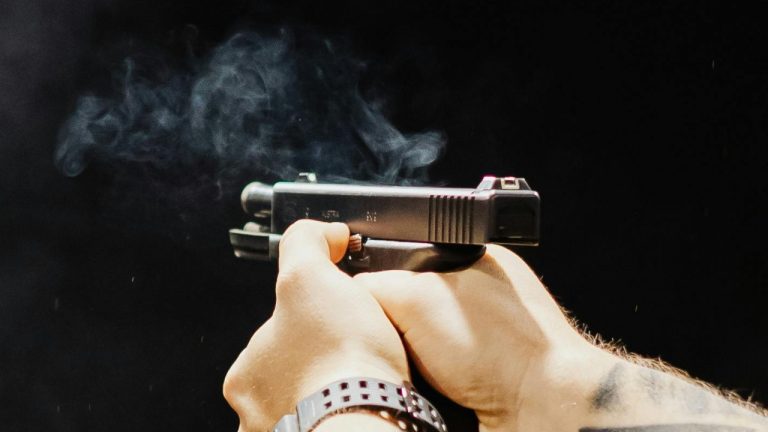
P320 controversy resurfaces after new claim of an unintended discharge
The Sig Sauer P320 is back in the spotlight after another report of a holstered pistol firing without a trigger pull, and the stakes are higher than ever. What started years ago as a debate over drop safety has grown into a nationwide fight over whether a striker-fired duty gun can fire on its own, and who should be held responsible if it does. I want to walk through what is actually known, what is being alleged, and how this latest claim fits into a pattern of lawsuits, corporate pushback, and hard questions for anyone who carries a P320 on the job or in the field.
The latest claim that reignited the P320 debate

The newest spark in this long running argument comes from a security incident that unfolded at Security Gate 4 on USAA’s San Antonio campus. A guard working that post in AUSTIN, Texas said that on March 18 his holstered P320 fired as he moved, sending a round into the pavement and turning an ordinary shift into a full blown safety scare at the USAA facility. According to his account, coworkers heard the shot and saw the aftermath, and he insists there was no trigger contact before the pistol went off.
That guard later said he was fired after speaking out about what happened, which only added fuel to the perception that unintended discharges are being swept aside instead of investigated in the open. His story echoes other reports of a P320 “just going off” in the holster, and it has been folded into broader coverage of alleged unintended discharges at Security Gate 4 and other duty environments. For people who carry a P320 every day, that kind of first hand account is hard to ignore, even as the manufacturer insists the design cannot fire without a trigger pull.
A pattern of incidents, from Texas to Canada
Once you zoom out from that Texas gate, the guard’s story looks less like an outlier and more like one more entry in a growing stack of similar claims. Over the past year, coverage out of San Antonio has noted that “similar incidents” involving the same model have been reported elsewhere, and that both USAA and Sig Sauer have had to respond publicly to reassure employees and the public that safety is still the mission. Those responses have stressed internal reviews and cooperation with law enforcement, but they have not stopped new allegations from surfacing.
North of the border, a report out of Canada described what investigators called a “new Sig Sauer P320 uncommanded discharge incident” that occurred on Sep 4, 2025. In that case, authorities reportedly reviewed video of a SIG Sauer pistol firing while holstered and said they had not found evidence of “criminality” by the carrier, which fed into online discussion that the gun itself might be the problem. The Canadian account, shared under the heading “Here’s the latest Sig Sauer P320 uncommanded discharge incident on Sep 4, 2025 in Canada,” has been cited by shooters who see a pattern of holstered guns firing without a clear trigger press, and it is often linked alongside the Texas gate story and other Canada incidents when critics argue that the P320 has a systemic defect.
How we got here: from drop issues to design questions
The P320 did not arrive in this storm overnight. Early production models were found to have a “drop safety” issue, where the gun could fire if dropped at a certain angle, and that discovery forced Sig Sauer to roll out a voluntary upgrade program and tweak the internals. Those changes were meant to address what official documents list under “Problems” and “Drop firing,” and they helped the pistol move forward as the basis for the military’s M17 and M18 sidearms. Even so, the early drop concerns planted a seed of doubt that critics still point back to when they argue the platform was rushed.
Since then, the legal record has been mixed. In Green-Berrios v. Sig Sauer Inc., a P320 unintentional discharge lawsuit was ultimately dismissed, which the company has cited as proof that at least some claims do not hold up under scrutiny. At the same time, other filings have alleged that the pistol is “effectively cocked” compared with some competitors, and that this internal geometry makes it more prone to firing if anything touches the trigger or internal parts shift. The official history of the model notes both the early Problems with drop firing and later allegations of unintended discharges that have caused severe injury, which is why every new incident now lands in a landscape already primed to argue.
What Sig Sauer says: “TRUTH” and legal wins
Sig Sauer has not been shy about its position, and the company has built an entire public facing page around what it calls the “TRUTH” about the P320. On that page, the company states flatly that the P320 “CANNOT, under any circumstances, discharge without a trigger pull,” and says that conclusion is backed by extensive internal and third party testing. The same statement stresses that SIG SAUER always prioritizes customer safety and that the pistol meets or exceeds all applicable standards, framing the controversy as a mix of misinformation and litigation strategy rather than a design flaw.
The company has also highlighted courtroom wins to back up that message. In a case out of the United States District Court for the District of Puerto Rico, a police officer who had sued over an alleged unintended discharge ultimately admitted that his Sig Sauer P320 pistol cannot discharge without a trigger pull, and the lawsuit was dismissed. Sig’s blog post on that outcome, datelined NEWINGTON, NH and marked “Mar 13,” presents the dismissal as validation of the company’s engineering and as proof that some claims crumble under discovery. For anyone trying to sort fact from fear, that kind of admission in a sworn case, laid out in a United States District filing, carries real weight, even if it does not answer every question raised by other incidents.
States and cities push back, from New Jersey to Washington
Despite Sig’s confidence, state officials and plaintiffs’ lawyers are leaning hard in the opposite direction. In New Jersey, the attorney general has sued Sig Sauer and is seeking a recall of P320 handguns, arguing that the pistols have a history of unintentional discharges that put officers and the public at risk. The complaint points to incidents involving law enforcement and claims that the company knew about safety issues but failed to act aggressively enough. In its rebuttal, Sig Sauer rejected the idea that the Army ever considered the P320 unsafe before adding a manual safety, and the company has said the lawsuit is not based on legitimate safety concerns, a stance reflected in its Sig Sauer statement.
On the other side of the country, a class action in Washington state accuses Sig Sauer of “defectively designed” pistols that are “effectively cocked” compared with other striker fired models. The named plaintiff, Schreiber, is seeking unspecified damages and is asking the court to certify a class that could include a large number of owners. That filing has drawn attention from gun groups and mainstream media because it goes beyond a single injury and attacks the core design. Coverage of the Washington case notes that the lawsuit has become a touchpoint for According critics who say the P320 should be recalled or redesigned before more people are hurt.
Individual lawsuits put faces to the claims
Beyond state level actions, individual suits are putting names and injuries to the allegations. In Snohomish County, Washington, a man has filed suit against SIG SAUER over an alleged defect in his P320, claiming the design has led to a “slew of unintended discharges” across the country. Court documents in that case say he is seeking damages that include approximately $1,093.82 in specific costs, a small number in the grand scheme but a reminder that these incidents often start with a single person who says their life changed in a fraction of a second. Local reporting on the Snohomish County man’s filing has become a reference point for those tracking how many ordinary carriers, not just cops, are now suing over Snohomish County man incidents.
New Hampshire based coverage has also highlighted a wave of new plaintiffs. One report noted that Sig Sauer has 34 more plaintiffs seeking damages for P-320 unintended firings, with those individuals calling on the gunmaker to recall and redesign the weapon “before more law enforcement officers and others are injured or killed.” Those plaintiffs want a jury to decide what the company knew and when, and they are part of a broader push that includes mass actions in Pennsylvania and beyond. The New Hampshire story about Nov plaintiffs underscores how many people now say they have been hurt by the same basic scenario, even as Sig maintains that every verified discharge has involved a trigger pull.
Mass actions and a “new wave” of litigation
The single plaintiff stories are now being bundled into larger actions that span multiple states. In Pennsylvania, thirty four Sig Sauer P320 victims across 23 states have filed the latest mass actions, with lawyers saying those clients await their days in court. The firm handling that effort describes the group as a cross section of law enforcement officers and civilians who all claim their P320s fired unintentionally, and they are pushing for damages as well as design changes. The filing, summarized under the heading “Thirty-four Sig Sauer P320 Victims Across 23 States File Latest Mass Actions in Pennsylvania,” shows how scattered incidents are being pulled into coordinated Thirty state litigation.
Nationally, coverage has framed this as a “new wave” of P320 lawsuits as dozens claim unintended discharges. Reports out of PHILADELPHIA describe how these cases are piling up in federal courts and how they have become part of a long running dispute over the firearm’s safety. One analysis noted that when people say “lawsuits are piling up,” it is easy to tune that out until you see the actual docket numbers and realize how many separate incidents are now in play. The phrase “Sig Sauer Faces New Wave of P320 Lawsuits as Dozens Claim Unintended Discharges” has become shorthand for this moment, and it appears in multiple summaries of how Sig Sauer Faces litigation is reshaping the conversation around the pistol.
New Jersey’s recall push and broader legal strategy
Attorneys who track firearms litigation say the P320 fight has become one of the most active product liability battles in the gun world. A legal update from a Founding Attorney at a national firm lays out an “Overview of the Sig Sauer Controversy” and “Recent Developments in Sig Sauer Litigation,” noting that “New Jersey Sues Sig Saue” is now a central pillar of the campaign to force a recall. That overview explains how plaintiffs’ lawyers are coordinating across jurisdictions, sharing expert theories about the striker system and sear geometry, and encouraging injured owners to file a Sig Sauer lawsuit if they believe their gun fired without a trigger pull. It also notes that some suits are targeting marketing claims about safety as much as the mechanical design, which broadens the attack beyond pure engineering.
New Jersey’s case is especially important because it seeks not only damages but a court ordered recall of P320 handguns, something that would be unprecedented for a modern duty pistol used by so many agencies. In its rebuttal, Sig Sauer has argued that the U.S. Army did not consider the P320 unsafe before requiring the addition of a manual safety, and that the state’s claims misrepresent the pistol’s track record with military and law enforcement agencies globally. That clash between a state attorney general’s office and a major manufacturer, outlined in both the New Jersey complaint and Sig’s response, is a big part of why the Overview of the now reads like a roadmap for years of litigation to come.

Asher was raised in the woods and on the water, and it shows. He’s logged more hours behind a rifle and under a heavy pack than most men twice his age.