

SCOTUS will hear the cannabis and gun rights case — what’s on the docket and why it matters
The Supreme Court is about to answer a question that has been hanging over gun owners and cannabis users for years: can the federal government bar people who use marijuana from owning firearms, even when their state says that same conduct is legal. The case, centered on a Texas man and a decades old federal statute, will force the justices to square modern gun rights doctrine with the country’s fast changing marijuana laws. What happens will shape how far Washington can go in tying gun ownership to personal behavior that many states no longer treat as criminal.
At stake is more than one man’s charges or one line of federal code. The ruling will signal how the Court reads the Second Amendment in an era when millions of Americans can legally buy cannabis on Friday and a hunting rifle on Saturday, at least under state law. It will also test whether a law written when Jun and Congress were focused on heroin and street crime still fits a world of dispensaries, medical cards, and background checks run off a laptop at the gun counter.
What case the justices agreed to hear
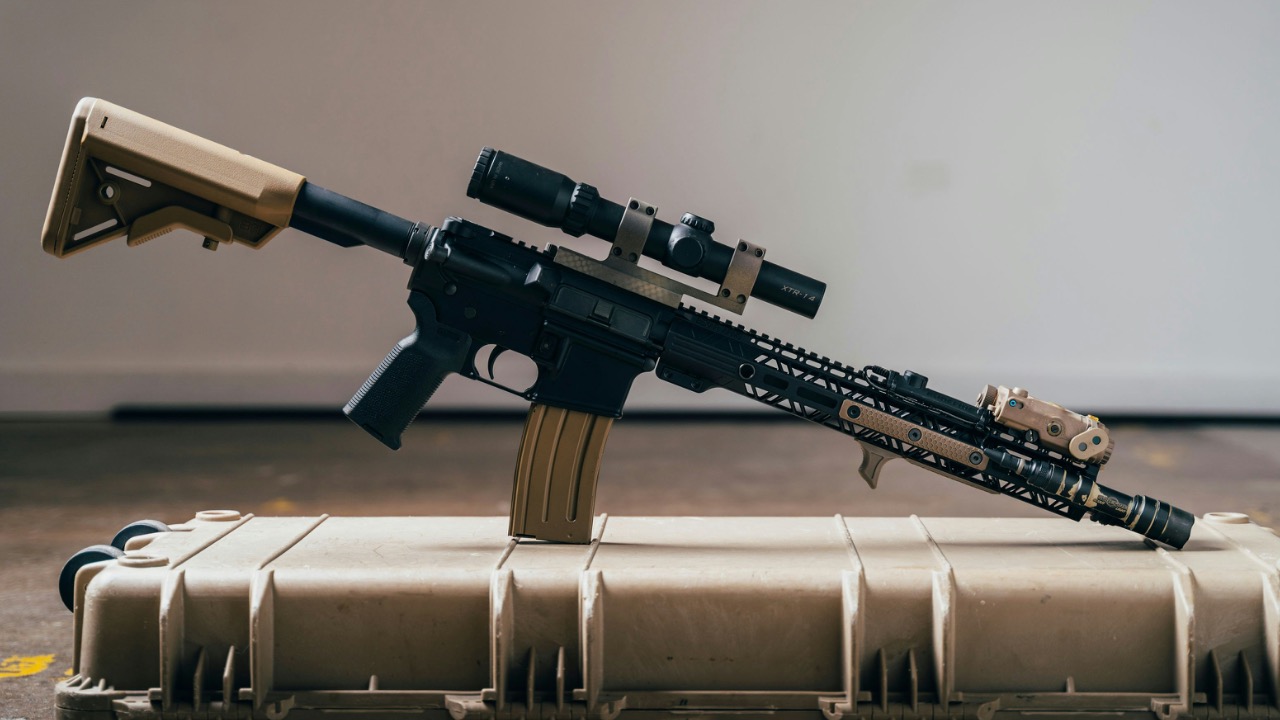
The fight the justices picked up comes out of Texas and turns on a federal ban that makes it a crime for an “unlawful user” of controlled substances to possess a firearm. The Supreme Court agreed to hear the government’s appeal in the prosecution of a Texa resident, Ali Daniel Hemani, who was charged after agents tied his guns to what they described as habitual marijuana use. According to the Court’s own scheduling notice, The Supreme Court will hear oral arguments on March 2 as part of its February sitting, putting the dispute squarely in the middle of a term already packed with high profile constitutional questions, including other gun related cases that test how far the Second Amendment reaches in everyday life, as reflected in the Court’s argument calendar for a February sitting.
Hemani’s case is formally captioned United States v. Hemani, and it zeroes in on 18 U.S.C. § 922(g)(3), the part of federal law that strips gun rights from anyone the government labels an unlawful drug user. The United States Supreme Court added this dispute to its 2025–26 calendar after lower courts split on how that statute fits with the Court’s recent Second Amendment rulings, and The United States Supreme Court did so in a way that signals it wants to clarify how far its 2022 decision in Bruen really goes for people whose only alleged wrongdoing is using cannabis, as described in a detailed overview of the Hemani dispute.
The federal law at the center of the fight
The statute on the chopping block, § 922(g)(3), has been on the books since the late 1960s, when Congress was reacting to a very different drug landscape. In the government’s own briefing, prosecutors stress that Jun and Congress enacted this part of § 922 in 1968 after many states had already moved to bar people they considered drug addicts or habitual users from owning guns, arguing that the federal law simply followed a pattern of state level restrictions that treated drug use and firearms as a dangerous mix, a history laid out in the government’s petition that tracks how Congress folded those state ideas into § 922(g)(3).
On paper, the law is broad. It does not distinguish between heroin and marijuana, or between a one time user and someone who is high every day. If the government can prove a person is an “unlawful user” of a controlled substance, that person can face felony charges for having a single round of ammunition in a glove box. That sweeping reach is exactly what has drawn fire as more states legalize cannabis for medical and recreational use, even as federal law still classifies marijuana as a Schedule I drug, a tension that has turned § 922(g)(3) into a flashpoint for gun owners who use cannabis and for prosecutors who say they need the statute to keep weapons away from people they view as impaired or unpredictable.
How Hemani’s case reached the Supreme Court
Hemani’s path to the high court started with a routine criminal case and turned into a constitutional showdown once the lower courts applied the Supreme Court’s own Second Amendment test. The 5th U.S. Circuit Court of Appeals threw out the charges against him, holding that applying § 922(g)(3) to Ali Daniel Hemani violated his 2nd Amendment rights because the government could not point to a historical tradition of disarming people based solely on drug use, a conclusion that put the Circuit Court of Appeals squarely at odds with other federal appeals courts that had upheld the same law, as described in a summary of the 5th Circuit’s ruling in favor of Ali Daniel Hemani.
That split is what drew the justices in. When different circuits read the same statute and the same Supreme Court precedent in opposite ways, the Court almost always steps in. Here, the government asked the justices to reverse the 5th Circuit and restore its ability to prosecute people like Hemani under § 922(g)(3), warning that the lower court’s approach would undercut a key public safety tool. Hemani, for his part, is asking the Court to affirm that decision and to say clearly that the Second Amendment protects gun owners from being stripped of their rights based on cannabis use alone, especially in states where that use is legal under local law.
Why this case matters for everyday gun owners
For people who hunt, shoot competitively, or keep a handgun at home, the Hemani case is not some abstract legal puzzle. It is about whether a state issued medical marijuana card or a recreational purchase could quietly turn them into felons under federal law. Reporting on the case notes that the decision is expected by early summer 2026, and that The Supreme Court’s answer will either cement or erase the federal government’s power to treat marijuana users as prohibited persons, a timeline that matters for anyone who might be filling out a background check form while the Trump administration’s Justice Department is still pressing for a broad reading of the law, as explained in coverage of how The Supreme Court agreed to consider whether pot smokers can own guns and how the Trump DOJ framed that question on a recent Monday announcement.
The stakes are especially high in states where marijuana is legal but gun culture is strong, places where a weekend might include both a trip to the dispensary and a morning in a duck blind. If the justices uphold § 922(g)(3), gun owners who use cannabis will face a hard choice between their medicine or recreation and their firearms, with no safe harbor from state law. If they strike it down, those same owners could see their rights clarified and protected, but they might also see new political pressure for Congress to rewrite the law in a narrower way that still targets people who are actively impaired while handling guns, a debate that will not end even if Hemani wins.
How the Court’s modern gun rulings set the stage
None of this is happening in a vacuum. The Court’s recent Second Amendment decisions, especially its shift to a history and tradition test, are the reason Hemani had a shot in the 5th Circuit and now stands before the justices. Analysts have pointed out that The United States Supreme Court has been steadily expanding gun rights in recent years, and that this case will test how far that expanded view really goes when it collides with federal drug policy, a trajectory that has made the Hemani dispute one of the most closely watched Second Amendment cases on the Court’s current docket for gun owners.
Under the Court’s current framework, the government has to show that a modern gun restriction fits within the nation’s historical tradition of firearm regulation. That is a tough sell when the law in question, like § 922(g)(3), was written in 1968 and targets a category of people that did not exist in the same way at the founding, such as state licensed cannabis patients. The justices will have to decide whether analogies to old laws disarming the mentally ill or the habitually drunk are close enough, or whether those comparisons stretch history too far, a line drawing exercise that will shape not only this case but future fights over other categories of “prohibited persons” in federal gun law.
The cannabis legalization backdrop
What makes Hemani’s case especially volatile is the backdrop of rapid cannabis legalization across the country. Dozens of states now allow medical or recreational marijuana, and millions of Americans use it under state law without fear of local prosecution. Yet under federal law they are still “unlawful users” of a controlled substance, which means they can be prosecuted for owning a gun even if their state sheriff is fine with both their rifle and their dispensary receipts, a clash that has turned cannabis consumers’ gun rights into a national test case that The Supreme Court will now review as part of a broader look at cannabis consumers’ gun rights and restrictions, a review flagged in a set of Key Takeaways.
For medical users, the stakes can be even higher. Some rely on cannabis to manage chronic pain, PTSD, or other conditions that might otherwise be treated with opioids or benzodiazepines, drugs that carry their own risks. If the Court upholds the federal ban, those patients will remain in a legal bind where following a doctor’s recommendation under state law could cost them their ability to own a shotgun for home defense or a .22 for small game. If the Court strikes the law down as applied to cannabis users, it could open the door for a more nuanced approach that treats marijuana more like alcohol for gun law purposes, focusing on use while armed rather than blanket bans.
How the arguments will unfold and when to expect a ruling
The case is now locked in on the Court’s calendar, with arguments set for early March and a decision expected by the end of the term. Coverage of the scheduling notes that Drug, User Gun Ban Set for US Supreme Court Argument in March, with the hearing pegged to the Court’s February sitting and the time listed as 9:51 AM PST in internal notices, a reminder of how tightly the Court manages its calendar and how much attention this particular argument will draw from both gun rights and cannabis reform advocates, as outlined in a preview that highlighted how John Crawley, Editor, framed the upcoming Drug User Gun Ban Set for US Supreme Court Argument.
Another report aimed at cannabis industry readers notes that Supreme Court Sets Date for Arguments in Cannabis and Guns Case, underscoring how closely the marijuana world is watching the Court’s moves and how the Cannabis and Guns Case has become a shorthand for a much broader set of questions about federal power and personal rights. That same report, circulated by Cannabis Wire, points out that Jan scheduling updates locked in the argument date and that the Court’s eventual ruling will land in a landscape where cannabis businesses, patients, and gun owners are all trying to read the same tea leaves about what federal enforcement will look like in the next few years, a dynamic captured in a newsletter titled Supreme Court Sets Date for Arguments.
The Hunter Biden shadow and a possible off-ramp
Hovering in the background is another high profile case under the same statute, the prosecution of Hunter Biden. Last year, federal prosecutors obtained a conviction against Hunter Biden under 18 U.S.C. § 922(g)(3), using the same federal statute that is now before the Court in Hemani’s case. That conviction has raised the stakes for the justices, because any broad ruling that guts § 922(g)(3) could ripple into the president’s son’s case, while a narrow ruling might leave his situation untouched but still reshape how the law applies to cannabis users, a tension that some analysts have described as an off ramp the Court could use to decide Hemani without fully resolving every question about Hunter Biden and § 922(g)(3).
The justices could, for example, focus on the specific facts of Hemani’s case and draw a line between marijuana use and other kinds of drug use, or between people who are actively intoxicated while armed and those whose use is more remote. They could also lean on procedural grounds, such as how the government charged Hemani or how the lower courts applied the Bruen test, to resolve the case without issuing a sweeping pronouncement on the statute’s constitutionality in every context. For gun owners and cannabis users looking for clarity, that kind of narrow ruling might feel unsatisfying, but it would be in line with the Court’s habit of moving in steps when a decision could have major political and legal fallout.
How advocates on both sides are framing the stakes
Gun rights advocates have been blunt about what they think is going on. One group argued that the Department of Justice Intentionally Hand-Picked the Worst Facts for Gun Owners when it chose Hemani’s case as the vehicle to defend § 922(g)(3), suggesting that prosecutors wanted a defendant whose marijuana use and other alleged conduct would make it harder for the justices to side with him without looking soft on crime. That same group has urged the Court to look past those facts and focus on the broader principle that The Supreme Court should not allow the federal government to strip gun rights from people based on nonviolent conduct that many states no longer treat as criminal, a plea laid out in a petition that accuses the government of stacking the deck against gun owners who use marijuana.
On the other side, public safety advocates and some law enforcement voices argue that mixing drugs and guns is a recipe for disaster and that Congress has every right to draw bright lines that keep firearms out of the hands of people who use illegal substances. They point to data on impaired driving, domestic violence, and accidental shootings, and they argue that the Second Amendment has always allowed for reasonable limits on who can own a gun. For them, Hemani’s case is not about punishing cannabis users, it is about preserving a tool that lets prosecutors intervene before a drug fueled incident turns deadly, especially in communities already struggling with addiction and gun violence.
What to watch for when the justices take the bench
When the justices finally take the bench for arguments, a few signals will tell gun owners and cannabis users where things might be headed. One is how much the Court focuses on marijuana specifically versus drug use in general. If the questions zero in on cannabis legalization, medical use, and the mismatch between state and federal law, that could hint at a ruling tailored to marijuana users. If, instead, the justices talk mostly about “controlled substances” and analogies to alcohol or other drugs, they may be thinking about a broader decision that either upholds or undercuts § 922(g)(3) across the board, a distinction that will matter for everyone from recreational users to medical patients who have been following the case since Arguments in the case were first flagged as likely to be heard in early 2026, a timing detail that came out in a report noting how Arguments and an Associated Press account framed the stakes for cannabis users facing federal gun bans.
Another clue will be how the justices talk about history. If they press the government hard for founding era analogues and seem skeptical of comparisons to laws about the mentally ill or the intoxicated, that could spell trouble for the statute. If they accept those analogies and focus instead on the government’s interest in preventing harm, the law may survive, at least in some form. Either way, the questions will give everyone from gun shop owners to cannabis dispensary operators a first look at how the Court is thinking about a world where state and federal rules pull in opposite directions, a world that has been front and center since Justices agreed to review the federal law banning drug users from possessing guns and reporters like John Fritze noted how Hemani’s habitual use of marijuana put him at the center of a national fight over drug users and guns.

Asher was raised in the woods and on the water, and it shows. He’s logged more hours behind a rifle and under a heavy pack than most men twice his age.


