The Military Hardware That Defines U.S. Naval Power
When people talk about global strength at sea, they’re really talking about the machinery that keeps the fleet operating, striking, and defending across vast distances. The naval force structure of the United States Navy rests on a combination of surface combatants, submarines, air power, and advanced sensor networks. Each piece plays a role in maintaining deterrence, projecting force, and protecting maritime trade routes.
You won’t always see these systems highlighted in popular media, but they form the backbone of American naval dominance. Modern naval power depends on stealth, speed, firepower, and networked intelligence working together under demanding conditions across oceans.
Ford-Class Aircraft Carriers

The Ford-class aircraft carrier represents the future of carrier strike operations. These carriers were designed to improve launch efficiency, reduce crew workload, and support next-generation aircraft operations. Advanced electromagnetic launch systems replace older steam catapults, allowing smoother aircraft deployment cycles.
You’ll notice automation plays a bigger role inside the ship’s operations. Fewer sailors are needed for certain mechanical tasks compared to older carriers. That doesn’t mean complexity disappeared—it shifted toward digital control systems, advanced maintenance diagnostics, and improved combat readiness support for long deployments.
Arleigh Burke-Class Destroyers
The Arleigh Burke-class destroyer is one of the most versatile surface combat platforms in modern naval history. These ships carry powerful missile defense, anti-submarine tools, and surface warfare capability in a single hull design.
A major strength comes from the integrated sensor and weapons coordination. The destroyer works closely with other fleet units rather than fighting alone. This class remains in production because it balances cost, survivability, and combat performance in multiple maritime scenarios. Many of these ships carry decades of modernization potential inside their framework.
Virginia-Class Attack Submarines
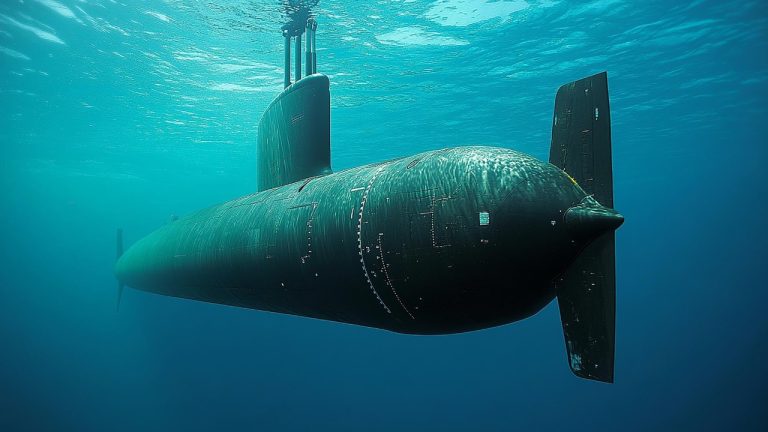
Silent underwater operations are dominated by the Virginia-class submarine. These submarines specialize in intelligence gathering, precision strike missions, and tracking hostile naval activity without detection.
Stealth design reduces acoustic signatures, making sonar detection more difficult. The platform can launch cruise missiles, support special operations teams, and monitor underwater communication infrastructure. Modern variants incorporate improved sensor arrays and digital combat management tools. Submarines like this are crucial when control of contested sea lanes becomes strategically important.
Aegis Combat System
The Aegis Combat System is one of the most respected naval defense networks ever built. It integrates radar tracking, missile guidance, and automated threat response across multiple platforms.
This system allows ships to monitor hundreds of potential threats simultaneously. Surface vessels equipped with Aegis can intercept aircraft, missiles, and some ballistic threats before they reach the fleet. The value of Aegis lies in reaction speed and network coordination, especially during high-intensity maritime conflicts. It’s a silent guardian rather than a frontline weapon.
Ohio-Class Ballistic Missile Submarines
The Ohio-class submarine represents strategic nuclear deterrence at sea. These submarines carry long-range ballistic missiles capable of reaching distant targets while remaining hidden underwater.
Their primary mission is stability through deterrence rather than direct combat. If potential adversaries know these submarines are constantly patrolling undetected, strategic risk calculations change. The platform’s endurance allows extended missions without surfacing often, preserving stealth advantage and operational security in global patrol zones.
Littoral Combat Ships
The Littoral Combat Ship was developed for operations closer to coastlines where speed and flexibility matter. These ships were designed to counter small boat threats, mines, and asymmetric naval challenges.
Modular mission packages allow crews to switch between roles depending on mission needs. Some critics point out maintenance and durability concerns, but supporters highlight operational adaptability. The platform reflects modern thinking about coastal conflict environments where traditional large combat ships are not always the best tool.
Zumwalt-Class Destroyers
The Zumwalt-class destroyer is probably the most visually distinctive modern surface warship. Its angular design reduces radar reflection, helping the ship operate with a lower detection profile.
These destroyers were intended to combine stealth, advanced firepower, and automated systems. The ship’s advanced gun systems and sensor architecture were designed for future battlefield environments. Though production numbers remain limited, the platform demonstrates experimental naval engineering aimed at redefining surface warfare technology.

Asher was raised in the woods and on the water, and it shows. He’s logged more hours behind a rifle and under a heavy pack than most men twice his age.