US Navy Fast-Tracks Blackbeard Hypersonic Missile for F/A-18 Fighter Jet Deployment
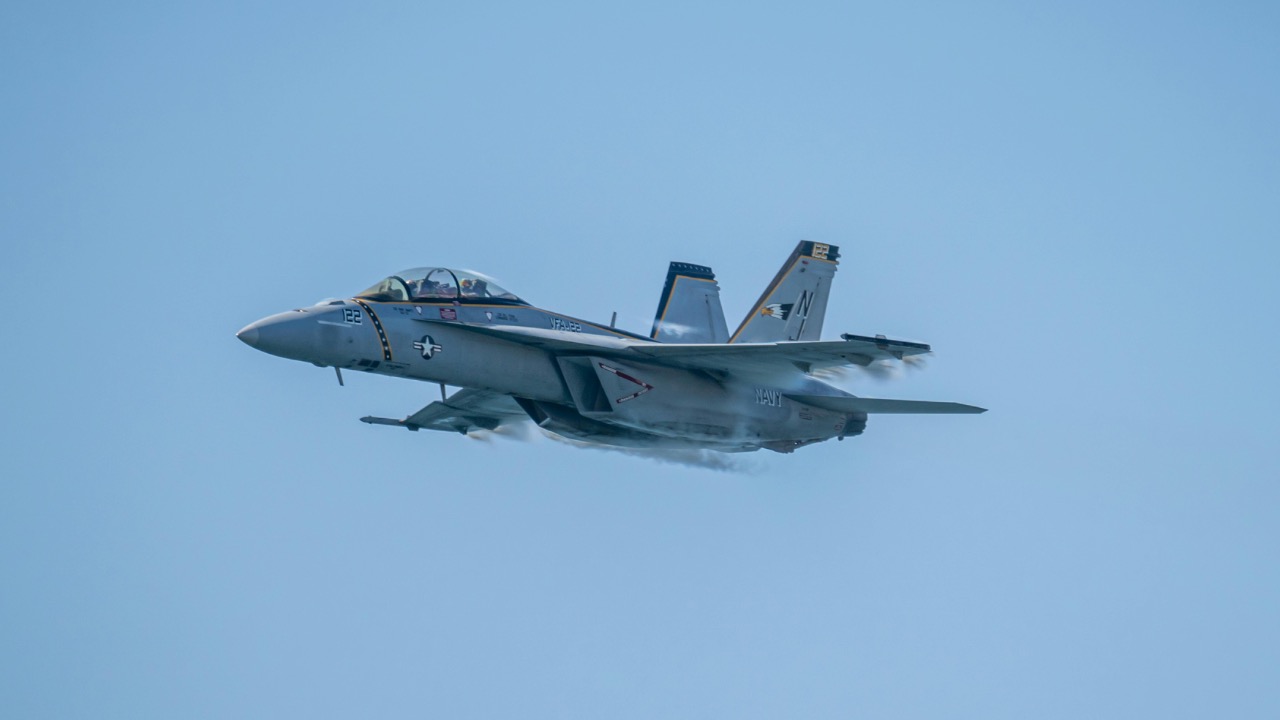
Reports indicate the U.S. Navy is moving quickly to advance a new hypersonic missile concept often referred to as “Blackbeard,” with plans aimed at potential deployment on the F/A-18 fighter jet platform. The push reflects a broader effort to modernize naval aviation firepower as global competition in advanced missile systems continues to intensify.
The focus is not just on speed, but also on adaptability. Integrating hypersonic capability into a carrier-based fighter like the F/A-18 represents a shift toward making high-speed strike systems more flexible and widely deployable, rather than limited to larger ship or ground-based platforms.
Why hypersonic weapons are a priority now

Hypersonic weapons are typically defined by their ability to travel at speeds above Mach 5 while maintaining maneuverability during flight. This combination makes them significantly harder to track and intercept compared to traditional missiles, which is why they’ve become a major focus for several global military programs.
For the U.S. Navy, the push toward systems like Blackbeard is tied to concerns about maintaining technological advantage in contested regions. As other countries continue developing similar capabilities, the emphasis has shifted toward speed of deployment and integration across multiple platforms, including aircraft that already operate from aircraft carriers.
The role of the F/A-18 platform
The F/A-18 fighter jet has long served as a workhorse for carrier-based operations. It is designed for versatility, handling both air-to-air and air-to-ground missions. Adding a hypersonic strike option would expand its role beyond traditional combat profiles.
However, integrating a weapon of this class into an existing aircraft is not simple. Factors like weight, heat tolerance, avionics compatibility, and launch systems all play a role. Even if testing moves quickly, full operational deployment typically requires extensive validation to ensure safety and reliability in real-world conditions.
Strategic competition and global pressure
The development effort is taking place in the context of growing international competition over advanced missile technology. Countries like China and Russia have already invested heavily in hypersonic systems, prompting the U.S. to accelerate its own programs to avoid falling behind.
This has created a cycle of rapid development and counter-development, where each advancement in missile speed or maneuverability leads to adjustments in defense systems. For the Navy, speed in fielding new capabilities is becoming just as important as the capabilities themselves.
Challenges in deployment and testing
Even with fast-tracked programs, hypersonic systems face significant technical hurdles. These include extreme heat generated during flight, guidance precision at very high speeds, and ensuring stability when launched from different platforms such as aircraft versus ships or land-based systems.
Testing also takes time because real-world conditions are difficult to fully replicate in simulations. Engineers must account for variables like altitude, carrier launch conditions, and atmospheric differences, all of which can affect performance.
What this signals about future naval strategy
The push toward integrating hypersonic weapons into carrier-based aviation suggests a shift in how the Navy views future conflict. Instead of relying solely on large, centralized launch systems, there is growing interest in distributing advanced strike capability across more flexible platforms.
If programs like Blackbeard continue advancing, it could change how carrier strike groups are structured and how quickly they can respond to threats. While the technology is still in development and not yet confirmed for active service, the direction of investment shows where military planning is heading in the coming years.

Leo’s been tracking game and tuning gear since he could stand upright. He’s sharp, driven, and knows how to keep things running when conditions turn.