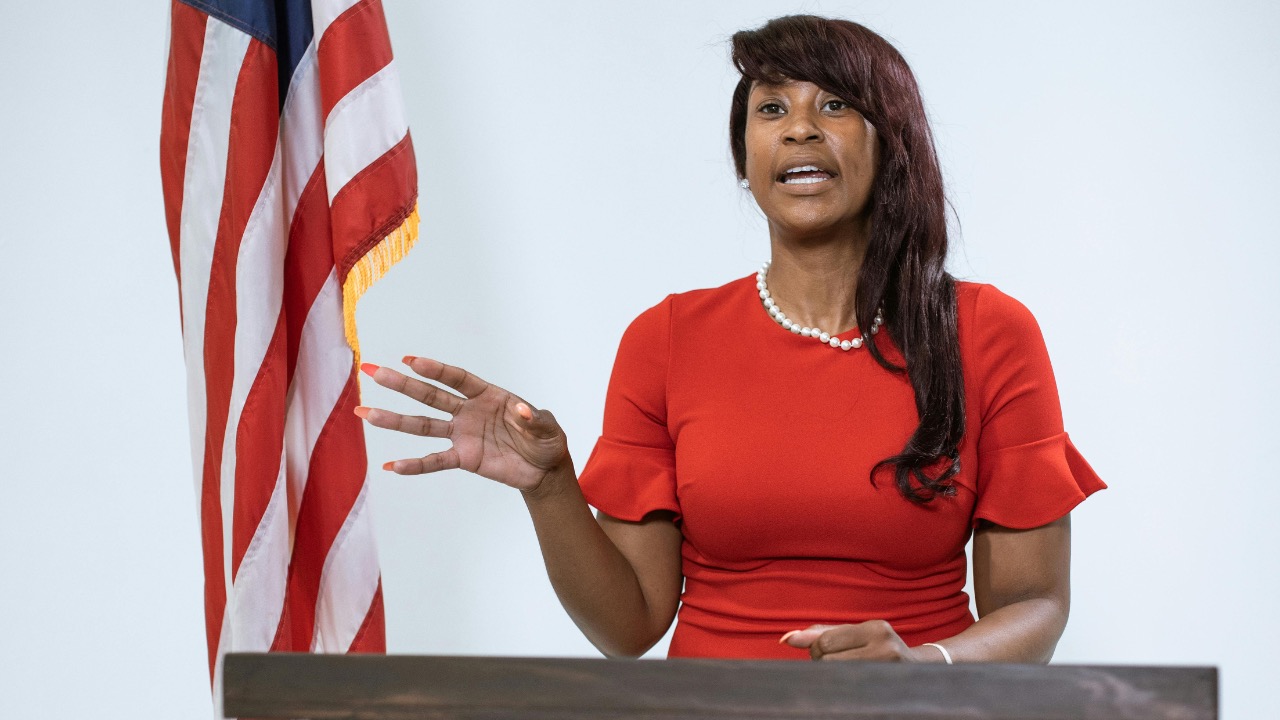
Woman sentenced after making violent threats against federal officials
Federal courts are increasingly confronting explicit threats aimed at judges, election workers and law enforcement, and one recent case ended with a woman sentenced after violent messages targeted federal officials. I see that outcome not as an isolated outburst, but as part of a broader pattern in which political anger, conspiracy narratives and online bravado spill into criminal conduct. By looking closely at this sentencing and similar prosecutions, I can trace how the justice system is trying to draw a bright line between protected speech and punishable intimidation.
In case after case, women from different states have been accused of threatening to kill judges, members of Congress and federal agents, sometimes invoking national figures or high profile prosecutions as justification. I view the latest sentence as a clear signal that federal judges are prepared to use the tools they have, from short jail terms to multi year prison sentences, to respond when rhetoric crosses into targeted threats of violence.
The California sentencing that set a federal benchmark

When I look for a clear marker of how seriously federal courts now treat violent threats, I keep coming back to a California woman who received the statutory maximum for targeting a judge. Federal prosecutors in Texas described how this California defendant admitted transmitting an interstate threat to injure a federal judge, and the court responded with a five year sentence that matched the maximum allowed by law. That length of time behind bars reflects a judgment that threatening the person who presides over a federal courtroom strikes at the core of the justice system itself.
In explaining the outcome, prosecutors emphasized that threats against judges are illegal and will be prosecuted, language that reads to me like an attempt to deter copycat behavior as much as to punish the original crime. The fact that a California woman drew the maximum sentence for a single interstate threat shows how federal authorities are willing to use sentencing power when they believe a line has been crossed from political anger into direct intimidation of a public official.
Election workers under siege in Detroit
The same pattern of hostility shows up in the treatment of local election officials, especially in places that became flashpoints in the 2020 presidential race. In Detroit, a Woman who is a New York resident admitted sending threatening messages to a Detroit area election official after that contest, accusing the office of criminal conduct and promising consequences. A state judge ultimately ordered her to serve 30 days in jail, a relatively short term that still represents a rare instance of incarceration for threats tied to election administration.
I read that sentence as part punishment and part warning to others who might be tempted to harass the people who run polling places and count ballots. Local coverage from Detroit described how the case became a reference point for Politics and Government experts who study intimidation of Voting officials, and I see the 30 day sentence as a concrete example of courts trying to shield the electoral process from targeted abuse.
How a Detroit radio station captured the climate of fear
Public radio coverage in Michigan added another layer to the story by focusing on how these threats feel on the receiving end. A local station at 101.9 FM reported on the same Detroit area case and highlighted that the Woman who sent the messages had zero direct authority over Elections, yet still managed to create a sense of real danger for the official and staff. I found it telling that the reporting framed the harassment not as a one off rant, but as part of a wave of hostility that local Newsrooms have tracked since 2020.
By centering the voices of election workers, that coverage helped me see how legal outcomes connect to everyday safety concerns. When a threat leads to even a short jail term, it sends a signal that the system will not leave local officials to face intimidation alone. The detailed account from WDET 101.9 tied the Detroit case to broader concerns about Elections, Politics and Government Finance, and I see that framing as a reminder that each sentencing decision lands in a much wider public debate.
Threats tied to Trump era prosecutions
Some of the most severe recent sentences have come in cases where defendants invoked Trump or his legal troubles as part of their threats. In one Texas case, a Woman called the chambers of a federal judge involved in Trump related criminal proceedings and issued a violent threat, including graphic language directed at the judge and members of the LGBTQ community. Federal prosecutors later confirmed that she received a prison term of more than two years, a length that reflects how seriously the court treated an attempt to intimidate a judge in a politically charged case.
Coverage of that Texas prosecution stressed that the caller specifically referenced Trump while vowing harm, which I interpret as an example of how national rhetoric can embolden individual acts of intimidation. One detailed report described how the Texas woman targeted a judge in a Trump criminal case, and another account from CBS News made clear that the sentence was 27 months in prison. I read those numbers as a benchmark for how courts may respond when political loyalty becomes a pretext for threatening federal officials.
A Washington State teen and the FBI agent she targeted
The pattern of violent threats is not limited to older adults or to people directly involved in partisan politics. In Minnesota, a Minnesota Federal Grand Jury returned an Indictment charging 18 year old Brenna Marie Doyle with threatening to murder a federal law enforcement officer from the FBI and members of the officer’s family. Prosecutors said the Washington State woman used her government issued cell phone to send messages that promised lethal violence, a detail that undercuts any suggestion that the threats were impulsive or anonymous.
I see that case as especially alarming because of the age of the defendant and the focus on an individual FBI Agent and their relatives, rather than on a distant institution. The charging documents describe how Brenna Marie Doyle allegedly threatened to murder a federal law enforcement officer and members of the officer’s family, and a separate report identified her as an 18 year old from Spokane, Washington who was indicted on a Thursday. Those details, drawn together, show how the justice system is now confronting threats that blend youth, political protest and direct targeting of federal agents.
Clashes in Minneapolis and a broader protest context
The Minnesota indictment of Brenna Marie Doyle did not happen in a vacuum, and I read it against a backdrop of clashes and protest activity in Minneapolis. One report described how four people were indicted after confrontations in the city, including Doyle, who was accused of threatening to murder a federal law enforcement officer and members of that officer’s family. The same account placed her at age 18, living in Spokane, Washington, and specified that the indictment was handed up on a Thursday, details that help me understand her case as part of a larger sequence of protest related prosecutions.
When I connect those facts, I see a pattern in which political demonstrations sometimes spill into direct hostility toward specific officials, whether they are police, federal agents or elected representatives. The story of four indicted after shows how prosecutors are willing to separate protected protest from criminal threats, and the charges against Doyle sit squarely on the criminal side of that line.
Physical violence against federal agents
Not every recent case stops at words, and I have watched with concern as some confrontations with federal agents have turned physically violent. In one incident near a law enforcement perimeter, court documents describe how officers from Customs and Border Protection and Homeland Security Investigations tried to secure an area after a shooting involving Alex Pretti. A woman at the scene is accused of biting off part of a federal agent’s fingertip, and prosecutors later secured a federal indictment that treats the attack as a serious assault rather than a minor scuffle.
The description of that event, which credits Customs and Border and HSI officers with trying to establish a secure perimeter, drives home for me how quickly a tense scene can escalate into lasting injury. The allegation that the agent’s fingertip remains injured reinforces the idea that attacks on federal officers carry long term consequences, both for the individuals harmed and for public expectations about how far confrontations with law enforcement can go.
Members of Congress as targets of violent rhetoric
Threats against federal officials have also reached the halls of Congress, where individual lawmakers are now frequent targets of violent rhetoric. In South Carolina, Congresswoman Nancy Mace reported that federal prosecutors are seeking a 21 month prison sentence for an individual accused of threatening to kill her and bomb her congressional office. The alleged threats were delivered by phone and focused on her role as a member of the House, a reminder that elected representatives are not shielded from the kind of personal intimidation more often associated with judges and agents.
When I read that prosecutors are asking for 21 months in prison for the person who threatened to kill Rep. Mace and bomb her office, I see a clear attempt to deter similar conduct against other lawmakers. The statement from Congresswoman Nancy Mace framed the case as part of a broader trend in which people are threatened simply for serving their country, and that language resonates with the other prosecutions I have examined.
New indictments and the line between speech and crime
Even as courts hand down sentences, new indictments keep arriving that test the boundary between heated speech and criminal threat. In another Minnesota case, a Minnesota Federal Grand Jury returned a true bill of indictment charging Claire Louise Feng of St. Paul with inflicting bodily injury on a federal law enforcement officer, a reminder that some confrontations move beyond words into direct violence. Prosecutors emphasized that the defendant is presumed innocent, but the very fact of the indictment shows how federal authorities are ready to bring charges when they believe an officer has been attacked.
Alongside that, I have seen reports of a Washington State teen charged in Minnesota for death threats against an FBI Agent and the agent’s family, with journalist Maria Hernandez explaining how a federal grand jury acted after an investigation into stolen weapons and ammunition. Another account from Facebook described how an Indianapolis woman named Shayla Addison, age 28, is facing federal counts after allegedly threatening to kill a U.S. congresswoman, illustrating how similar conduct can lead to charges even before any sentencing occurs. The description of An Indianapolis woman named Shayla Addison, and the separate reporting that credits Maria Hernandez with explaining the charges against a Washington State teen, both reinforce my sense that federal authorities are drawing a firmer line around violent rhetoric directed at public officials.

Leo’s been tracking game and tuning gear since he could stand upright. He’s sharp, driven, and knows how to keep things running when conditions turn.