Why Drone Warfare Is Changing Naval Strategy
Naval warfare is being rewritten by cheap, expendable drones that can hunt ships, saturate defenses and scout far beyond the horizon. From the Black Sea to the Pacific, commanders are redesigning fleets, tactics and even shipbuilding plans around a future in which uncrewed systems are everywhere above, on and below the water.
Drone warfare at sea is not just another modernization cycle. It is forcing navies to reconsider who can control key waterways, how to protect high-value ships and whether traditional assumptions about naval power still hold.
The Black Sea as a live-fire laboratory
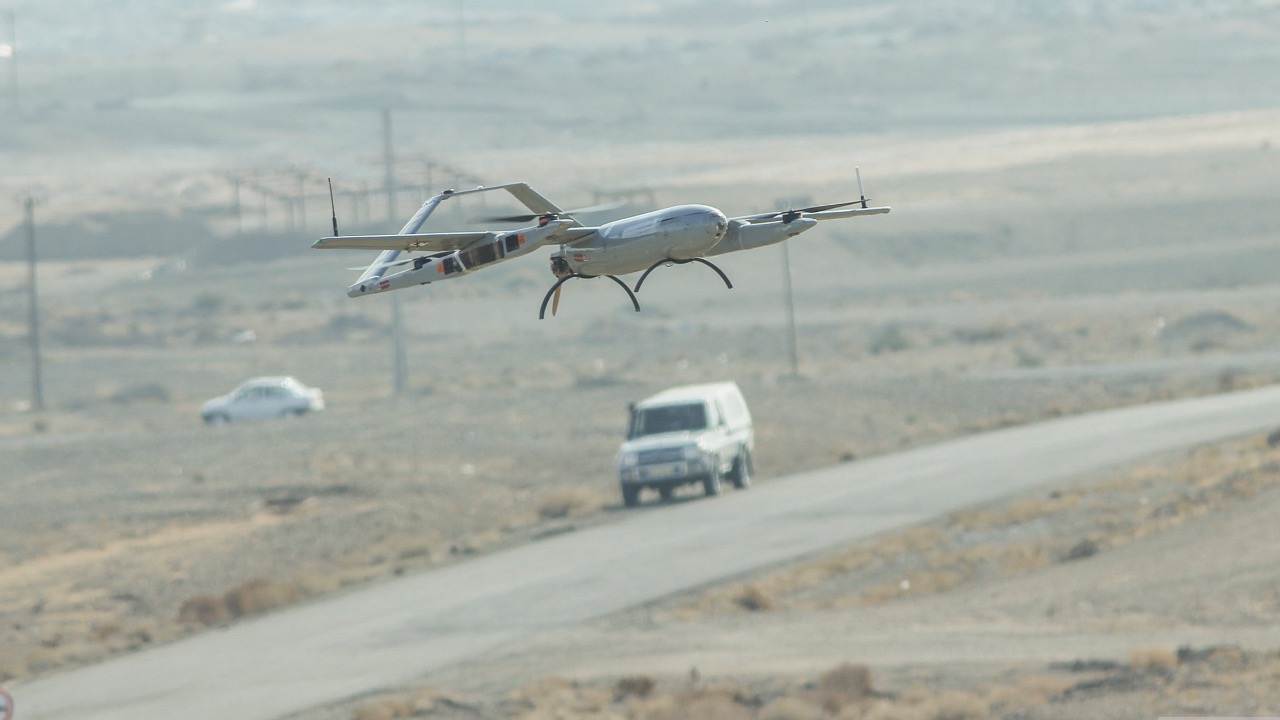
The most vivid proof of this shift sits in the Black Sea, where Ukraine has used naval drones to attack Russian warships and ports despite having almost no conventional fleet. Ukrainian operators along the southern coast, including figures identified by the call sign Call Sign, have turned remote-controlled sea craft into precision weapons that can slip past coastal defenses and strike targets inside heavily defended harbors.
Analysts describe how these attacks force Russia to keep much of its fleet farther from Ukraine, limiting its ability to launch missiles or project power near the coast. In effect, a state with no blue-water navy has used naval drones in the Black Sea to constrain a traditional fleet before those ships can get in range. This asymmetric success is already influencing debates over coastal defense in regions from the Baltic to the South China Sea.
The Black Sea campaign also shows how quickly tactics evolve. Ukrainian units constantly tweak software, warhead configurations and approach routes in response to Russian countermeasures. That rapid adaptation cycle, enabled by relatively low-cost hardware and software updates, contrasts sharply with the slow upgrade rhythm of large surface combatants.
From niche tool to core capability
What began as improvisation is now central to military planning. Reporting on the conflict around Kyiv and other fronts describes how drones and artificial intelligence have moved from supporting roles to the heart of modern operations, especially since Russia invaded Ukraine in 2022. Analysts note that drones and artificial now shape how commanders think about surveillance, strike and logistics.
Economics are a key driver. En masse, low-cost drones can damage or disable million-dollar tanks or ships, creating a cost exchange ratio that some experts warn could bankrupt Russia if it tries to match losses platform for platform. The same logic applies at sea, where a swarm of inexpensive surface drones can threaten a frigate or even a larger vessel at a fraction of the price.
Researchers examining mass drone warfare describe a new kind of conducted battle, where waves of uncrewed systems and countermeasures give operations a methodical, staccato rhythm reminiscent in spirit of late World War conflicts. The complexity of coordinating many small platforms, each with sensors and sometimes autonomy, is already changing how staffs plan and execute campaigns.
Sea drones and the rise of asymmetric navies
Sea drones have become the signature naval innovation of the Ukraine conflict. Detailed accounts of Ukrainian operations explain how small, fast surface craft packed with explosives have struck Russian warships, fuel depots and even major bridges. One analysis argues that sea drones give smaller navies a real chance to turn the tide against larger fleets.
These systems are attractive to states that cannot afford aircraft carriers or large destroyers. They can be built in dispersed workshops, launched from civilian marinas and controlled from hidden shore sites. This aligns with broader research that describes how technology is making warfare more asymmetric, giving smaller and less equipped forces a way to offset traditional disadvantages if they can master advanced tools.
Strategists now talk about a future in which coastal states field full suites of air, land and sea drones to deny access to hostile ships. Video reports from places such as Mount Monganoi, where a company is trialing integrated drone systems for national defense forces, show how this concept is already moving from theory into field testing.
Unmanned systems in the U.S. Navy’s “hedge” strategy
Major navies are not watching from the sidelines. Senior leaders in the United States are folding uncrewed systems into a broader hedge strategy meant to keep pace with rapid technological change and potential adversaries. In a detailed explanation of this approach, Admiral Caudle argues that historical tendencies, including a heavy reliance on carrier strike groups, have inhibited more flexible force designs. The new plan calls for tailored certification of unmanned systems so they can be fielded faster and used in combinations that tip the scales in favor of the fleet.
Coverage of this strategy describes how Caudle wants unmanned systems integrated into everyday operations rather than treated as experimental add-ons. A companion report emphasizes that combat commanders have to know how to ask for these capabilities, which means packaging them in familiar ways and building them into standard planning questions.
The hedge concept sits alongside other calls for a high and low mix of manned and unmanned platforms. Analysts warn that all-or-nothing force structure changes often fail in global combat, citing Germany in World War Two as a cautionary example when it dropped certain capabilities too quickly. The emerging consensus favors a hybrid fleet where crewed ships handle complex command and control, while drones extend reach, add magazine depth and absorb risk.
Every ship a carrier: strike drones from any deck
One of the most radical implications of naval drones is the idea that any warship, not only large carriers, could launch and recover strike aircraft. A detailed report on U.S. planning describes how the Navy is on the hunt for strike drones that can launch from any warship, potentially allowing dozens of smaller ships to carry significant airpower. A defense analyst quoted in that piece captures the shift by saying that, instead of one aircraft carrier projecting power, dozens of ships could each launch multiple strike drones.
This concept is at the heart of proposals to make Instead of one or two high-value carriers, a dispersed flotilla of ships could each act as a mini carrier. Separate reporting on a DARPA program describes a new battle drone with a compact launch and recovery system that allows operations from smaller ships, reinforcing this trend.
Commentary on global naval power notes that the U.S. Navy and its fleet of carriers still represent unmatched traditional strength, yet drones are opening the door to a new style of water warfare. Analysts such as Peter Zeihan argue that as uncrewed systems proliferate, the geography of naval power will change, with more emphasis on coastal chokepoints and less on blue-water carrier duels.
Submarine-launched drones and the invisible battlespace
The underwater domain is changing just as quickly. A detailed video analysis of the Blackwing UAS explains how the U.S. submarine force has integrated small drones into frontline attack boats so that the silent service is no longer blind when it surfaces a mast or risks detection. These uncrewed aircraft can be launched from submerged tubes, fly over the horizon to scout targets or relay communications, then be recovered or expend themselves in a strike.
The integration of systems like Blackwing shows how Navy submarines are becoming hubs for networks of uncrewed sensors. A separate link to the same topic highlights how the silent service in 2026 is using submarine launch drones as a standard part of its attack profile.
Beyond aircraft, underwater drones are turning the seabed into a future battlefield. Analysts of autonomous weapons describe how aerial drones are already transforming warfare and argue that underwater drones are next, with the potential to mine sea lanes, shadow submarines or sabotage undersea cables. This adds a new layer of vulnerability for navies that depend on secure communications and logistics beneath the surface.
AI, swarming and the fight for the algorithm
Artificial intelligence is the force multiplier that makes naval drones more than remote-controlled boats or planes. On the Ukrainian front lines, observers describe how drones and anti-drone countermeasures have evolved from rudimentary remote-controlled devices into sophisticated and increasingly autonomous weapons of war. Algorithms now help drones recognize targets, evade jamming and coordinate with other platforms.
Technical analysis of drone operations in 2025 explains how swarms rely on distributed intelligence instead of a central command system. Rather than one controller directing every move, each drone contributes to the overall decision making process, which improves resilience and allows the group to adapt to dynamic environments. The description that Instead of central control, each drone plays a part, captures how swarms can keep functioning even if some units are destroyed or jammed.
China is also studying these dynamics closely. Research into future war planning notes that, according to PRC authors, one major takeaway is that small, expendable drones and drone swarms offer key offensive and defensive advantages. They can be used alongside more expensive uncrewed combat vehicles and crewed systems, giving Chinese planners a flexible toolkit for saturating enemy defenses or protecting their own assets.
Defending against cheap drones with cheaper defenses
As navies and armies field more drones, they also scramble to counter them. Traditional air defense systems rely on missiles and interceptors that are often expensive compared with the relatively low cost of small drones and improvised munitions. France is developing next generation laser defenses to close that gap, seeking a way to shoot down incoming threats with energy weapons that cost far less per shot than a surface to air missile.
Similar logic drives new short-range air defense systems such as Merops, which promotional material says has already taken down more than 1,000 Russian drones in Ukraine and is now used by Poland and Romania to protect their airspace. Advocates argue that traditional missile systems are often too expensive to counter mass drone attacks, which forces militaries to innovate with cheaper, scalable tools against UAV threats.
Navies face the same math at sea. If a warship uses a multi-million dollar interceptor to destroy a few thousand-dollar drones, it will run out of both money and missiles long before the attacker runs out of platforms. This cost spiral is pushing research into directed energy, electronic warfare and hard-kill guns that can engage swarms without depleting magazines.
Redesigning fleets and shipbuilding
The shift to drones is not just about weapons. It is changing how navies design ships and think about force structure. A media brief on future naval ships notes that planners recognize the navies of the future will need a hybrid mix of platforms and systems, lean crews and uncrewed vehicles that can operate together while offering greater value for money. This means designing hulls with modular bays for unmanned systems, flexible power generation for directed energy and advanced networks to connect everything.
Senior officials have said the platform mix will balance capability across high and low, manned and unmanned, enabling modular, adaptable and resilient force packages. That vision, described in a Defense News briefing, aims to replace a narrow focus on a few exquisite ships with a more distributed fleet that can absorb losses and reconfigure quickly.

Leo’s been tracking game and tuning gear since he could stand upright. He’s sharp, driven, and knows how to keep things running when conditions turn.