
Guns that should’ve stayed on the drawing board
Every so often, a firearm comes along that looks promising in brochures or on the range, but reality tells a different story. Some guns are heavy, unwieldy, or temperamental. Others seem clever in theory but fall apart in real-world conditions. These are the guns that frustrate shooters, waste ammo, and make you wish they had stayed on the drawing board.
Understanding which firearms tend to underperform can save you time, money, and headaches. They’re not necessarily dangerous, but their shortcomings are impossible to ignore in the field. Experienced hunters and shooters quickly learn to admire the design intent while moving on to more reliable tools.
Thompson/Center Contender (Original Break-Action Models)

The Thompson/Center Contender was designed as a versatile break-action rifle for multiple calibers. In theory, swapping barrels and cartridges is brilliant, but the execution often falls short. Early models had loose barrels and inconsistent headspace.
The result is unpredictable accuracy and frequent barrel seating adjustments. Premium ammo doesn’t always fix the issue, and heavy handloads can exacerbate wear. Many shooters love the concept but find themselves frustrated with continual tweaking. The Contender shines as a collector’s piece or a controlled-range experiment, but it rarely delivers consistent performance for practical hunting.
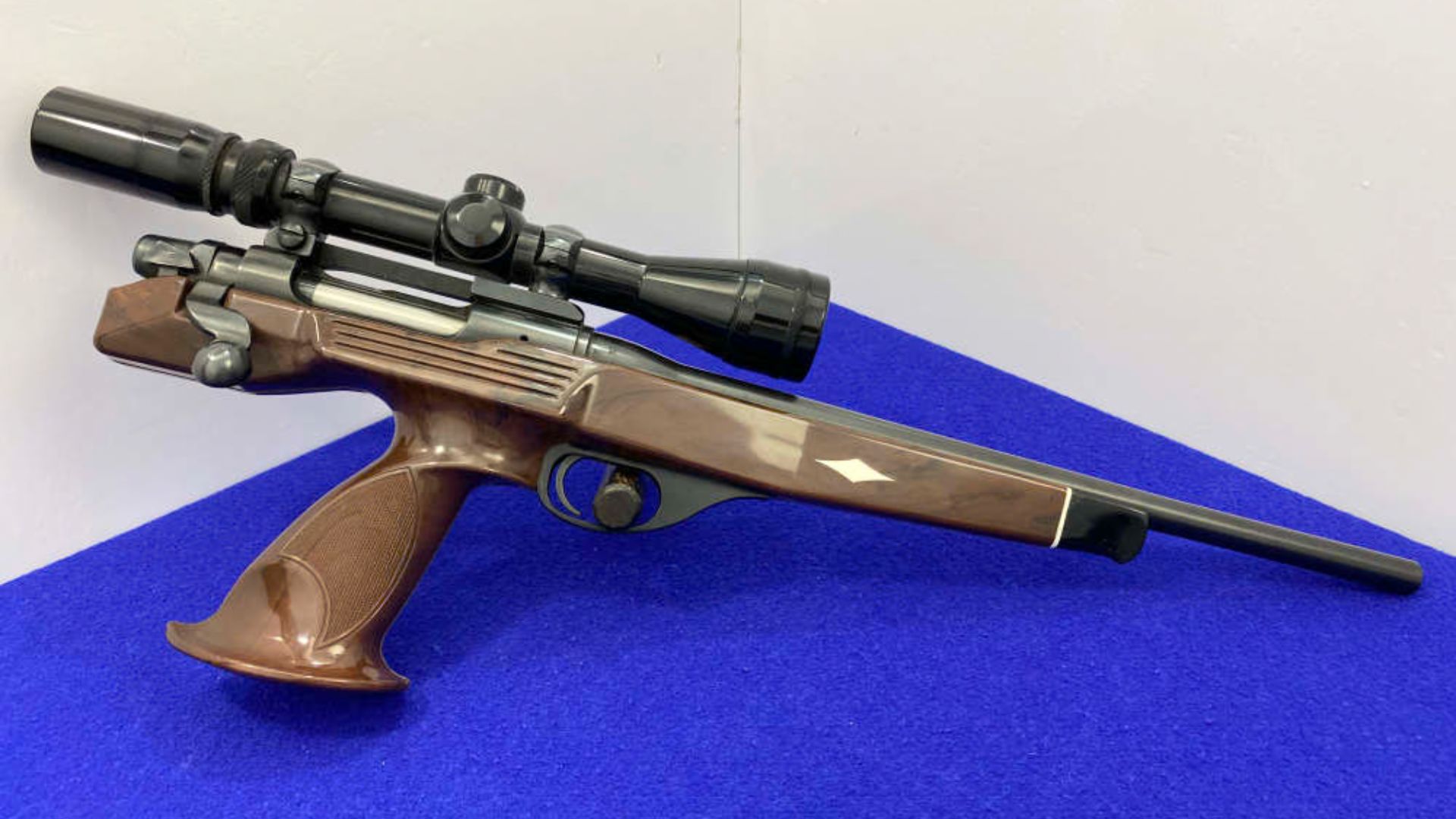
Remington XP-100 (Early Versions)

The Remington XP-100 was a long-range pistol designed for precision shooting in .221 Fireball and other cartridges. The design was unusual, and ergonomics were a compromise to achieve stability.
Early versions are notorious for trigger creep, sight alignment issues, and limited magazine reliability. Better ammo can sometimes increase fouling and reduce cycling consistency. While it remains a collector’s favorite, the original XP-100 struggles in practical shooting scenarios. Many hunters test it once or twice and find it more frustrating than effective.
Savage Striker
The Savage Striker attempted to combine bolt-action precision with a hunting pistol platform. Its compact design promised mobility and power in one package.
In reality, the Striker suffers from stock ergonomics, recoil control, and inconsistent accuracy. Even premium loads can exaggerate these weaknesses, making follow-up shots awkward. The trigger and bolt interface were prone to uneven performance, leaving shooters disappointed. While it has a niche appeal, most find it more trouble than it’s worth.
H&K G11
The H&K G11 was an ambitious attempt to use caseless ammunition in a military rifle. The concept promised weight reduction and higher rates of fire, but execution failed spectacularly.
Feeding problems, heat sensitivity, and reliability issues plagued the design. Manufacturing complexity made it impractical and expensive, and the gun never saw widespread use. Even under controlled testing, it was temperamental. The G11 is fascinating as a prototype, but it never should have left the drawing board for mass deployment.
Rossi Circuit Judge (Early Revolving Carbine Models)
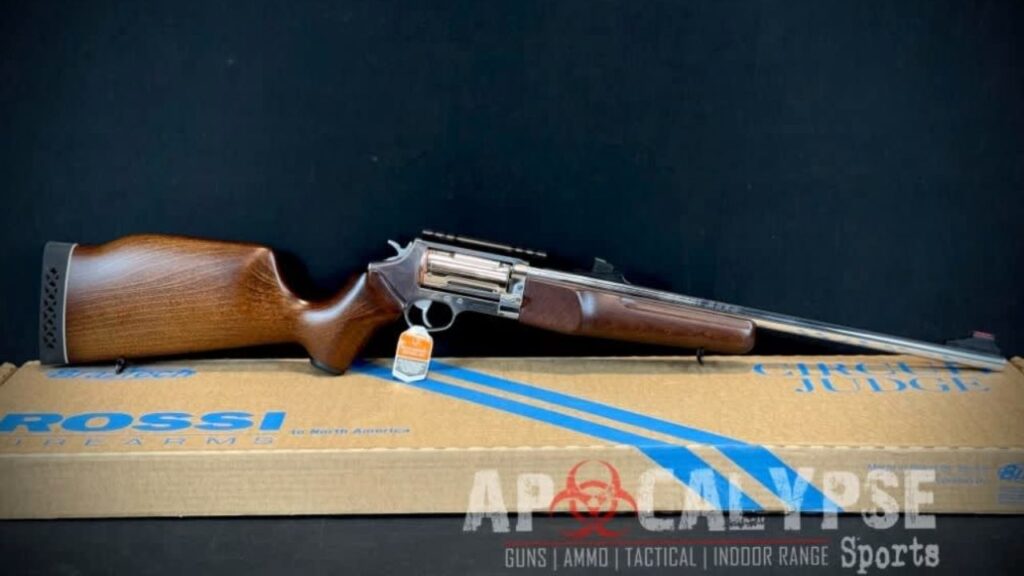
The Rossi Circuit Judge was marketed as a hybrid revolver/rifle capable of shooting .45 Colt and .410 shells. The idea seemed appealing to casual shooters looking for versatility.
Early versions struggled with cylinder alignment, inconsistent chamber timing, and poor ergonomics. Accuracy at range was limited, and recoil management became a challenge with heavier loads. Many shooters try it once and stick to conventional rifles or revolvers that handle their respective cartridges better. The concept intrigued, but practical results were underwhelming.
Bushmaster ACR (First Gen)
Bushmaster’s first-generation ACR promised modularity, ambidextrous controls, and adaptability for hunters and tactical users. It looked modern and adjustable on paper.
The execution fell short, with cycling problems, parts availability issues, and heavy weight. Even careful maintenance didn’t prevent malfunctions when using quality ammo. Many owners sold them quickly after testing in real conditions. While the idea of a highly modular rifle remains appealing, this early ACR demonstrates how complexity can undermine reliability.
Heckler & Koch VP70
The VP70 pistol was designed with a polymer frame and the unusual option for a stock attachment that enabled burst fire. In theory, it was ahead of its time.
In practice, it suffered from heavy trigger pull, limited ergonomics, and poor controllability in full-auto mode. Accuracy suffers with modern ammunition, and reloading is awkward. Most shooters handle it once, appreciate the historical curiosity, and shelve it in favor of more conventional, manageable pistols.
Remington Nylon 66

The Nylon 66 was a lightweight .22 rifle with a synthetic stock that seemed revolutionary in the 1950s. Durability and low weight were selling points.
However, the action and barrel alignment often led to inconsistent accuracy. Premium rounds didn’t always translate to better performance, and the magazine system could be temperamental. While it remains an interesting collector’s item, hunters found it underwhelming in the field, preferring more conventional bolt-action rifles.
High Standard Supermatic Trophy
The Supermatic Trophy aimed to combine a .22 rifle with semi-automatic fire for small game and target shooting. Its sleek profile suggested ease of handling.
Accuracy and reliability were inconsistent, especially with higher-velocity rounds. Feed issues, occasional jams, and sensitivity to ammunition quality limited its usefulness. Shooters quickly realized that conventional bolt-action .22 rifles outperformed it for hunting and training. It’s admired for style, but not for practical performance.
Beretta CX4 Storm (Early Versions)
The early Beretta CX4 Storm offered a pistol-caliber carbine with modularity and ambidextrous features. On paper, it was an urban-friendly firearm with appeal for home defense.
Reality showed frequent feed issues with certain ammo, ergonomics that didn’t suit all shooters, and a trigger system that could feel mushy. Some early models also had magazine compatibility quirks. Most users quickly adapt to more traditional carbines or pistols for dependability. It’s a clever idea that didn’t fully translate into reliable use.
Winchester Model 88

The Winchester Model 88 aimed to replace lever-action and bolt-action rifles with a hybrid design capable of handling medium-power cartridges. Its concept promised versatility.
The rifle often suffers from uneven bolt timing and inconsistent headspace. Accuracy with premium ammunition varies, and some calibers exacerbate wear on the action. Shooters quickly realize that conventional rifles in those same calibers outperform the Model 88. It remains interesting historically, but it never earned a spot as a reliable field rifle.
Uzi Carbine (Civilian Versions)
Civilian Uzi carbines offered the appeal of a submachine gun in a semi-automatic format. Compact, fast-handling, and fun on the range, they looked exciting on paper.
Unfortunately, reliability suffers with modern ammunition, and stock ergonomics make follow-up shots awkward. Accuracy is limited, and the overall design favors controlled bursts rather than precise fire. Many shooters test it once for novelty and then return to proven rifles or pistols for dependable performance.

Asher was raised in the woods and on the water, and it shows. He’s logged more hours behind a rifle and under a heavy pack than most men twice his age.


No! Not the Nylon 66! 🥲 For the longest time I had a hankering for one, ever since I first became interested in guns back in the early 1970s (I’m 66). I had a chance to handle one last year at a local gun store and that finally put my hankering to rest. It was nothing special and the price, although I don’t remember it exactly, was way too high. Most times it’s best not to idolize the objects, not to mention people, that got away.
On this same topic, I had wanted a Steyr Scout since first hearing of them in the late 1990s. About four years ago I bought one off of Gun Broker in 7-08. The rifle was very accurate but I could warm up to the stock; the width of the forearm didn’t work for me. I also found I’m not a fan of the scout scope concept, preferring instead an LPVO conventional scope. I sold it about 18 months ago.