Military sidearms that lasted far longer than anyone expected
Some military sidearms quietly outlive the empires, doctrines, and uniforms around them. Designed for one era’s wars, they keep riding in holsters through technological revolutions, budget fights, and multiple “final” replacements. Their survival says as much about trust and culture as it does about metallurgy.
From black powder revolvers to slab-sided .45s, a handful of pistols and revolvers stayed in service far longer than planners expected. They endured because troops believed they would fire when rifles jammed, because armorers could keep them running, and because no sleek new contender fully replaced the confidence they inspired.
The Colt Single Action Army and the age of the revolver
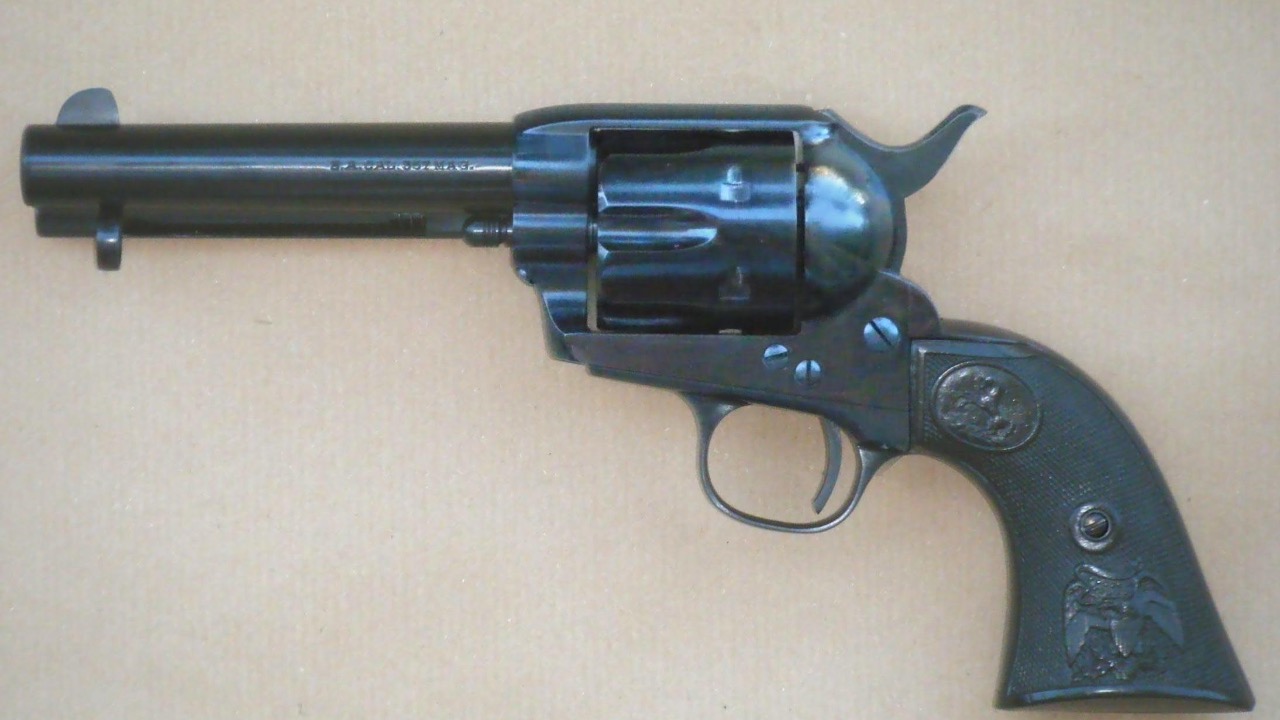
The story of long-lived sidearms starts in the 19th century, when the U.S. Army carried the Colt M1873 Single Action Army as both weapon and symbol. Designed as a rugged single-action revolver that could handle black powder .45 Colt cartridges, it became a fixture on the frontier and in early overseas campaigns, remaining in U.S. service even as smokeless powder and more modern designs appeared. A historical survey of Army holsters shows the revolver sitting in the lineage alongside the Colt M1847 Walker and later semi-automatics, illustrating how slowly institutions shift away from trusted sidearms once they are fielded at scale and proven under harsh conditions, especially when those revolvers are already supported by existing logistics and training systems.
Even after newer double-action revolvers and semi-automatic pistols emerged in Europe, the Single Action Army remained in limited military and constabulary use because it was simple, familiar, and durable. That longevity fits a broader pattern in which older firearms, such as the British Land Pattern Musket introduced in 1722, served for generations before finally giving way to successors. The Land Pattern Musket, often called the Brown Bess, stayed in front-line and secondary roles across the British Empire for roughly a century, and analysis of the British Land Patternhelps explain why: once an arm is mass-produced, widely issued, and backed by doctrine, it tends to linger in arsenals, colonial garrisons, and reserve units long after its supposed replacement arrives.
The M1911: a .45 that refused to retire
No sidearm better illustrates unexpected longevity than the M1911. Adopted by the United States as a .45 caliber semi-automatic pistol, it went to war with U.S. forces in World War I and was still being carried by Marines and soldiers in Vietnam. A review of long-serving U.S. weapons notes that the M1911 was designed by John Browning as a short-recoil, single-action pistol that combined stopping power with reliability, and it remained in combat service for most of the 20th century. Even after the official transition to newer designs, specialized units continued to use upgraded versions, including models that evolved into what the Marine Corps later designated as the M45, underscoring how deeply the platform was embedded in training and armories across the force, as highlighted in a survey of longest-serving weapons.
When the U.S. military adopted a 9×19 mm pistol to replace the M1911, planners expected a clean break. Instead, the old .45 lingered. Detailed lists of sidearms that troops trusted when rifles failed describe how, even as newer pistols entered service, some personnel continued to favor the M1911’s heavy bullet and familiar ergonomics in close-quarters situations. That same reporting on sidearms U.S. troops notes that battlefield confidence often outweighed procurement charts, particularly in units that could secure waivers or maintain their own specialized inventories. The M1911’s extended run was driven less by nostalgia than by a century of institutional muscle memory, a deep supply of spare parts, and a proven record of functioning in mud, sand, and tropical humidity.
From Browning to Beretta and beyond
The M1911 was not the only Browning design to outlast expectations. Variants of the Browning Hi-Power, developed in the interwar period, remained standard or reserve issue in multiple militaries well into the late 20th and early 21st centuries, often serving alongside more modern polymer pistols. That persistence mirrors the experience of other Browning creations, such as the M1919 Machine Gun, which served from 1919 into the Vietnam era. Analysis of U.S. weapon longevity singles out the M1919 Machine Gun as a standout for its decades of service, thanks to its proven reliability and adaptability to different mounts and roles. Sidearms built on similar design philosophies, with robust steel construction and straightforward maintenance, benefited from the same institutional inertia that kept the M1919 in inventories long after newer systems appeared.
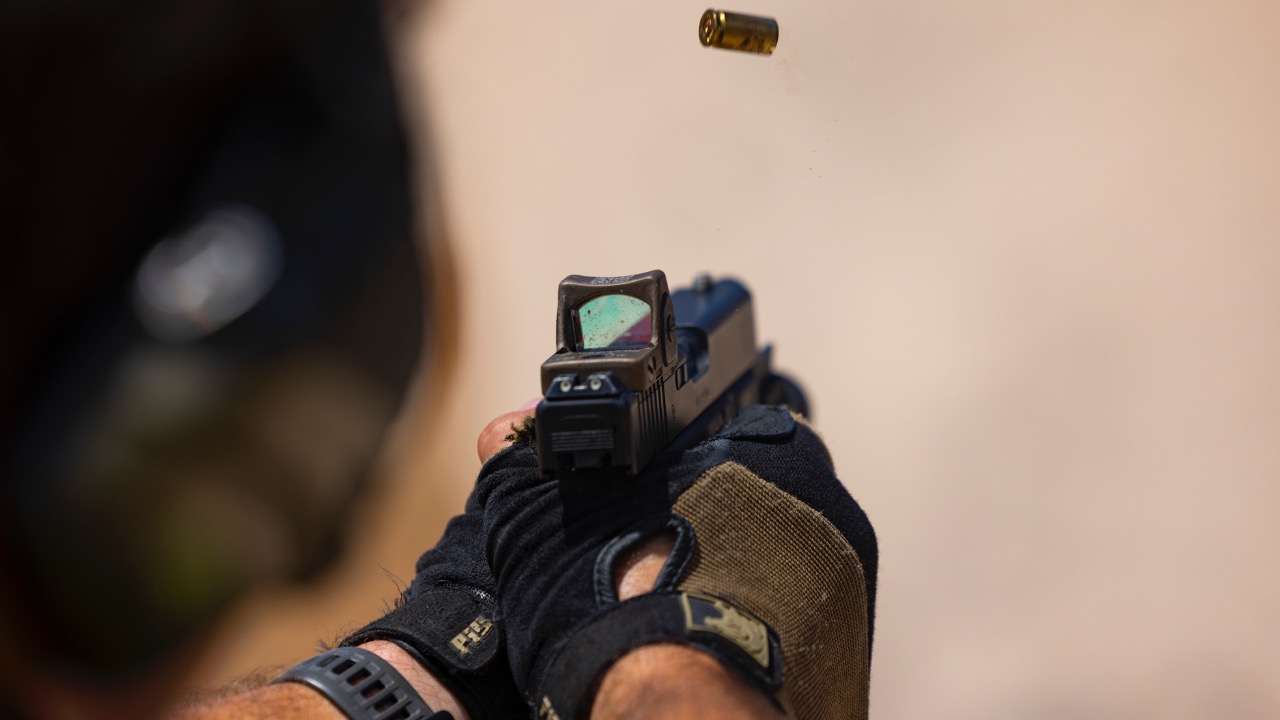
As the U.S. military eventually moved to the Beretta M9 and later to more modern modular pistols, the expectation was that older sidearms would quickly fade from active use. Reporting on long-serving pistols instead describes a patchwork reality in which legacy designs remained in armories, were issued to certain specialties, or appeared in training environments long after official replacement. A detailed quick read on military sidearms too explains that some forces continued to issue older models through waivers or special programs, particularly where elite units valued specific features such as trigger feel, suppressor compatibility, or caliber. The pattern shows that sidearm replacement is rarely a clean technological leap; instead, it is a layered process where old and new coexist for years.
Revolvers hanging on in the age of semi-automatics
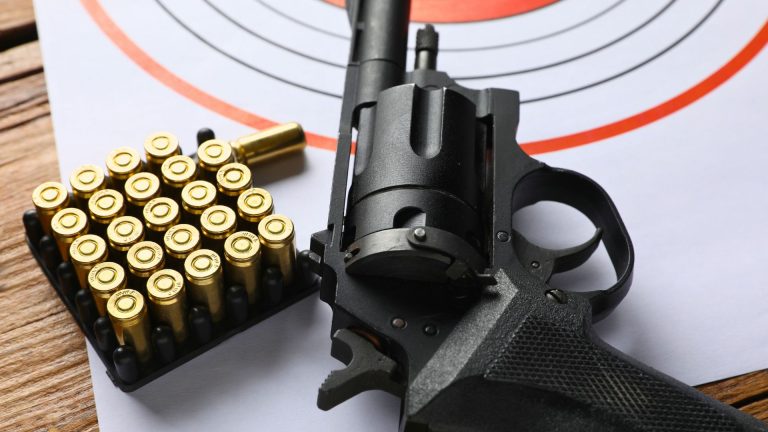
Even after semi-automatic pistols became standard, revolvers refused to disappear from military service. Discussions among firearms historians and enthusiasts point out that some armies continued to issue revolvers in secondary roles well into the late 20th century, especially for aircrew, police units, and rear-echelon troops. One widely cited conversation about the last armies to regularly field revolvers as standard sidearms highlights how certain forces valued the revolver’s mechanical simplicity and tolerance for neglect, which could be attractive in environments with limited maintenance infrastructure. A thread on what was the to rely on revolvers traces how these handguns persisted in niche roles long after most frontline units had shifted to semi-automatics.
In the U.S. context, revolvers such as the Smith & Wesson models issued to aviators and security personnel remained in use even after semi-automatics dominated infantry holsters. Historical overviews of Army sidearms show that the service moved from early revolvers like the Colt M1847 Walker and the Colt M1873 Single Action Army to semi-automatics, yet still kept certain wheelguns in circulation for specific tasks. A look at how the Army sidearms have shows that changes in doctrine and technology did not instantly erase older types. Instead, revolvers lingered where their strengths, such as resistance to ammunition sensitivity and ease of use under stress, still mattered.
Why some sidearms outlive their era
When certain pistols and revolvers remain in service for generations, the reasons go beyond nostalgia. Analysts looking at the longest-serving weapons in U.S. combat inventories emphasize a combination of reliability, training investment, and cost. Once an arm like the M1911 or an older revolver is integrated into manuals, qualification courses, and depot-level maintenance, replacing it requires not only buying new hardware but also rewriting doctrine and retraining entire cohorts of troops. Overviews of long-serving U.S. weapons point out that proven designs often evolve through incremental upgrades rather than being discarded outright, which helps explain why certain sidearms receive new finishes, sights, and internal parts while keeping the same basic frame and controls.
There is also a cultural dimension. Units that build their identity around specific missions, such as close-quarters combat or special reconnaissance, often develop strong preferences for particular sidearms that have served them well. Commentaries on sidearms that troops refused to give up describe a pattern in which personal experience under fire carries more weight than abstract performance metrics. At the same time, broader studies of long-serving firearms show that once a weapon proves itself across multiple conflicts, it tends to migrate from front-line issue to reserve stocks, training units, and allied forces, extending its service life far beyond the original design horizon. In that sense, the revolvers and pistols that stayed in holsters long after anyone expected are not anomalies; they are the predictable outcome of institutions that prize proven reliability over novelty.

Leo’s been tracking game and tuning gear since he could stand upright. He’s sharp, driven, and knows how to keep things running when conditions turn.