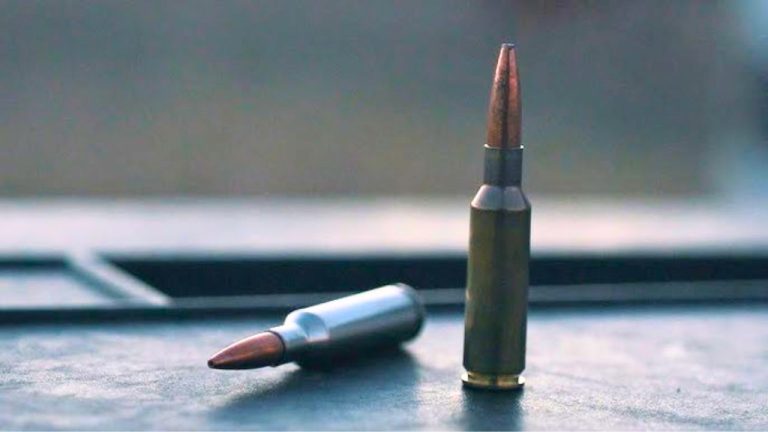
Preppers swear by it, but is the Springfield M1A really an ideal survival rifle?
Few rifles spark as much debate in preparedness circles as the Springfield M1A. Preppers praise its power, reach, and military heritage, while critics question whether a heavy, wood-and-steel .308 is still the smartest choice when everything goes wrong. This piece tests that reputation against what recent reviewers, hunters, and defensive shooters have actually found, then weighs whether this classic really fits the survival role many owners assign to it.
Why preppers keep coming back to the M1A

For people who think in worst case scenarios, the M1A checks several emotional and practical boxes at once. As a semi automatic descendant of a battle rifle expected to function in mud, sand, and snow, it appeals to anyone picturing a long walk out of a disaster zone with only one long gun on their shoulder. In long form survival content that compares rifles for SHTF use, creators often highlight the appeal of rugged, full power platforms alongside budget options, and the M1A frequently appears in that conversation even when the focus is on more affordable choices, as in one prepper oriented roundup of budget rifles that preppers trust.
There is also a philosophical angle that explains why some survival minded shooters gravitate toward it. Many want a rifle that can handle defense, hunting, and long range shots with the same basic setup, and they are willing to trade weight and recoil for that kind of versatility. Writers who frame the M1A as a potential “bug out” rifle describe it as a single platform that can cover everything from close range defensive work to precise hits at distance if the shooter trains and selects the right configuration, a theme that runs through detailed arguments about whether the rifle is too outdated or for self defense and bug out use.
Battle rifle DNA and what it means for survival
The M1A’s origin story is central to its survival mystique. It traces back to the M14, a select fire 7.62×51 mm rifle built for infantry use, and the civilian configuration carries that lineage into a semi automatic package. Hunting focused analysis describes the “Military Roots” of the M14 configured as an M1A and emphasizes its reputation as a rugged rifle with proven durability in harsh conditions, a description that helps explain why some preppers see it as an all weather tool rather than a range toy, as detailed in one exploration of its military background.
That heritage brings both strengths and compromises into a modern survival context. On the plus side, the M1A operates with a gas system and forged components designed around high round counts and field maintenance, which gives owners confidence that it will keep running if they stay on top of basic cleaning. However, the rifle’s layout, weight, and manual of arms come from an era before modular rails and lightweight optics, so anyone expecting AR style ergonomics may find the controls and balance less intuitive for rapid, close range defensive work.
Reliability under stress: what 15,000 rounds tell us
If a survival rifle cannot be trusted to function when filthy and hot, nothing else about it matters, and here the M1A has some hard data in its favor. In one widely cited torture test, a single rifle was run for 5 Days and a total of 15K Rounds with only basic maintenance, and the photos of battered brass marks on the receiver illustrate how aggressively it was cycled during that period. The testers described how the gun endured this schedule while continuing to operate, using the experience to argue that the design can handle extreme round counts and rough handling, as documented in the account of 5 Days 15K.
Other reviewers have echoed that reliability story in more typical use. A detailed breakdown of the SOCOM 16 and National Match variants rated functional reliability at 5 out of 5 and noted that, despite some oddities in accuracy testing, the rifles cycled consistently with standard ammunition. Feedback like that, combined with the torture test results, supports the idea that a properly maintained M1A can be trusted to fire when needed, even if its accuracy and ergonomics spark more debate than its basic ability to go bang.
Accuracy, trigger feel, and real world shootability
Accuracy is where the M1A’s old school design either satisfies or frustrates survival minded shooters, depending on their expectations. Precision oriented versions like the Loaded and National Match models are tuned for tighter groups, but even the more general purpose rifles benefit from a fairly refined trigger system. One review of the platform highlights a two stage trigger around 5 lb that gives a clear sense of when the break is coming, a characteristic that helps shooters manage the heavier recoil of 7.62×51 mm and stay on target for follow up shots, as described in a detailed review of the.
Scout length variants build on that with match style trigger packs that are specifically called out as two stage national match assemblies, giving them a feel closer to tuned service rifles than budget carbines. One Scout Squad evaluation notes that this type of trigger is a commercial product based on the original military pattern, which is why it tends to be compared directly to the M14’s fire control system, as discussed in a review that opens with “Speaking of the trigger” when describing the Scout Squad trigger. For a survival role, that means a trained shooter can make precise hits at intermediate ranges, although the rifle’s weight and length limit how quickly they can transition between close targets compared with a lightweight 5.56 carbine.
Ergonomics, weight, and the burden of carrying it all day
The M1A starts to look less ideal as a survival rifle when you consider hauling it, plus magazines and .308 ammunition, over long distances. Detailed hunting oriented coverage under the heading “Ergonomics and Weight” notes that the rifle has been engineered to feel comfortable in varied shooting positions, whether in a stand or on the move, but also acknowledges that its size and heft are part of the package. That same analysis points out that the M1A, like any firearm, demands that the user balance performance with the weight of gear suited for outdoor adventures, a tradeoff that becomes more pronounced when a prepper imagines days of walking with a full pack and rifle, as described in the discussion of Ergonomics and Weight.
Shorter models try to address that burden. The Scout Squad, for example, trims the barrel to 18 inches instead of the standard 22, a change that one technical review describes as a wise move because it improves handling without dramatically affecting ballistics. That same analysis explains that the front sight had to be modified to keep a clear sight picture with the shorter barrel, which shows how much engineering went into making the rifle more compact, as laid out in the breakdown of the Scout Squad barrel. Even so, the platform remains heavier than typical AR-15 style rifles, and that weight penalty is a real factor in any survival scenario that involves serious foot travel.
Variants like SOCOM 16 and Scout Squad for SHTF roles
Survival minded shooters rarely talk about the M1A as a single, generic rifle, because specific variants handle very different tasks. The SOCOM 16, for instance, is built as a compact, close quarters focused version with a short barrel, enlarged sights, and features that make it easier to maneuver indoors or in vehicles. Product descriptions for this model emphasize that the SOCOM 16 has the same performance and reliability that M1A shooters expect, while also being pitched as the gun you need when you want to “Bring Enough Gun,” a phrase used in marketing for the SOCOM 16.
Analysts also argue that the best balance for a survival role often comes from Scout length rifles that split the difference between full size and ultra short barrels. One feature on the SOCOM 16 CQB configuration concludes that, when properly accessorized, this model can fulfill most of the missions assigned to a scout rifle, including defensive use and general purpose field work, which is why it is described as The Best option among M1A Scout Rifle choices from Springfield Armory for shooters who want a compact package, as outlined in the discussion of the Springfield Armory SOCOM. For preppers, that means the platform can be tuned toward either longer range precision or closer range defense, but each variant involves tradeoffs in blast, recoil, and sight radius.
Hunting with the M1A and feeding yourself after the grid goes down
One of the strongest arguments for the M1A as a survival rifle is its effectiveness on medium and large game. Detailed hunting case studies describe how the rifle’s .308 chambering and semi automatic action make it suitable for deer and similar animals, provided the shooter selects appropriate ammunition and respects ethical shot distances. In those discussions, the authors emphasize that the same ruggedness that appeals to preppers also serves hunters who might be hiking into remote areas, since the rifle can withstand bumps, weather, and repeated firing without losing zero, as laid out in the hunting focused M1A hunting exploration.
From a preparedness perspective, that capability can translate directly into calories when supply chains fail. A semi automatic .308 that can quickly place accurate shots lets a shooter take advantage of fleeting opportunities on game animals, and the detachable box magazines simplify follow up shots if the first round is not perfect. The downside is that the same power that makes the M1A a competent hunting rifle also produces more recoil and noise than intermediate caliber carbines, which can be a liability when conserving energy or avoiding attention is just as important as putting meat in the freezer.
How it stacks up against other doomsday rifle choices
No survival rifle exists in a vacuum, and even devoted M1A owners acknowledge that there are compelling alternatives. Guides that rank guns and calibers for doomsday scenarios often place lighter, higher capacity rifles at the top of their lists, with An AK in 47 configuration frequently cited as a primary choice because 7.62×39 mm ammunition is widely available and relatively easy to reload, as explained in one overview of best guns and to own on doomsday. In that context, the M1A becomes a heavier, more expensive option that trades magazine capacity and logistics simplicity for range and terminal performance.
There is also the question of parts and customization. Community discussions among M1A owners point out that the platform is not an easy or cheap thing to customize or modify, especially when compared with AR-15 or AK pattern rifles that have enormous aftermarket ecosystems. One Reddit thread on whether the M1A or M-14 is suitable for SHTF and home defense describes how the rifle excels at hitting targets at distance, depending on the specific platform, but also highlights the cost and complexity of tailoring it to individual needs, as debated in the conversation about whether the M1A/M-14 is suitable for that role. For preppers who prioritize simplicity and parts commonality, those factors can tilt the decision toward more ubiquitous platforms.
Real world user experiences, issues, and maintenance demands
Any honest look at the M1A has to include the less flattering experiences from owners who have run into issues. In one community thread focused on Springfield M1A problems, a user described ammunition related malfunctions that appeared when switching loads without cleaning, and another commenter responded that this was Likely not an issue for many guns and should be no problem if the owner gives the rifle a good cleaning before switching. That exchange, captured in the discussion of Springfield M1A issues, underlines a basic reality: the rifle is robust, but it still expects a certain level of maintenance, especially when changing ammunition types.

Leo’s been tracking game and tuning gear since he could stand upright. He’s sharp, driven, and knows how to keep things running when conditions turn.