Reports of Gunfire at Karachi Consulate Protest Leave Multiple Dead
Gunfire at a protest outside the United States consulate in Karachi turned a political rally into one of Pakistan’s deadliest recent street confrontations, with reports that more than twenty people were killed and over one hundred injured. Witness accounts, video from the scene and early official statements suggest that a mix of local security forces and United States personnel opened fire after demonstrators tried to force their way into the compound. The clash is already reverberating far beyond Karachi, feeding into anger over the Israel and Iran conflict and raising new questions about how diplomatic sites are defended when protests escalate.
How a pro-Iran rally became a deadly siege
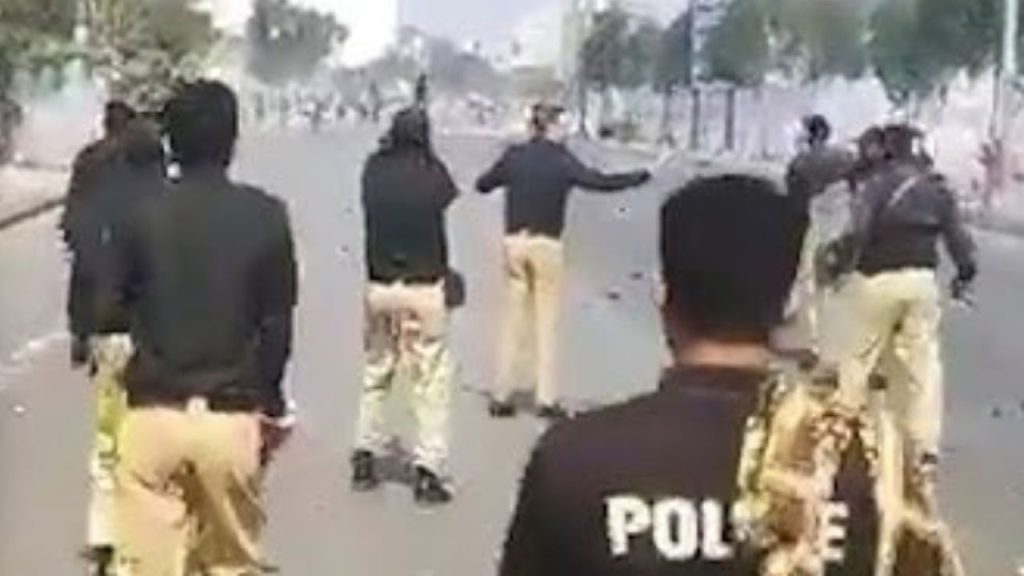
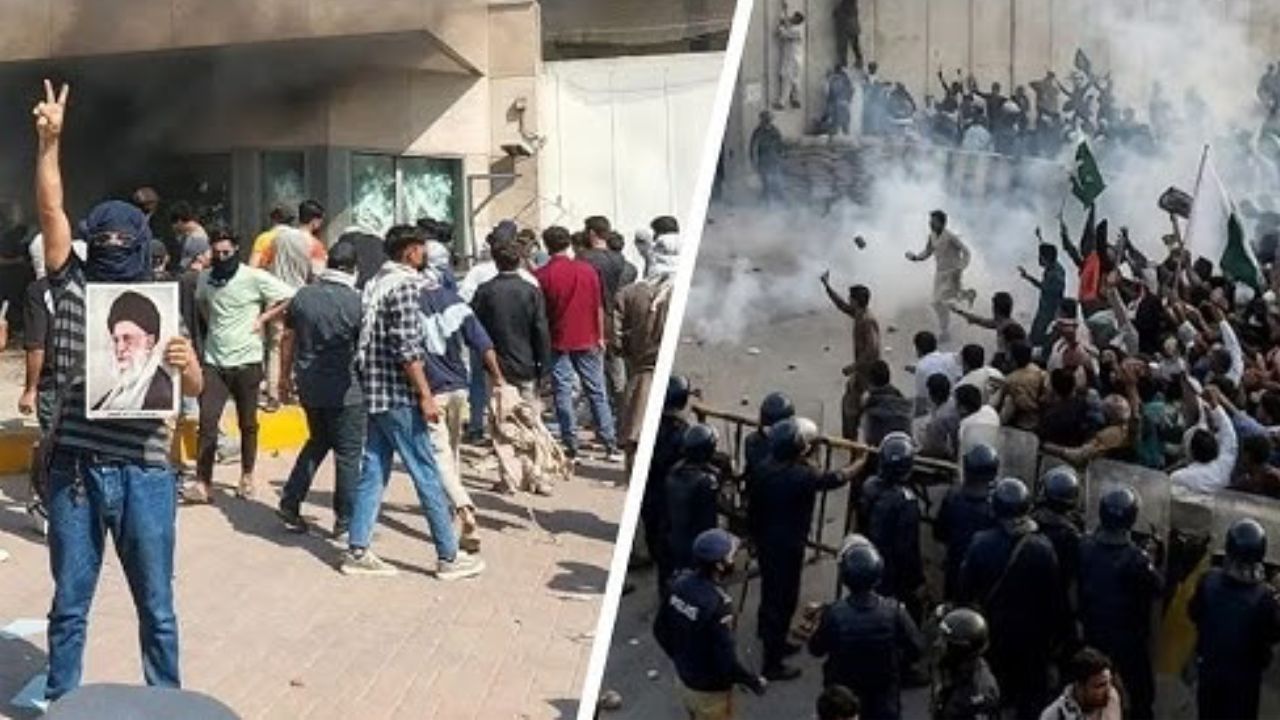
The protest began as a pro-Iran gathering outside the Consulate General of the United States in Karachi, where crowds rallied in support of Iran and against Israel, reflecting wider outrage over the Israel and Iran conflict. Demonstrators marched along M. T. Khan Road and massed near the fortified mission, part of a wave of mobilization in Pakistan and Iraq, which are described as Iran’s neighbors to the east and west and as having the world’s largest Shi Muslim populations after Iran. Organizers framed the rally as a show of solidarity with Iran, but the choice of target, a high-profile United States diplomatic post in Pakistan’s largest city, meant that any loss of control risked a rapid and forceful response.
According to reporting from the scene, the demonstration shifted from slogans and flag waving to direct confrontation when groups of protesters moved toward the consulate’s perimeter, some reportedly throwing stones and attempting to breach security barriers. Local police had already been using tear gas and other crowd control tactics outside the United States compound in Karachi as tensions rose. By the time the front ranks reached the outer defenses, the scene had turned into a chaotic standoff between demonstrators and a layered security presence that included Pakistani police, paramilitary units and United States security staff inside the walls.
Conflicting death tolls and the scale of the violence
Initial casualty figures from the clashes varied sharply, reflecting both the confusion of the confrontation and the political sensitivity of acknowledging the full toll. Some early accounts from Karachi spoke of at least 10 people killed as protests erupted outside the United States consulate in the Pakistani port city, with video showing bodies on the pavement and injured demonstrators being carried away. Other authorities later cited at least 22 people killed in Pakistan as protesters tried to storm the Consulate, and said more than 120 were wounded, with several reported in critical condition in Karachi hospitals.
Alongside those higher figures, one detailed account of a pro-Iran protest at the United States consulate in Pakistan’s Karachi referred to Ten people killed in the immediate aftermath of the gunfire. That same reporting framed the rally explicitly as a pro-Iran protest, linking it to anger over Israel and to a broader wave of demonstrations tied to the Israel and Iran conflict that has swept parts of Pakistan. The variation between a toll of Ten dead and later references to at least 22 killed highlights how quickly the situation evolved, as some of the wounded succumbed to their injuries and as information from different hospitals and districts of Karachi filtered in.
Who opened fire and what role Marines played
One of the most sensitive questions emerging from the Karachi confrontation is who exactly fired live rounds that left so many protesters dead. Pakistani officials have acknowledged that local police and paramilitary forces were deployed around the United States consulate and that they used force as demonstrators tried to storm the Consulate compound. At the same time, United States officials have privately confirmed that Security guards and Marines at the consulate reported firing on protesters when parts of the crowd breached or threatened to breach the outer defenses, an account that aligns with video suggesting shots coming from positions closer to the compound walls.
According to detailed accounts from United States officials, Marines fired on protesters storming the consulate in Karachi after outer security layers began to give way, describing the use of live ammunition as a last resort to prevent a full breach of the diplomatic compound. These officials stressed that daily security operations at United States diplomatic missions are often carried out by private contractors and local forces, but that in Karachi, once the crowd pressed past certain barriers, Marines on duty became directly involved in repelling the incursion. The revelation that United States Marines fired on Pakistani protesters has already stirred anger on social media, where clips of United States Marines opened fire on demonstrators during the storming of the consulate have circulated widely, with one widely shared video attracting 27K likes and 870 comments that accuse Washington of excessive force.
Inside the attack on the United States consulate in Karachi
Accounts of the 2026 attack on the United States consulate in Karachi describe a multilayered assault on the compound’s defenses that unfolded over several hours. On 1 March 2026, the Consulate General of the United States in Karachi came under sustained pressure as protesters hurled stones along M. T. Khan Road, smashed windows and tried to tear down fencing. The official description of the 2026 attack on the United States consulate in Karachi emphasizes that the mission’s defenses were designed to withstand exactly this kind of onslaught, with high blast walls and inner compounds that allowed staff to shelter even as outer structures took damage.
Regional coverage in multiple languages, including accounts that were later Discovered through Arabic, Spanish, Persian and French reporting on the United States presence in Karachi, paints a picture of a coordinated attempt by some in the crowd to move beyond symbolic protest. While many demonstrators reportedly remained on the road chanting and waving flags, smaller groups focused on the gates and vulnerable sections of the perimeter, prompting Pakistani police to fire tear gas and rubber bullets. As the confrontation escalated, the combination of local forces and United States personnel responded with live fire, which turned the attack on the consulate into a deadly clash that is now the subject of intense scrutiny in both Pakistan and the United States.
Domestic fallout in Pakistan and regional stakes
The bloodshed outside the United States consulate has intensified political pressure inside Pakistan, where opposition figures and religious leaders are demanding accountability for the deaths. Authorities in Pakistan have spoken of at least 22 people killed in clashes with police after protesters tried to storm the Consulate, language that implicitly places primary responsibility on local security forces even as questions swirl about the role of United States Marines. In Karachi, which is the capital of southern Sindh province and Pakistan’s largest city, senior police officials have defended their response by pointing to smashed consulate windows and what they describe as an organized attempt to overrun the compound after news of Khamenei’s death spread among the crowd.
The Karachi violence cannot be separated from the wider regional picture, particularly the Israel and Iran conflict that has galvanized pro-Iran groups across Pakistan and Iraq. One detailed account of the pro-Iran protest at the United States consulate in Pakistan’s Karachi explicitly ties the Ten killed in the rally to anger over Israeli actions against Iran, and to calls from demonstrators for a stronger Pakistani response in support of Iran. Another section of that same reporting notes that Ten killed in pro-Iran protest at US consulate in Pakistan’s Karachi became a rallying cry on social media and in Shia neighborhoods, where posters and banners now depict those who died as martyrs in a struggle that stretches from Iran to Pakistan and Iraq.

Leo’s been tracking game and tuning gear since he could stand upright. He’s sharp, driven, and knows how to keep things running when conditions turn.