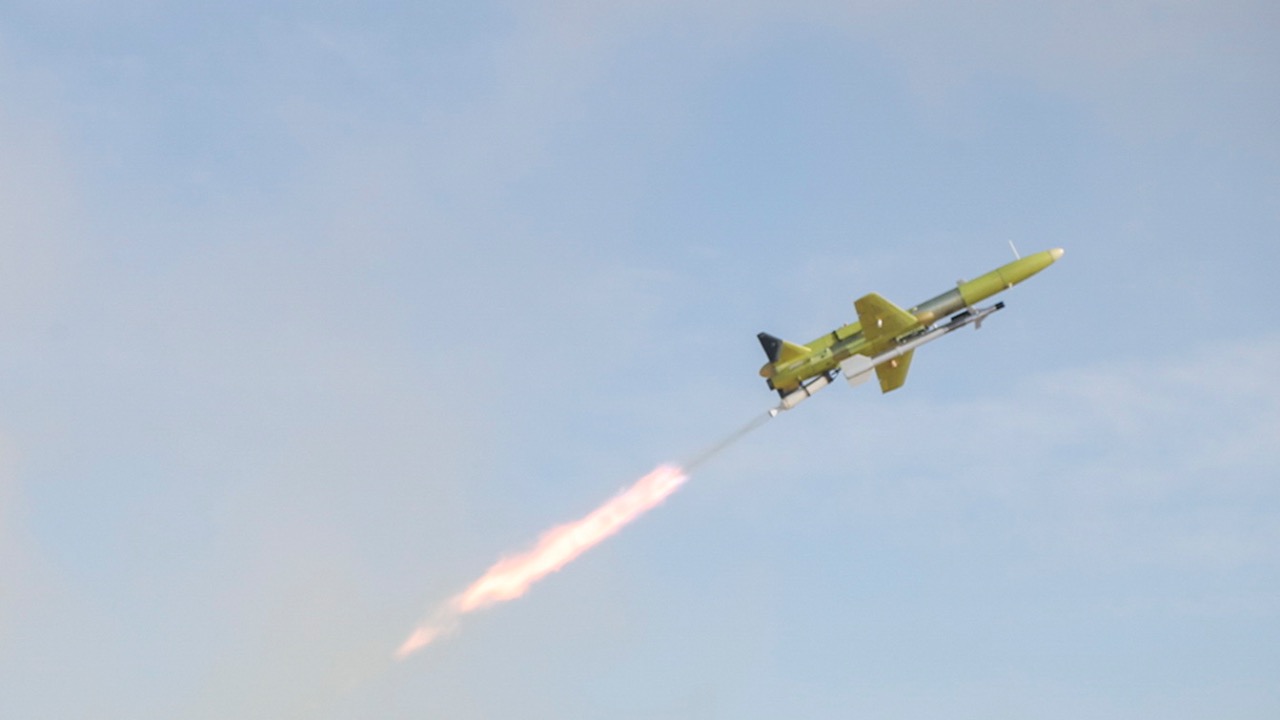
The Iranian Drone Threat to California Is Real. Here’s How the State Could Prepare.
Federal law enforcement has quietly warned that Iranian-linked operatives could try to hit targets in California using drones, turning a distant conflict into a local security problem. The risk is not abstract: officials describe specific scenarios in which small, inexpensive aircraft could be used to strike critical infrastructure, crowded public spaces, or symbolic political sites on the West Coast.
California, with its ports, tech hubs, military facilities, and dense cities, sits squarely in the crosshairs of this emerging threat. State and local leaders now face a practical question: how to prepare for an attack that might come from a device that costs less than a used car and can fit in the trunk of a sedan.
What happened
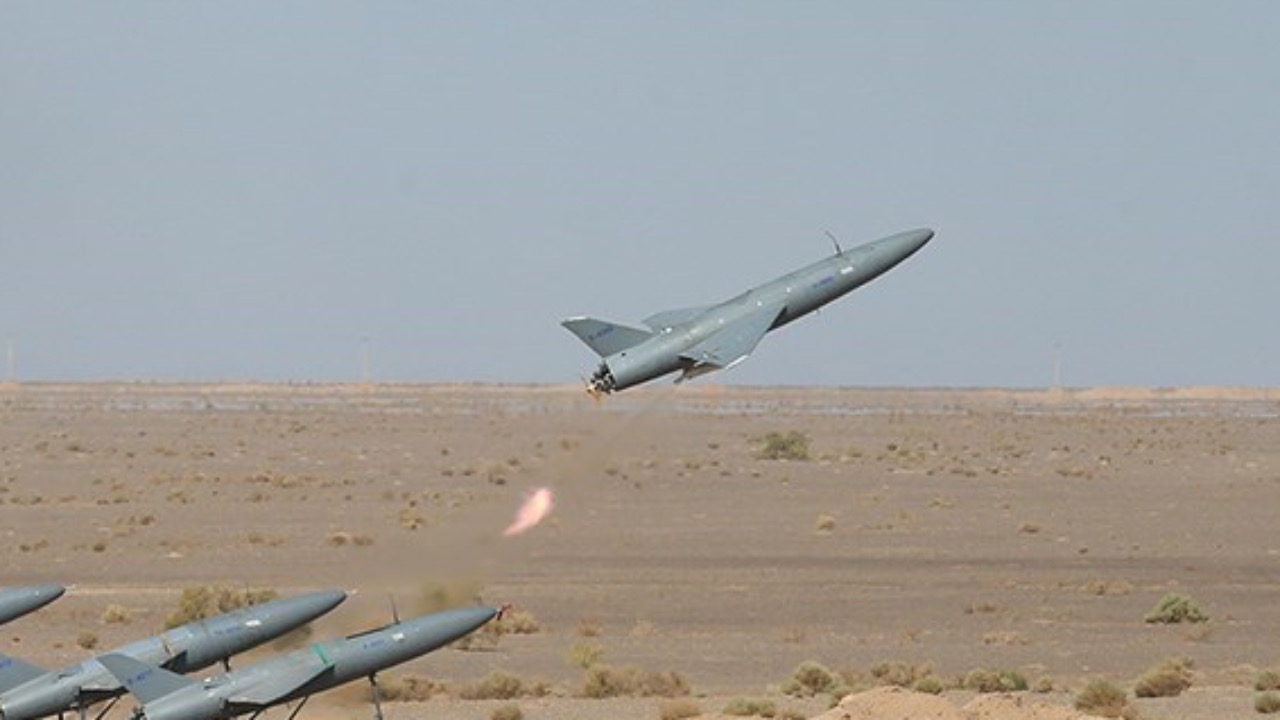
Federal officials have circulated a memo warning that Iran and its proxies could attempt attacks on U.S. soil in response to the conflict in the Middle East, and that California is among the states at risk. The memo, shared with state and local agencies, outlines scenarios in which operatives could use commercially available drones or modified hobby aircraft to carry explosives or conduct surveillance against targets in major metropolitan areas. Reporting on the document describes it as a threat assessment that highlights ports, energy infrastructure, political events, and religious institutions as potential targets, with particular concern about the Bay Area and Southern California.
According to that assessment, Iranian planners have studied how low-cost drones have been used in conflicts from Ukraine to the Red Sea, and they see similar tactics as viable against soft targets in the United States. The memo describes how small unmanned aircraft could be launched from short distances, flown at low altitude to evade radar, and guided using publicly available satellite maps. It also notes that California’s long coastline and heavy maritime traffic create opportunities for covert staging from small boats or commercial vessels.
Federal concern is not theoretical. U.S. officials have publicly tied Iran to a series of drone and missile attacks across the Middle East, including strikes on shipping and energy facilities, and they have warned that the same networks that support those attacks could enable operations farther afield. Analysts point out that Iran’s Islamic Revolutionary Guard Corps has invested in a large inventory of one-way attack drones, including models that can be broken down into components and reassembled outside Iran. The memo shared with California partners stresses that even a much smaller, improvised system could cause serious damage if used against a crowded venue or a vulnerable chemical or fuel site.
National security experts interviewed about the memo explain that California is singled out not only for its size, but also for its concentration of high-profile targets. The state hosts major ports in Los Angeles, Long Beach, and Oakland, large refineries in the Bay Area and along the coast, and key tech and defense contractors in Silicon Valley and San Diego County. The federal assessment warns that disruption at any of these nodes could have cascading economic effects across the country, which is one reason the memo frames the drone threat as part of a broader Iranian strategy to impose costs on the United States.
Public awareness of the warning grew after coverage of a federal briefing that referenced an Iranian drone threat to California. During that briefing, officials described the memo and emphasized that it was not tied to a specific plot, but rather to a pattern of intelligence pointing to intent and capability. Analysts who reviewed the language noted that it fits with past assessments of Iran’s willingness to use proxies and deniable methods to strike outside its borders, including cyberattacks and plots against dissidents and former officials.
Political figures have started to respond. One report highlighted how former President Donald Trump, while praising a recent U.S. military operation, cited an FBI warning about an Iranian drone threat to California and used it to argue for tougher domestic security measures. That warning was referenced in a segment that focused on FBI concerns about potential attacks linked to Iran, underscoring that the issue has already entered national political debate.
At the local level, the warning has landed with particular force in the Bay Area. Coverage from San Francisco described how federal authorities briefed city leaders on the possibility of a drone strike, prompting questions for Mayor London Breed, mayoral candidate Daniel Lurie, and Governor Gavin Newsom about how prepared California is for such a scenario. In that reporting, officials discussed how the FBI had shared information about a potential drone strike threatand encouraged local agencies to review their security plans for large public events.
Additional coverage of the memo has stressed that California is not the only state mentioned, but it is one of the most prominent because of its size and symbolic value. One report on the federal assessment explained that the document warned of potential threats tied to the conflict with Iran, and that California officials were urged to consider how drones could be used in combination with cyber or physical sabotage. Another analysis framed the memo as a wake-up call for state and local agencies that have focused more on wildfires and earthquakes than on foreign state-backed terrorism using consumer technology.
Why it matters
The warning matters for California because it highlights a gap between the sophistication of the threat and the maturity of the state’s defenses. Iran has demonstrated that it can use relatively cheap drones to hit high-value targets in other regions, including oil facilities and military bases, by exploiting blind spots in traditional air defense systems. Those systems were built to track and intercept fast-moving aircraft and missiles, not small quadcopters flying a few hundred feet above the ground. The same vulnerability exists over American cities, where air defense is fragmented between federal, state, and local agencies and often relies on visual observation or ad hoc measures.
Analysts who study Iranian capabilities point out that Tehran has invested heavily in one-way attack drones, including systems that can fly hundreds of miles and carry substantial explosive payloads. Some of these designs have been exported to partners and proxies, which have used them in Yemen, Iraq, Syria, and Ukraine. A detailed examination of Iranian tactics explains how these drones are often launched in swarms, combined with cruise missiles, or used to probe defenses before a larger strike. The federal memo suggests that even a single drone, if used in a dense urban area, could achieve the psychological effect Iran seeks by demonstrating that it can reach inside the United States.
California’s economic profile amplifies the stakes. The state’s ports handle a large share of U.S. imports from Asia, and its tech sector sits at the center of global supply chains for hardware and software. A drone strike that disrupted operations at a major port, damaged a refinery in Richmond or Carson, or targeted a data center in Santa Clara County could ripple through national markets. A separate analysis of the threat argued that Iran might see such disruption as a way to retaliate against U.S. actions in the Middle East without triggering a full-scale military response, since a deniable drone attack could be framed as the work of a proxy or a lone actor.
Security experts also stress the symbolic dimension. California hosts prominent political figures, major media outlets, and iconic landmarks. A drone attack on a high-visibility site in Los Angeles or San Francisco would send a message far beyond the physical damage, showing that an adversary can bypass oceanic distance and traditional military deterrence. That is one reason why a detailed piece on the subject argued that war with Iran could translate into a direct threat to California, even if no Iranian soldier ever sets foot on U.S. soil.
At the same time, the memo exposes how uneven California’s drone defenses are. Airports and some military installations already have radar and counter-drone systems, but most city centers, stadiums, and industrial sites do not. Local police departments may have policies for seizing a suspicious drone, yet they often lack the legal authority or equipment to jam or shoot down an aircraft in flight. The Federal Aviation Administration regulates the airspace, but its tools are geared toward safety and traffic management, not hostile drones controlled by foreign operatives.
One opinion piece focused specifically on how California should respond argued that the state has been slow to translate abstract warnings into concrete policy. The author pointed out that while California has invested heavily in wildfire prevention and earthquake retrofits, it has not created a comparable strategy for low-altitude air threats. The piece urged state leaders to develop a layered defense that combines detection technology, clear rules of engagement, and training for local responders. It also warned that without such preparation, California could be caught off guard by a relatively simple attack that exploits bureaucratic confusion.
That argument reflects a broader concern: the tools that make drones attractive for business and recreation also make them attractive for attackers. Off-the-shelf quadcopters can carry several kilograms of payload, fly pre-programmed routes using GPS, and stream live video. Open-source software allows operators to modify flight profiles and navigation systems, and online marketplaces offer parts that can be assembled into custom platforms. The federal memo and subsequent commentary suggest that Iranian operatives or sympathizers could adapt these tools without needing advanced engineering support from Tehran, which complicates efforts to distinguish between state-directed and opportunistic threats.
California’s political leadership must also navigate the balance between security and civil liberties. Aggressive counter-drone measures can raise privacy concerns, especially if they involve persistent monitoring of low-altitude airspace over residential neighborhoods. Communities that have already experienced heavy surveillance in the name of counterterrorism may be wary of new systems that track every small aircraft. The memo does not resolve these tensions, but it forces state and local leaders to confront them sooner rather than later.
What to watch next
California’s response will likely unfold on several fronts. First, the state government can move to coordinate a unified drone security strategy that links the Governor’s Office of Emergency Services, the California Highway Patrol, local police and fire departments, and private operators of critical infrastructure. Observers will be watching to see whether Governor Gavin Newsom directs agencies to develop a statewide framework for detecting and responding to hostile drones, including standardized protocols for when local responders can request federal assistance.
Second, lawmakers in Sacramento may introduce legislation that clarifies who has authority to counter drones in different scenarios. Current law often leaves local agencies uncertain about whether they can jam signals or physically disable an aircraft, especially near airports or sensitive sites. A policy blueprint outlined in a recent opinion piece argued that California should establish clear rules for law enforcement and critical infrastructure operators, and that it should invest in training and equipment to match those rules. That piece laid out a series of steps for preparing for a, including expanding sensor coverage and integrating data from private radar and camera networks.

Leo’s been tracking game and tuning gear since he could stand upright. He’s sharp, driven, and knows how to keep things running when conditions turn.