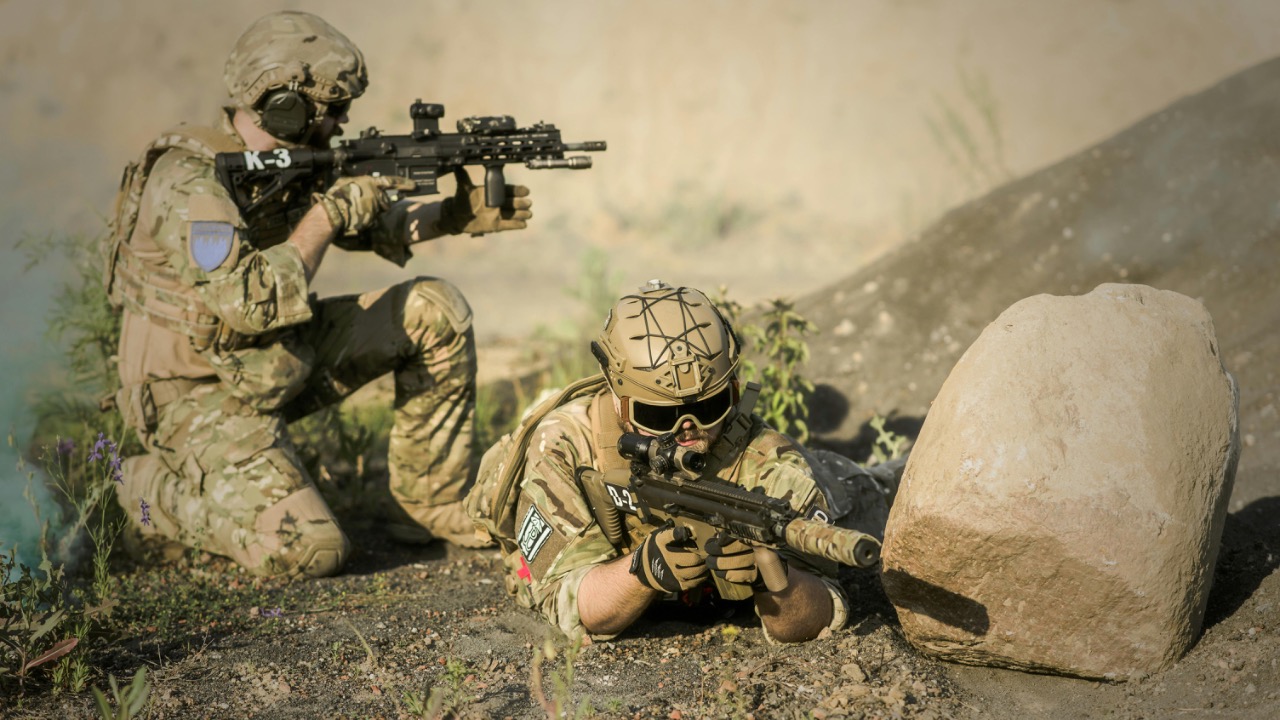
Military spending decisions that still haunt policymakers
Military budgets are often framed as technical line items, but the choices buried in those spreadsheets shape wars, alliances, and domestic politics for generations. Some of the most consequential decisions were made in moments of fear or optimism, only to leave leaders grappling with unintended costs long after the headlines faded. When I look across recent conflicts and debates, I see a pattern of spending choices that solved short term problems while quietly creating strategic, fiscal, and moral liabilities that are far harder to unwind.
Those legacies are not abstract. They show up in the way the United States fights the Global War on Terror, in how allies like Ukraine and Canada calibrate their own defenses, and in the political fights over whether to expand the Pentagon or protect Medicare and Social Security. They are visible in the lobbying footprint of defense manufacturers, in the strain on recruiting, and in the persistent gap between what the public says it wants and what Congress funds. The ghosts of past appropriations still sit in the room every time policymakers argue over the next dollar.
The ghosts of past wars in today’s budgets
Modern defense debates are saturated with memories of earlier conflicts, and those memories quietly steer how much money leaders are willing to spend. In Ukraine, the millions of dead and displaced have become what one account describes as “Ukrainian ghosts,” a shorthand for the trauma inflicted by Russia and the determination of Ukraine never to be overrun again. That history helps explain why Kyiv presses so hard for advanced weapons and why Western governments, even when uneasy, keep approving large aid packages rather than risk being blamed for another capitulation to aggression.
In the United States, the Global War on Terror has left its own imprint on the ledger. The U.S. Global War on Terrorreshaped strategy across multiple countries and normalized a level of overseas operations that now feels permanent. Many Americans who came of age after 2001, as one analysis of recruiting notes, have Many Americans and GWOT as their only reference point for what military service looks like, which makes endless deployments and ambiguous missions feel like the default. That perception feeds back into budget politics, because leaders who fear being labeled “weak” on terrorism hesitate to cut any program that can be tied, however loosely, to counterterror operations.
Afghanistan’s spending surge and the corruption hangover
Few examples illustrate the long shadow of spending choices as starkly as Afghanistan. Internal interviews later revealed that Many aid workers on the ground blamed Congress for what they saw as a mindless rush to spend, a gusher of aid that Washington poured into Washington’s project in Afg without sufficient oversight. By allowing corruption to fester, that flood of money empowered local power brokers and undercut the very legitimacy the coalition was trying to build, eventually helping the Taliban present themselves as the only force capable of enforcing order.
Warnings about this dynamic were not hypothetical. A formal inquiry into wartime contracting in Iraq and Afghanistan concluded that “If, however, we spend large quantities of international contracting funds quickly and with insufficient oversight, it is likely to fuel corruption, strengthen criminal networks, and undermine our efforts in Afghanistan,” a judgment recorded in the final report. That is exactly what happened. The decision to prioritize rapid disbursement over careful institution building now haunts policymakers who must explain why so much treasure and blood produced such fragile results.
The permanent war economy and its political defenders
Behind these specific cases sits a broader structural choice: the embrace of what critics call a permanent war economy. Proponents of high military outlays argue that large budgets are essential to deter threats and sustain jobs, and they justify a buildup by inflating the Proponents of narrative about what the Pentagon can accomplish abroad. Once that logic takes hold, it becomes self reinforcing, because every new weapons system or overseas deployment is framed as proof that the previous investment was necessary and that even more is now required.
That mindset is reinforced by a powerful lobbying ecosystem. For over two decades, the military industry has consistently spent more than $100 m per year, more than $100 million annually, lobbying policymakers to influence spending decisions that support its financial interests. Once such sums are in play, it becomes far harder for elected officials to treat the defense budget like any other line item, and far easier for them to rationalize ever larger appropriations as the path of least political resistance.
Congress, jobs, and the politics of saying no
Even when lawmakers recognize the long term risks of runaway defense spending, they often feel trapped by local economic pressures. As one analysis of nuclear weapons politics notes, Reuters reported that even if Democrats secured majorities in the Democrats controlled the House and Senate, they would still be wary of cutting weapons programs that could be portrayed as taking jobs away from their constituents. That fear helps explain why even modest proposals to trim specific systems often die quietly in committee.
The result is a recurring pattern in which Congress for years has been willing to criticize waste in the abstract while approving large topline increases. When the House recently advanced a package that would send roughly a trillion dollars to the defense establishment, Robert Weissman, co president of Public Citizen, warned that Throwing that much at the Pentagon was a dangerous and wasteful choice. Yet for many members, the political cost of opposing the bill still looked higher than the cost of supporting it.
Public opinion, social programs, and the opportunity cost
What makes these choices especially fraught is how far they often diverge from public preferences. Surveys on nuclear weapons policy have found that But the public would prefer that the nuclear arsenal be reduced, not expanded, and respondents on average favored at least a one third cut in the stockpile in favor of a smaller, cheaper force. That sentiment sits uneasily beside platforms that call for new warheads and delivery systems, and it suggests that some of today’s procurement decisions may look badly out of step if a future administration decides to align policy more closely with voters.
The trade offs are even starker when set against domestic needs. The average American strongly supports the benefits of social programs such as Medicare and Social, making proposed cuts to such benefits deeply unpopular. Economic analyses underline why: high Military outlays can increase national debt and leave less money for schools, healthcare, and infrastructure, while also driving taxes higher. When leaders choose to prioritize new weapons over these programs, they are making a bet that future voters will accept those trade offs, a bet that may not age well.
Waste, “use it or lose it,” and the culture of excess
Even within the defense establishment, there is growing recognition that some spending habits are hard to defend. Officials have acknowledged that the Department of Defense has already slashed billions of dollars in government waste, including dozens of contracts and programs that were not delivering value, as highlighted in one discussion of how the Department of Defense could cut more waste. Another conversation about reform stresses that there is now more opportunity to align budgets with priorities like inclusion and the response to COVID, rather than simply racing to obligate funds before they expire.
Yet the “use it or lose it” mentality remains deeply embedded. A separate briefing notes that the Department of Defensehas been pushed to end end of year spending sprees that encourage offices to burn through remaining funds on marginal projects. Those habits may look like bureaucratic trivia, but they add up to billions of dollars that could otherwise reduce deficits or be redirected to higher priorities. The longer they persist, the harder it becomes for any administration to argue credibly that every defense dollar is indispensable.
Recruiting, GWOT, and the human cost of budget choices
Spending decisions also shape who is willing to serve. Analysts of the recruiting crisis point out that Many Americanstoday, especially the younger ones the services need, have GWOT as their only mental picture of military life. Two decades of high tempo deployments, funded by supplemental appropriations and emergency authorizations, have normalized a model in which service often means repeated tours in distant conflicts with unclear endpoints. That reality makes it harder to persuade families that the benefits of enlistment outweigh the risks.
At the same time, the sheer scale of U.S. spending sends its own message. One commentator notes that Everyone knows by now that the U.S. military has the largest budget on the planet, so large that it could pay for China’s entire military several times over. When young people see that level of investment alongside stories of veterans struggling with health care and transition, they can reasonably ask whether the system values hardware more than human beings, a perception that no amount of glossy recruiting ads can fully erase.
Allies, groupthink, and the pressure to keep up
The United States is not alone in wrestling with the inertia of high defense spending. In Canada, for example, debates over meeting alliance targets have sparked what one critic calls military spending groupthink, in which leaders talk about major increases but rarely follow through. It would be easy to assume that, if the past is anything to go on, such talk will typically not translate into actual expenditure, a pattern highlighted in an examination of how It would be easy to compare today’s rhetoric with the record since the Soviet Union’s collapse in 1991.
Yet even without dramatic increases, the political logic of alliance solidarity can lock countries into costly trajectories. In Ukraine’s case, the suffering inflicted by Ukrainian ghosts at the hands of Ukraine’s neighbor has pushed Western governments to deepen their alliance with Kyiv, although not without misgivings about escalation. Those commitments, once made, are politically difficult to scale back, which means that today’s pledges of long term support will shape European and North American budgets for years, regardless of who holds office.
Economic drag, war costs, and the bills that never end
Beyond the immediate price tags, war related spending has a way of lingering in national accounts. One study of U.S. conflicts notes that a Bill that expands veterans’ benefits tends to reduce the half life of temporary war costs, but the net effect of such expansions is to raise the fiscal burden, not reduce it. Those obligations, from disability payments to interest on war debt, can last decades after the last troops leave, quietly constraining what future governments can do.
Macroeconomic analysis reinforces the point. When a country devotes a large share of its resources to defense, high Military expenditure can slow growth and drive taxes higher by crowding out more productive investment. Critics of current U.S. priorities point out that the military already plans to spend upwards of $2 trillion in the coming decade on nuclear weapons and related systems, as one account of how Aug spending choices compare with social needs makes clear. Those are commitments that will shape tax and spending debates long after today’s policymakers have left office.
Strategic overreach and the limits of military solutions
Finally, some of the most haunting spending decisions are those that enable strategies with little chance of success. Analysts warning against a hypothetical U.S. invasion of Mexico argue that, from a historical perspective, the United States has repeatedly launched interventions in foreign nations, whether in United States operations in Vietnam and Iraq, that produced staggering costs and limited long term strategic benefits. The fact that the Pentagon can fund such operations does not mean they are wise, and history suggests that the financial and human toll often far exceeds initial estimates.

Leo’s been tracking game and tuning gear since he could stand upright. He’s sharp, driven, and knows how to keep things running when conditions turn.